How Do You Generate A Lightweight, High-Quality Western Cartoon 3D Character From An Image?
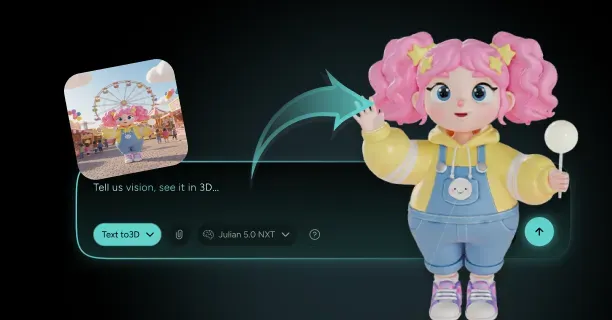
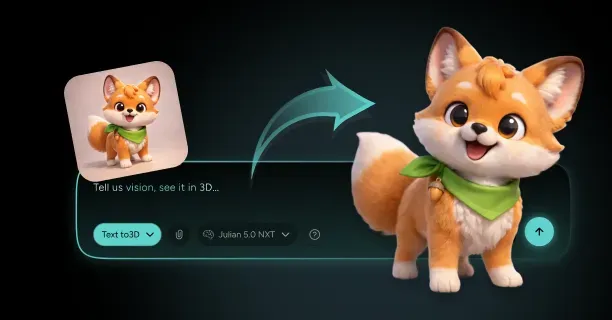
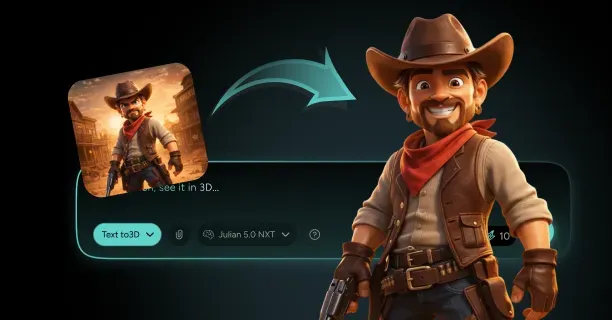
To generate a lightweight, high-quality Western cartoon 3D character from an image, upload a single reference image to Threedium’s AI-powered platform, which processes the 2D artwork using semantic segmentation and edge detection, generates three-dimensional geometry from depth estimation using stylization-aware neural network algorithms, and produces an optimized 3D model with clean quad-based topology suitable for real-time rendering in game engines like Unity and Unreal Engine and skeletal animation using humanoid armatures.
Creating Western cartoon 3D characters from images represents an ill-posed inverse problem in computer vision: when reconstruction algorithms utilize just one single-view 2D reference image containing only RGB color data, infinite possible 3D geometric configurations exist as mathematical solutions due to the absence of explicit depth information. A standard 1024×1024 pixel reference image contains 1,048,576 pixels storing RGB color channel values with 24-bit color depth but zero explicit Z-axis depth information, requiring reconstruction systems to infer probabilistically the missing spatial dimensions through convolutional neural network pattern recognition and learned priors derived from training datasets of thousands of Western cartoon 3D characters.
Geometric ambiguity intensifies as a computational problem during occlusion handling, where completely non-visible surfaces including:
- The back of a character’s head
- Rear body surfaces
- Hidden facial features such as ear backs and jaw undersides
These remain unobservable in the original single-view source artwork, requiring generative inference using symmetry assumptions and learned shape patterns from training datasets. Threedium’s deep learning reconstruction system addresses this occlusion problem through supervised learning on extensive training datasets containing over 10,000 Western cartoon 3D character models, enabling the neural network to generate probabilistically non-visible backside geometry that maintains stylistic consistency and artistic coherence with visible front-facing elements observed in the reference image.
Western cartoon aesthetics require specialized non-photorealistic rendering (NPR) techniques including toon shading and cel shading that emphasize deliberate shape language using geometric primitives, exaggerated proportions with head-to-body ratios of 1:3 to 1:4 (versus realistic 1:7), and simplified geometric forms. These visual characteristics prove incompatible with photorealistic AI reconstruction models trained primarily on photographic datasets and anatomically accurate 3D scans of real humans.
Traditional 3D reconstruction algorithms including photogrammetry and structure-from-motion techniques, optimized for processing photographed real-world subjects, produce erroneous geometric results when applied to cartoon imagery because these algorithms assume as prerequisites:
- Anatomical accuracy matching medical reference data for human proportions
- Subtle shading gradients providing depth cues for surface normal estimation
- Realistic surface textures with physically-based reflectance properties
Threedium’s AI-powered 3D character generation platform implements stylization-aware reconstruction using custom neural networks trained specifically on Western cartoon character datasets, enabling the system to detect and preserve cartoon-specific visual patterns including:
| Feature | Measurement | Description |
|---|---|---|
| Head Size | 1.5 to 2 times larger | Than realistic anatomical proportions |
| Head-to-Body Ratio | 1:3 to 1:4 | Versus realistic 1:7 ratio |
| Limb Geometry | Simplified cylindrical | Reducing anatomical complexity |
| Outlines | Bold black ink-style | Characteristic of Western animation |
When users provide their Western cartoon reference image through Threedium’s upload interface, the multi-stage analysis pipeline:
- Quantifies feature exaggeration levels by measuring proportion ratios
- Detects characteristic shape simplifications using pattern recognition
- Produces 3D mesh geometry that preserves detected stylistic characteristics
- Maintains cartoon aesthetic integrity rather than normalizing toward photorealistic accuracy
The fundamental tension between ‘lightweight’ performance requirements demanding low polygon counts (1,500-15,000 polygons) for optimization on resource-constrained mobile devices and ‘high-quality’ visual fidelity requirements demanding detailed surface geometry with higher polygon counts (50,000-100,000 polygons) presents an optimization problem with competing constraints that necessitates strategic polygon budget allocation through adaptive subdivision techniques concentrating geometric detail in visually critical facial regions while simplifying less prominent body areas.
High-quality cinematic 3D characters for AAA game production and animated films typically range from 100,000 to 500,000 polygons to capture fine surface detail including skin wrinkles and pores, support complex facial expression subtleties through blend shapes and morph targets, and achieve smooth curvature transitions across organic surfaces.
Mobile game optimization guidelines from Unity Technologies and Epic Games recommend:
- Low-end smartphones: 1,500 polygons
- High-end mobile devices: 15,000 polygons
- Target framerates: 30-60 frames per second
3D artists and automated generation systems achieve both lightweight performance and high-quality visual fidelity simultaneously through strategic polygon density allocation:
- Facial regions: 2,000-4,000 polygons for expression animation
- Hands: Detailed finger articulation and gesture detail
- Torso: Box primitive geometry for simplified structure
- Upper arms: Cylindrical primitives for peripheral areas
Clean quad-based topology with organized edge flow following natural deformation patterns provides essential infrastructure for smooth skeletal animation at joint deformation zones and efficient GPU rendering by reducing draw calls and memory overhead, yet automated mesh generation processes historically have difficulty producing the organized edge loop patterns and optimal polygon flow that professional 3D character artists create manually through retopology workflows using specialized tools like ZBrush’s ZRemesher and Maya’s Quad Draw.
Topology defines the mathematical arrangement and vertex connectivity of polygons forming a 3D mesh structure, with optimal layouts for character animation utilizing:
- Quad-based geometry: Four-sided polygons arranged in continuous edge loops
- Anatomically-informed patterns: Following natural deformation around joints
- Facial expression zones: Orbiting eyes, encircling mouth, following eyebrow curves
- Clean subdivision: For level-of-detail generation and smooth deformation
Poor topology manifests as triangulated meshes with irregular polygon distribution, producing visual defects including:
- Mesh collapse
- Surface pinching
- Shading discontinuities during skeletal animation
- Unnatural deformation and rendering artifacts
Threedium’s multi-stage automated 3D generation pipeline produces initial mesh geometry through single-view reconstruction using depth estimation neural networks, then executes automated topology cleanup algorithms that:
- Convert triangulated geometry to quad-based meshes
- Identify character’s intended deformation zones
- Reorganize polygon flow by creating continuous edge loops
- Support skeletal rigging with humanoid armatures
- Enable blend shape deformations for facial animation
Upload and Analysis
Users initiate the Western cartoon character generation workflow by providing a high-resolution reference image (minimum 1024×1024 pixels, recommended 2048×2048 pixels or higher) through Threedium’s upload interface, ensuring clear visibility of the character’s primary anatomical features including:
- Face
- Torso
- Arms
- Legs
The character should preferably be depicted in a neutral rigging-ready pose such as a T-pose or A-pose with arms slightly extended away from the body to prevent occlusion and legs separated to establish clear silhouette boundaries for automated limb segmentation.
Threedium’s AI analysis system executes a multi-stage computer vision pipeline beginning with semantic segmentation using convolutional neural networks for pixel-wise classification that detects and classifies distinct character components:
| Body Part | Description |
|---|---|
| Head | Facial region and primary expression zone |
| Torso | Chest and abdomen |
| Arms | Upper arms, forearms, hands |
| Legs | Thighs, calves, feet |
| Clothing | Separate layered geometry distinct from skin surfaces |
| Accessories | Hats, glasses, jewelry, weapons, character-specific props |
Edge detection algorithms including Canny edge detectors and gradient analysis techniques detect and extract the characteristic bold ink-style outlines (typically 2-5 pixels wide black contours) common in Western animation styles, utilizing the detected outline contours and their gradient strength to calculate initial depth extrusion values that determine Z-axis displacement magnitudes when converting 2D boundaries to 3D surface geometry.
Color region analysis determines which areas represent distinct surfaces versus painted details, preventing the system from generating unwanted geometric protrusions for graphic elements like belt buckles or buttons that should remain as texture details rather than modeled geometry.
Depth estimation networks predict the Z-axis positioning of each pixel by comparing the input image against learned representations of cartoon character construction. The system recognizes that Western cartoon heads typically feature:
- Pronounced front-facing volume with flattened rear profiles
- Eyes positioned wider apart than anatomical norms
- Noses simplified to basic wedge shapes
- Mouths capable of stretching beyond realistic boundaries for expressive poses
You’ll receive a base mesh where depth values translate into vertex positions, creating the initial 3D form that captures the character’s essential silhouette and volume distribution.
Polygon Optimization
Polygon count optimization happens through adaptive subdivision where the system analyzes surface curvature and visual importance to determine local detail requirements. Facial regions receive higher polygon density to support expression animation, with typical allocations of 2,000 to 4,000 polygons dedicated to the head alone in a 10,000-polygon character budget.
Limbs use cylindrical primitive topology with strategic edge loop placement at joints:
- Elbows
- Knees
- Wrists
- Ankles
This ensures clean deformation during skeletal animation. The torso employs simplified box-like geometry with additional subdivision around the shoulders and hips where connection to limbs demands smooth blending. Our platform automatically balances these allocations based on the character’s intended use case:
- Mobile gaming: Lower polygon counts
- Web-based experiences: Moderate counts
- High-fidelity desktop applications: Higher counts within lightweight parameters
UV unwrapping generates the 2D texture coordinate layout that maps the original image’s color information onto the 3D surface. Western cartoon characters benefit from straightforward UV layouts with minimal distortion because their simplified geometry naturally unfolds into clean rectangular regions. The system creates distinct UV islands for major body parts:
- Separate unwraps for the head
- Each limb individually mapped
- The torso as a dedicated region
This allows texture resolution to concentrate on visually prominent areas. You’ll get automatic UV coordinates optimized for texture painting and detail addition, with seam placement strategically hidden along natural boundaries like clothing edges or behind the character’s ears where texture discontinuities remain invisible during typical viewing angles.
Texture and Material Generation
Texture projection transfers color data from your reference image onto the UV-mapped 3D model, accounting for the perspective transformation between 2D artwork and 3D surface geometry. The AI recognizes that Western cartoon textures often feature:
- Flat color regions with sharp transitions
- Graphic qualities rather than photographic gradients
- Hand-drawn aesthetic characteristics
Outline rendering receives special treatment through dedicated processing that converts 2D drawn lines into either:
- Geometric edge extrusion
- Shader-based outline effects
The choice depends on your target platform’s rendering capabilities. Threedium’s texture generation maintains the hand-drawn aesthetic characteristic of Western animation while ensuring consistent appearance across different viewing angles that weren’t present in the original single-view reference.
Backside generation addresses the challenge of creating plausible geometry for completely occluded surfaces that don’t appear in the input image. The system employs:
- Symmetry assumptions for bilateral features like ears, arms, and legs
- Mirroring of the visible side’s geometry to construct hidden counterparts
- Procedural generation for the rear of the head based on learned patterns
Hairstyle continuation proves particularly complex because cartoon hair often features:
- Asymmetric styling
- Gravity-defying volumes
- Graphic simplification that resists simple mirroring
Our AI analyzes hair flow direction visible in the reference image and extrapolates volumetric continuation that maintains stylistic consistency while creating three-dimensional plausibility for the unseen portions.
Rigging Preparation
Rigging preparation ensures the generated model supports animation by verifying proper topology flow and joint placement accuracy. The system identifies natural deformation zones where the character will bend during animation:
- Shoulders
- Elbows
- Wrists
- Spine segments
- Hips
- Knees
- Ankles
Edge loop density receives adjustment at these critical areas, adding geometric resolution if initial generation produced insufficient subdivision for smooth bending. You’ll receive a model with topology organized to support standard humanoid auto-rigging, with:
- Quad-strip arrangements circling limbs
- Radial topology patterns around connection points where arms attach to shoulders and legs connect to the pelvis
Export and Validation
Export formatting delivers your Western cartoon 3D character in industry-standard file formats optimized for your target platform:
| Format | Features | Use Case |
|---|---|---|
| FBX | Embedded textures, proper scale calibration | Unity, Unreal Engine, Blender workflows |
| glTF | Web-optimized, efficient binary encoding, PBR materials | Three.js and WebGL rendering |
| OBJ | Universal compatibility, geometry-only data | Basic mesh import without rigging |
Our platform generates all necessary accompanying files:
- Diffuse texture maps
- Normal maps for surface detail enhancement
- Material definition files
These are packaged together for seamless integration into your production pipeline.
Quality validation performs automated checks across multiple criteria to ensure the generated character meets professional standards:
- Polygon count verification confirms the model falls within specified lightweight parameters
- Topology analysis scans for problematic geometry including non-manifold edges
- UV layout inspection identifies stretching or compression beyond acceptable thresholds
You’ll receive a quality report highlighting any issues requiring manual correction, though our AI-driven generation typically produces clean results requiring minimal post-processing intervention for most Western cartoon character styles.
The complete generation process from image upload to downloadable 3D character runs rapidly through GPU-accelerated neural networks that parallelize depth estimation, mesh generation, and texture processing operations.
You’ll get a production-ready Western cartoon 3D character that balances the competing demands of lightweight performance optimization and high-quality visual presentation, suitable for deployment across:
- Gaming platforms
- Virtual environments
- Interactive media applications
The final result maintains the distinctive aesthetic qualities that define Western animation’s graphic appeal while meeting technical requirements for real-time rendering and animation systems.
How Do You Preserve Western Cartoon Shape Language And Readability When Converting Images To 3D?
Preserving Western cartoon shape language and readability during image-to-3D conversion requires maintaining clear character silhouettes, implementing exaggerated geometric forms, and applying stylized rendering techniques that authentically reproduce the visual clarity of 2D artwork while building production-ready, animation-optimized 3D geometry for game engines and real-time platforms.
Western cartoon aesthetics, developed by animation studios like Disney and Warner Bros, fundamentally utilize simple geometric primitives:
- Circles representing friendliness
- Squares suggesting stability
- Triangles conveying danger
These are strategically composed into bold, highly readable character designs that instantly communicate personality traits, emotional states, and narrative archetypes to viewers.
3D character artists transform 2D cartoon reference images into production-ready 3D models by preserving the visual simplicity and geometric clarity of the source artwork while strategically introducing dimensional depth through topology-based reconstruction techniques that maintain character readability across multiple viewing angles.
The fundamental principle of successful 2D-to-3D cartoon conversion requires systematic shape language preservation: every curve (encoding approachability and friendliness), angle (communicating threat or dynamism), and proportion (defining narrative hierarchy) in the original 2D character design encodes specific semantic information about the character’s narrative role, psychological temperament, and story function that must transfer intact to the 3D model geometry.
Character Archetypes in Western Animation:
| Character Type | Geometric Features | Psychological Communication |
|---|---|---|
| Hero | Broad shoulders, circular rounded shapes | Approachability, trustworthiness, protective strength |
| Villain | Sharp angular geometry, compressed proportions | Threat perception, danger signals, psychological menace |
3D character artists systematically preserve original design choices and shape language decisions by conducting comprehensive geometric deconstruction of source reference images: identifying underlying primitive constructions, proportional relationships, and foundational geometric forms before constructing topology-optimized 3D mesh geometry, following industry-standard pre-modeling analysis workflows that prevent design drift during the 2D-to-3D conversion process.
Silhouette Strength and Line of Action
Strong, clearly defined silhouettes constitute the foundational design principle of character readability in Western animation traditions developed by studios like Disney, Warner Bros, and Pixar, critically determining:
- Instant character recognition
- Pose identification
- Emotional state communication
These elements work across any viewing distance, lighting condition, or background complexity through principles established by Disney’s Nine Old Men and refined throughout animation history.
Character designers and art directors validate silhouette strength using the industry-standard black fill test method. This involves applying solid black fill to the character design and systematically assessing whether the character’s identity, pose clarity, and emotional state remain instantly recognizable from the outline alone, without relying on internal details, colors, or facial features.
3D character modelers and technical directors construct and optimize production-ready 3D models from 2D reference images by ensuring and validating that the 3D mesh geometry preserves silhouette clarity and outline readability from primary viewing angles:
- Front view
- Three-quarter view
- Profile perspectives
Preserving silhouette clarity from primary viewing angles requires strategically positioning and optimizing vertex placement to maintain the exact curves (encoding character approachability) and straight line segments (communicating strength or threat) that define the character’s outline and shape language, while actively preventing automated mesh generation algorithms such as AI-based tools like Kaedim or Meshy from smoothing, rounding, or degrading these design-critical edges through uncontrolled algorithmic interpolation that loses original artistic intent.
The line of action: a fundamental animation principle from Disney’s Twelve Basic Principles describing the invisible curved path that flows through a character’s pose and gesture must be preserved and remain clearly visible in the 3D model’s stance, skeletal structure, and proportional relationships, effectively directing and controlling viewer eye movement through the compositional hierarchy just as effectively as in the source 2D animation frames or concept artwork.
Topology Planning for Cartoon Deformation
Topology planning (the pre-modeling process of designing edge flow patterns, polygon density distribution, and quad-based mesh structure) critically determines and controls how effectively a 3D character model deforms and animates to successfully implement cartoon animation principles including:
- Squash and stretch
- Extreme exaggeration
- Anatomically impossible poses
These define Western animation aesthetics established in Disney’s Twelve Basic Principles of Animation.
Character topology artists and technical directors design and organize edge flow patterns to follow the natural contours of stylized cartoon anatomy, constructing and implementing quad-based concentric loops around critical facial features:
- Eyes (for extreme squints and bulges)
- Mouths (for wide stretches and speech shapes)
- Eyebrows (for independent expressive movement)
- Body joints (shoulders, elbows, hips, knees)
These enable and facilitate the exaggerated expressions and anatomically impossible poses characteristic of Western cartoon animation beyond realistic deformation limits.
Strategically designed quad-based topology directly facilitates and supports squash and stretch deformations (the first and most fundamental of Disney’s Twelve Basic Principles of Animation developed in the 1930s) where character geometry dynamically compresses (squash) and elongates (stretch) far beyond realistic anatomical proportions to visually communicate and express:
- Physical properties including weight, mass, and flexibility
- Collision impact forces
- Emotional intensity through controlled geometric exaggeration
A cartoon character’s facial geometry dynamically stretches and elongates vertically (often 150-200% beyond neutral proportions) during surprised expressions to amplify emotional impact, or dynamically compresses and widens horizontally during laughter to create exaggerated smile width, necessitating and demanding meticulously designed quad-based mesh topology that deforms and flexes cleanly without creating visual artifacts such as:
- Polygon pinching
- Edge stretching
- Normal flipping
- Mesh intersections
Retopology becomes paramount when working from AI-generated base models, which often produce irregular triangle-heavy meshes unsuitable for animation. You rebuild the surface with clean quad loops that terminate at natural facial landmarks, ensuring blend shapes and skeletal deformations produce smooth, controllable results.
Edge loop placement around facial features determines expression range and animation quality. You create concentric loops radiating from the mouth opening, allowing lips to purse, stretch, and curl into the extreme shapes characteristic of cartoon speech and emotion. Eye regions require loops that support both the spherical movement of the eyeball and the elastic deformation of surrounding eyelids, which in Western cartoons often stretch and compress far beyond anatomical limits. Eyebrow loops must allow independent movement and extreme arching or furrowing, sometimes extending the brow ridge geometry itself to create the pronounced shapes visible in 2D animation. You position these loops to terminate at natural anatomical landmarks (the corners of the mouth, the bridge of the nose, the temples) creating clean topology that deforms predictably without creating pinching or stretching artifacts.
Blend Shape Systems for Extreme Expressions
Blend shapes enable the asymmetrical, stylized facial animation characteristic of Western cartoons. High-end stylized 3D characters utilize several hundred blend shapes for the face to achieve nuanced and exaggerated expressions that mimic 2D animation, allowing animators to mix smile variations, eye squints, and mouth shapes in combinations that would be impossible with skeletal rigs alone. You create these morph targets by sculpting extreme poses (a character’s mouth stretching impossibly wide, one eyebrow raised while the other furrows) that break realistic anatomical constraints to match the expressive freedom of hand-drawn animation.
Arc System Works developers demonstrated this principle in Guilty Gear Xrd, using 80-100 bones in facial rigs to achieve highly expressive, 2D-like looks that set new standards for 3D-for-2D aesthetics. You layer these blend shapes with lattice deformers for broad, soft-bodied manipulations that create cartoonish squash and stretch effects across entire body sections, not just facial features.
Toon Shading and Non-Photorealistic Rendering
Toon shading mimics the flat look of 2D cel animation by quantizing smooth lighting gradients into discrete bands of color and shadow. Traditional 3D rendering calculates continuous light-to-dark gradients across surfaces, creating photorealistic depth that contradicts the bold, graphic quality of Western cartoons. You implement toon shaders that evaluate the angle between surface normals and light direction, then snap the resulting values into two or three distinct tones:
- A base color
- A single shadow band
- Sometimes a highlight
This creates the hard-edged shadows and solid color fills that define cel animation aesthetics. Non-photorealistic rendering encompasses the broader category of 3D graphics techniques designed specifically for stylized looks, including techniques like Gooch shading for technical illustrations and watercolor effects for painterly styles, but toon shading remains the primary method for Western cartoon conversion.
Shader customization extends beyond basic toon shading to replicate specific Western animation styles. You adjust the quantization thresholds that determine where light transitions to shadow, creating two-tone, three-tone, or even five-tone shading schemes depending on the source material’s complexity. Rim lighting (a bright edge along the character’s silhouette opposite the main light source) adds dimensional pop that helps characters stand out against backgrounds, a technique widely used in productions like Fortnite to maintain readability in chaotic gameplay environments. You implement specular highlights as discrete shapes rather than smooth gradients, often rendering them as simple white circles or crescents that move across surfaces to suggest glossiness without introducing photorealistic complexity. These shader customizations transform generic 3D models into style-specific characters that match the visual language of particular animation studios or artistic traditions.
Outline Generation Techniques
The inverted hull method creates consistent character outlines that replicate the inked borders of traditional animation. You duplicate the character mesh, scale it slightly larger, flip its normals to face inward, and apply a solid black shader. When rendered, this creates a black outline that follows the character’s silhouette and major internal edges, visible from all angles. You control outline thickness by adjusting the hull scale factor, making lines thicker on important silhouette edges and thinner on internal details to create visual hierarchy. This technique works reliably across different rendering engines and maintains consistent line weight regardless of the character’s distance from the camera, though you may need to adjust parameters for extreme close-ups or wide shots to prevent outlines from appearing too thick or too thin.
Outline variation creates visual hierarchy and drawing-style authenticity. You implement variable line weights that make silhouette edges thicker than internal contours, directing viewer attention to the character’s overall shape before secondary details. Some productions use colored outlines instead of pure black, choosing dark versions of the adjacent surface color to create a softer, more integrated look reminiscent of certain animation styles. You can even animate outline thickness to emphasize motion, thickening lines on the side of the character moving toward the camera to suggest speed and force, a technique that bridges 3D rendering with traditional animation’s use of motion lines and impact effects. These outline refinements require shader customization or post-processing effects, but they significantly enhance the hand-drawn quality of the final render.
Vertex Normal Editing for Artistic Control
Vertex normal editing provides artistic control over shading by manipulating how surfaces respond to light independently of their actual geometric shape. You manually adjust the invisible vectors attached to each vertex that determine surface lighting, allowing a geometrically smooth curve to render with sharp, creased lighting that mimics the hard shadow lines of 2D drawings. Normal-splitting (giving a single vertex multiple normal vectors) enables smooth surfaces to display hard lighting transitions at specific edges, replicating the graphic contrast of inked comic art. This technique requires specialized tools within modeling software like Blender’s Data Transfer modifier or Maya’s Vertex Normal Edit tool, but it allows you to achieve 2D-style lighting effects that would be impossible through geometry alone, preserving polygon efficiency while gaining artistic control.
AI-Powered Generation and Manual Refinement
AI-powered tools provide a starting point for 3D model generation but require manual refinement to preserve cartoon shape language. Platforms like Kaedim and Meshy claim generation times under 15 minutes to create basic 3D models from single 2D images, offering rapid prototyping for character concepts. These systems analyze the source image to reconstruct approximate depth and geometry, but they typically interpret cartoon imagery through photorealistic assumptions, adding unwanted surface detail and smoothing the bold geometric shapes that define Western cartoon aesthetics. You use AI-generated models as blocking references, extracting the general proportions and pose while rebuilding topology to support animation and applying manual sculpting to restore the sharp angles, exaggerated curves, and simplified forms of the original 2D design. Style-aware 3D generation represents an emerging field where generative models actively interpret and preserve specific artistic styles during conversion, but current implementations still require artist intervention to achieve production-quality results.
Threedium’s Julian NXT technology addresses Western cartoon preservation through specialized processing that maintains shape language during image-to-3D conversion. Our system analyzes the geometric primitives underlying cartoon designs, identifying circles, rectangles, and triangular forms, and reconstructs 3D geometry that preserves these foundational shapes rather than smoothing them into organic curves.
You upload your Western cartoon reference image and our AI identifies the character’s silhouette boundaries, line of action, and proportional relationships, generating topology that supports the exaggerated deformations and clear readability paramount to the style. The workflow includes automated toon shader application and outline generation, providing you with a production-ready base model that maintains the graphic clarity of your source artwork while enabling real-time rendering in game engines and web platforms.
Material Definition and Texture Painting
Material definition and texture painting reinforce shape language through color and pattern choices. Western cartoons use solid, saturated colors with minimal texture variation to maintain visual clarity and focus attention on character silhouettes and expressions. You apply flat base colors organized into distinct zones:
- Skin tone
- Clothing
- Hair
These have sharp boundaries between regions that echo the color holds of traditional ink-and-paint animation. Texture maps remain simple, avoiding photographic detail or complex surface variation that would introduce visual noise. When you add details like fabric patterns or surface markings, you paint them as graphic shapes that follow the character’s contours and reinforce the underlying form, rather than applying realistic material properties that might obscure the simplified geometry.
Camera-Aware Modeling Techniques
Camera-aware modeling techniques optimize character appearance for specific viewing angles, a principle refined by studios creating 3D-for-2D productions. You build asymmetry into the model geometry itself, elongating features that appear foreshortened from the primary camera angle and adjusting proportions to look correct from the intended viewpoint rather than from all angles equally. This approach acknowledges that Western cartoons often prioritize frontal or three-quarter views, allowing you to “cheat” the 3D geometry to look perfect from these angles even if the model appears distorted when rotated to other perspectives. Arc System Works exemplified this methodology in their fighting games, where characters look flawlessly 2D from gameplay cameras but reveal their geometric tricks when viewed from unintended angles, demonstrating how you can sacrifice 360-degree correctness to maximize 2D appeal.
Pose Testing and Reference Validation
Pose testing validates that your 3D model maintains readability across the range of actions your production requires. You place the character in extreme poses (running, jumping, crouching, reaching) and evaluate whether the silhouette remains clear and the line of action stays evident. Western cartoon characters often assume poses that would be physically impossible or unstable in reality, requiring you to build flexibility into the rig and geometry that allows these exaggerations. You check that blend shapes combine cleanly without creating intersection errors or visual artifacts, ensuring that a character can simultaneously smile, squint, and tilt their head without geometry colliding or normals flipping. This testing phase reveals topology problems that might not be apparent in the character’s neutral pose, allowing you to refine edge flow and add supporting geometry where deformations create unwanted creasing or stretching.
Reference consistency checking ensures the 3D model faithfully translates the source image’s design intent. You overlay orthographic views of your 3D model directly onto the original 2D artwork, comparing proportions, angles, and feature placement to identify deviations. This process reveals where automated conversion tools have misinterpreted perspective or where manual modeling has drifted from the reference, allowing you to make corrections before investing time in rigging and animation. You pay particular attention to the relationships between features:
- The distance between eyes
- The size of the head relative to the body
- The length of limbs
These proportional relationships define character identity more than any individual feature. Small deviations from the source proportions can make a character feel “off” even if you cannot immediately identify the specific problem, so methodical reference checking prevents these subtle errors.
Performance Optimization for Real-Time Platforms
Performance optimization balances visual fidelity with real-time rendering requirements. Western cartoon 3D characters often target game engines and 3d models threejs that demand efficient geometry and texture usage. You reduce polygon counts through strategic decimation that preserves silhouette edges and key feature definition while simplifying flat surfaces and hidden geometry. Texture atlasing combines multiple material regions into single texture files, reducing draw calls and improving render performance. You bake complex shader effects like ambient occlusion and rim lighting into texture maps when targeting lower-end platforms, sacrificing dynamic lighting flexibility to maintain the visual style within performance budgets. Our platform automatically generates optimized versions of your character suitable for WebGL and Three.js deployment, ensuring your Western cartoon 3D models maintain their shape language and readability even in browser-based experiences with strict performance constraints.