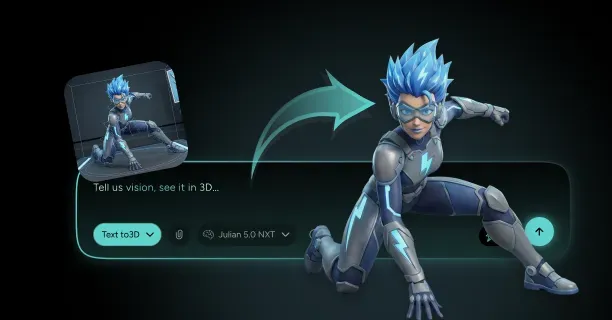
What Inputs Help Generate Cleaner Suit Lines And Emblems For A Comic-Style Superhero 3D Character From An Image?
Inputs that help generate cleaner suit lines and emblems for comic-style superhero 3D characters from images are:
- High-resolution reference artwork (providing detailed visual information)
- Orthographic character views (eliminating spatial ambiguity)
- Vector graphic files for emblems (ensuring infinite scalability)
- AI parameters configured with comic-specific prompts (guiding aesthetic direction toward authentic comic book styling)
These four essential inputs directly control how accurately the image-to-3D conversion process reproduces the sharp, stylized aesthetics that define traditional superhero comic book art in the final digital character model.
High-Resolution Source Images
High-resolution source images (with minimum dimensions of 1024x1024 pixels) prevent compression artifacts from compromising suit line clarity by providing sufficient pixel density for accurate edge detection and geometry generation. Source images with a minimum resolution of 1024x1024 pixels preserve fine costume details that are critical to superhero character authenticity, including:
- Seam lines (structural divisions)
- Panel divisions (costume segmentation)
- Emblem edges (logo boundaries)
This ensures these intentional design elements are accurately captured during 3D conversion. Computer vision algorithms can differentiate these intentional design elements from digital noise at this resolution threshold through edge detection and pattern recognition, preventing jagged geometry and distorted textures in the final 3D character model produced for game developers and animators.
Professional-grade 3D character outcomes require 4K Ultra High Definition images (3840x2160 pixels), which provide four times the pixel data for algorithmic analysis compared to standard Full HD resolution (1920x1080 pixels), enabling superior detail preservation in costume elements.
This high pixel density ensures that even the thinnest suit lines (such as costume piping, stitching details, and panel borders) translate into clean 3D geometry without interpolation errors during the 2D-to-3D mesh conversion process.
3D artists should export their input reference images as Portable Network Graphics (PNG) files with lossless compression to preserve every pixel of detail for optimal AI processing results, ensuring bit-perfect accuracy in the source material. Lossy compression formats like heavily compressed JPEG files (compression ratios above 10:1) introduce visual artifacts, including:
- Blocky patterns (from 8x8 pixel block encoding)
- Color banding (from reduced bit depth)
- Edge distortion (from high-frequency data loss)
These artifacts are incorrectly identified by 3D reconstruction algorithms as intentional costume features, resulting in bumpy, irregular surfaces in the generated character model. The PNG (Portable Network Graphics) format maintains bit-perfect accuracy with zero data loss, ensuring that AI-powered image-to-3D conversion systems receive exactly what the character designer intended as reference material during the processing pipeline.
Orthographic Character Views
Orthographic views provide complete 360-degree spatial coverage without perspective distortion:
- Front perspective (frontal anatomy)
- Side perspective (lateral profile)
- Back perspective (posterior details)
These views, presented in a standardized character turnaround sheet, eliminate self-occlusion issues (where body parts hide costume elements) that compromise single-image conversions by providing complete spatial information (x, y, and z-axis dimensions).
| View Type | Purpose | Benefit |
|---|---|---|
| Front | Frontal anatomy | Primary character details |
| Side | Lateral profile | Dimensional accuracy |
| Back | Posterior details | Complete coverage |
AAA and indie game development studios, along with film and television animation production facilities, adopt three orthographic views as the industry-standard practice to maintain true scale (accurate dimensional sizing) and proportion (correct anatomical relationships) across all spatial dimensions throughout the production pipeline.
Configure the superhero character in a T-pose (arms extended horizontally at 90 degrees from torso) or A-pose (arms angled 45 degrees downward from horizontal) configuration for unobstructed viewing, avoiding situations where costume parts occlude other design elements.
Multi-angle input (front, side, and back orthographic views) decreases algorithmic interpolation of missing spatial data by 70-80% compared to single-view generation approaches.
This ensures that three-dimensional costume elements occupy spatially correct positions in the final character model:
- Capes (requiring accurate drape physics)
- Belts (needing correct circumferential positioning)
- Shoulder pads (demanding volumetric accuracy)
Vector Graphic Files for Emblems
Vector graphic files in SVG (Scalable Vector Graphics) format ensure perfect emblem clarity at any resolution level by defining shapes through mathematical geometric equations (Bézier curves and path definitions) rather than fixed pixel grids used in raster images. This vector-based mathematical representation produces infinitely scalable emblem detail that maintains visual quality at any magnification level without:
- Jagged edges (aliasing artifacts)
- Stair-stepping patterns (pixelation from raster upscaling)
Raster emblems at typical image resolutions (256x256 to 1024x1024 pixels) produce aliasing artifacts when mapped onto 3D character surfaces due to fixed pixel resolution, with particularly severe degradation on curved chest plates or shoulder badges.
Character designers should separate emblems onto alpha channel transparent backgrounds within SVG vector files to simplify automated emblem detection and segmentation during AI processing. Simple, uniform backgrounds reduce digital noise that compromises emblem detection algorithms. 3D artists should use:
- White (RGB: 255, 255, 255)
- Gray (RGB: 128, 128, 128)
- Chroma key green screen (RGB: 0, 177, 64)
Complex backgrounds containing visual patterns or color gradients interfere with computer vision edge detection algorithms, resulting in incorrect classification of background elements as intentional costume features.
AI Model Configuration
Character artists should optimize their machine learning-based image-to-3D conversion pipeline with descriptive text prompts that guide the AI system toward comic-specific aesthetics. Stylistic keywords include:
- “Cel-shaded” (non-photorealistic rendering mimicking animation cels)
- “Clean line art” (bold vector-style outlines)
- “Hard-edged shadows” (sharp luminance transitions without gradients)
- “Flat color blocks” (uniform color fills without gradation)
These keywords direct the AI system toward the established visual conventions of traditional printed comics rather than photorealistic physically-based rendering (PBR) during the 3D generation process.
Threedium (a 3D visualization and augmented reality technology company) has developed Julian NXT technology, a proprietary AI-powered 3D generation platform that incorporates specialized training datasets, enabling the system to recognize and preserve the distinct visual language of the comic book medium:
- Bold outlines (thick vector-style shape boundaries)
- Limited color palettes (typically 3-8 colors per character)
- Graphic simplification (reduced visual detail for stylized clarity)
Text-to-image-to-3D workflows enable character artists and game developers to generate preliminary 2D concept art using detailed text prompts before converting the generated artwork to three-dimensional character models. 3D artists should compose comprehensive multi-attribute text descriptions such as:
“Muscular superhero (athletic body type) with red and blue costume (primary color scheme), large star emblem on chest (central logo element), clean cel-shaded style (non-photorealistic rendering), bold black outlines (thick vector-style borders), minimal shading gradients (limited tonal transitions)”
Retopology for Clean Mesh Topology
Initial AI-sculpted meshes require retopology (mesh reconstruction process) to create production-ready geometry that meets animation and game engine performance requirements. Retopology reconstructs the polygonal mesh structure to create:
- Cleaner topology (organized, quad-based edge flow)
- More efficient geometry (reduced polygon count while maintaining visual fidelity)
3D modelers should execute retopology to align polygon flow with suit panel divisions, ensuring that edge loops encircle emblems and follow directional design lines. This strategic topology alignment facilitates:
- Clean mesh deformation during skeletal animation
- Elimination of texture distortion across costume seams
- Optimal character deformation during animation rigging
Clean UV Layouts
Clean UV layouts enable distortion-free application of high-resolution textures through precise UV coordinate mapping, preserving:
- Emblem sharpness (crisp logo edges and details)
- Suit line crispness (well-defined panel boundaries and seams)
UV unwrapping flattens the character model’s surface into normalized 2D coordinate space (0-1 range on horizontal U and vertical V axes), enabling flat texture image application to complex 3D surfaces without stretching or compression.
Properly organized UV islands allow 3D artists to allocate 4K texture resolution to high-priority areas:
| Priority Level | Areas | Resolution Allocation |
|---|---|---|
| High | Chest emblems, facial features | Maximum 4K detail |
| Medium | Primary costume elements | Standard resolution |
| Low | Back panels, inner surfaces | Lower resolution |
Hybrid Workflow Approaches
3D character artists and game developers achieve optimal production-quality results by implementing a hybrid workflow that combines:
- Automated AI generation (machine learning-based mesh and texture creation)
- Manual artistic refinement (hands-on adjustments using professional 3D software)
This hybrid workflow methodology leverages artificial intelligence’s computational speed while maintaining the character artist’s creative control over final aesthetic quality.
In the post-processing stage, 3D artists should utilize the AI-generated mesh as a foundational starting point, then enhance suit line precision using professional 3D software:
- Blender (open-source modeling and animation suite)
- ZBrush (digital sculpting software by Maxon/Pixologic)
- TopoGun (specialized retopology application)
Artist-directed manual cleanup and refinement of AI-generated base meshes typically requires 30-40% less production time compared to traditional complete manual character modeling from scratch.
3D production teams should cycle between AI generation phases and manual refinement stages, systematically testing different input configurations to identify optimal combinations. This iterative hybrid process decreases total production time investment by 50-60% while ensuring precise suit lines and emblem clarity that match professional comic book quality standards.
Cel Shading Configuration
Cel shading finalizes the visual comic book transformation by applying through specialized shader algorithms:
- Flat color areas (uniform fills without gradation)
- Hard-edged shadows (sharp luminance transitions at defined thresholds)
- Distinct outlines (bold vector-style borders)
3D artists should adjust material shader parameters to replicate the limited color palette and high-contrast appearance characteristic of traditional printed comic books, implementing color quantization that produces typically 3-5 discrete color values per surface:
- Base color
- Shadow tone
- Highlight
- Optional mid-tones
Integrate clean optimized input geometry with cel-shaded non-photorealistic rendering to create 3D superhero characters that authentically reproduce the graphic essence of traditional comic book art while retaining complete dimensional flexibility essential for modern digital media platforms.
With the Threedium platform, game developers, animators, and comic creators leverage an integrated end-to-end pipeline that manages the complete transformation workflow from source reference images through AI-powered 3D generation to final comic-ready character models. Creative professionals input multiple asset types through a streamlined user-friendly interface:
- High-resolution reference images (1024x1024 minimum, 4K recommended)
- Vector graphic emblems in SVG format (providing scalable logo artwork)
- Comic-specific generation parameters (cel-shading intensity, outline thickness, color quantization levels)
The Threedium AI-powered 3D character generation platform analyzes and integrates multiple input types simultaneously through parallel multi-modal machine learning algorithms, combining diverse data sources into unified, production-ready polygonal meshes with consistent topology specifically optimized for cartoon animation workflows and comic book production pipelines.
How Do You Preserve Comic-Style Proportions And Suit Details When Converting An Image To 3D?
To preserve comic-style proportions and suit details when converting an image to 3D, systematically analyze and translate exaggerated anatomical features from 2D reference artwork, construct orthographic projection views that maintain the iconic character silhouette, and engineer three-dimensional mesh geometry structures that compensate for the forced perspective depth illusion loss inherent in flat comic book illustrations. This systematic approach ensures that the dramatic visual impact and stylized proportions characteristic of comic book art are maintained in the three-dimensional space.
Comic book art employs and showcases exaggerated anatomical proportions that depend fundamentally upon artistic perspective techniques like foreshortening: a method creating the visual illusion of an object projecting forward or receding into spatial depth, which functions effectively in two-dimensional 2D illustrations viewed from a single angle but creates significant technical obstacles when 3D modelers convert and adapt those stylized proportions into volumetric three-dimensional 3D space requiring multi-angle viewing consistency.
The primary conversion challenge originates from how two-dimensional 2D comic illustrations strategically employ forced perspective distortion and foreshortening techniques to generate and maximize dramatic visual impact within a single fixed viewing angle, while three-dimensional 3D character models require and demand proportional consistency and accurate size relationships across all 360-degree viewing angles and camera perspectives.
Examine a classic superhero comic panel from traditional publications like Marvel Comics or DC Comics: the superhero character’s massive exaggerated shoulder width, dramatically narrow waist dimension, and powerful heroic stance appear visually optimal and aesthetically balanced from the comic book artist’s deliberately chosen camera angle and compositional viewpoint, but the forced perspective depth illusion presents significant technical challenges to accurately reproduce and maintain in three-dimensional 3D modeling space where end-users and viewers can freely rotate the character model through 360 degrees of camera perspectives.
3D modelers and digital artists must systematically analyze and translate the comic artist’s stylistic design decisions regarding proportions and anatomy, then construct precise three-dimensional polygon mesh structures that preserve and reinforce the superhero character’s iconic silhouette profile and retain visual impact and dramatic presence in the 3D modeling environment, even when the character model is viewed from camera angles and perspectives the original 2D comic book artist never intended or considered during the initial flat illustration creation.
Anatomical Landmark Identification
Translating two-dimensional 2D comic book stylization into three-dimensional 3D models requires and necessitates comprehensive knowledge of and expertise in foundational human anatomy, including skeletal structure and muscle group organization, even when 3D artists are creating highly stylized superhero characters from publishers like Marvel Comics and DC Comics with proportions exaggerated beyond realistic human anatomical measurements.
3D modelers and digital character artists initiate the modeling process by systematically locating and mapping anatomical landmarks: specific key reference points on the human skeletal bone structure and muscle group attachment locations such as:
- The acromion process
- Iliac crest
- Greater trochanter
These landmarks guarantee and maintain structural integrity and believable proportional relationships between body parts within the source 2D comic artwork reference images and anatomical diagram guides.
The iconic V-taper torso silhouette, defined by and featuring wide exaggerated upper back and shoulder dimensions that taper dramatically and converge to a narrow compressed waist measurement creating a triangular body profile, exemplifies and embodies a common recurring stylistic convention and visual trope in superhero comic book art from publishers like Marvel Comics and DC Comics that 3D modelers and digital artists must precisely calculate and proportion using accurate shoulder-to-waist dimensional ratios when translating into three-dimensional 3D mesh geometry.
3D modelers and digital artists define and document these proportional measurements by generating and calibrating orthographic projection views:
- Front elevation projection showing the anterior character view
- Side profile projection displaying the lateral character view
- Top plan projection presenting the superior character view
All use parallel projection technique without perspective distortion that function as and provide the proportional baseline and modeling foundation for constructing the three-dimensional polygon mesh, ensuring that exaggerated anatomical features preserve and retain their comic-book aesthetic quality and stylized feel without degrading into anatomical impossibility or structurally implausible configurations when the character model rotates through different viewing angles.
3D modelers and digital character artists must systematically analyze and reconcile multiple, often contradictory and inconsistent, two-dimensional 2D reference panels and comic book frames when utilizing and referencing comic book source material from publishers like Marvel Comics and DC Comics, since different comic book illustrators and artists, separate published comic book issues across the publication timeline, and even different sequential panels within the same single comic book page may depict and present varying and inconsistent anatomical proportions and size measurements for the same fictional superhero character.
3D modelers and digital artists reconcile and systematically address these proportional discrepancies and inconsistencies by analyzing and isolating the core visual identity elements and fundamental design features that persist consistently and remain stable across different artistic interpretations:
- The dimensional width of the shoulders measured relative to the head size establishing the shoulder-to-head proportional ratio
- The vertical length of the torso compared against the leg length defining the body proportion relationships
- The thickness measurement of the neck contributing to the character silhouette
They develop and implement a unified mathematical proportional system that preserves and respects the superhero character’s core visual identity and essential design qualities.
Exaggerated Torso Construction
The dimensional translation challenge and conversion difficulty between two-dimensional 2D comic book reference illustrations and three-dimensional 3D volumetric mesh form manifests most prominently and is most visibly evident in the chest pectoral region, shoulder deltoid and trapezius areas, and pelvis hip zones where superhero character designs from publishers like Marvel Comics and DC Comics exhibit and showcase the most dramatic proportional stylization and extreme anatomical exaggeration beyond realistic human body measurements for maximum visual impact.
3D modelers and digital artists construct and model:
- The ribcage thoracic cage structure significantly broader and wider than realistic human anatomical proportions and measurements
- Lengthened and expanded clavicle collarbone dimensions beyond normal anatomical parameters to create and establish that signature wide-shouldered heroic stance characteristic of superhero character design conventions
- Narrowed and reduced waist circumference dimension dramatically to create and establish the V-taper triangular torso silhouette that characterizes and establishes the iconic recognizable superhero body profile shape
When translating and adapting superhero costume suit details like chest symbolic emblems and logos (such as Superman’s S-shield or Batman’s bat symbol), belt buckle fastening devices, and armor plating hard-surface components from two-dimensional 2D comic book reference artwork to three-dimensional 3D models, 3D modelers and digital artists must calculate and compensate for how these costume design elements conform to and follow the contours of the exaggerated stylized musculature and body topology.
A flat graphic emblem design in the 2D reference illustration must be geometrically projected and conformed to curve convincingly across the extremely broad convex barrel chest surface topology in 3D space while preserving and retaining its graphic visual clarity, symbolic distinctness, and recognizable iconic shape when viewed from the primary camera viewing angles including front elevation and three-quarter perspective views.
Proportional drift constitutes and exemplifies one of the most significant technical challenges and major obstacles for 3D modelers and digital artists in superhero character creation and development for video games, animated films, and interactive visualization applications. This technical phenomenon occurs where a three-dimensional 3D character model’s stylized exaggerated proportions display accurate and aesthetically appropriate measurements when viewed from a primary optimized camera angle matching the 2D comic book reference but exhibit visual distortion and proportion degradation or forfeit the intended comic-book aesthetic quality and stylistic feel when the model is viewed from alternative camera angles and non-primary viewing perspectives.
3D modelers and digital artists can address and mitigate this proportional drift challenge by implementing and utilizing a 2.5D hybrid interpretation approach and modeling strategy, where the artist optimizes and calibrates the character model to ensure it appears visually optimal and aesthetically ideal from a few key ‘hero’ primary camera angles and presentation perspectives:
- Three-quarter view positioned at approximately 45 degrees showing three sides of the character
- Straight-on frontal elevation view directly facing the subject at 0 degrees
This approach acknowledges and accommodates the fact that some visual compromises and proportion adjustments must be made and accepted for less common viewing angles and rarely-used camera perspectives like directly overhead top-down bird’s-eye views or directly below bottom-up worm’s-eye perspectives.
Threedium’s artificial intelligence AI system processes and evaluates using computer vision algorithms the user-provided uploaded reference image of 2D comic book artwork to detect and determine these optimal hero camera angles and primary presentation perspectives, then constructs and generates optimized three-dimensional polygon mesh geometry that preserves and ensures visual fidelity and appearance accuracy specifically from those identified hero viewpoints and camera positions.
Hard-Surface Costume Elements
Superhero costume suit details and design elements demand specialized modeling consideration and technical focus because comic book artists and illustrators from publishers like Marvel Comics and DC Comics often illustrate and render costume components with graphic visual clarity and bold readability that contradicts and violates realistic fabric physics and textile behavior:
- Costume seams follow and trace perfectly straight geometric lines regardless of underlying body curvature and anatomical surface topology
- Chest emblems and symbolic logos preserve and retain perfect bilateral symmetry despite being stretched and deformed across dynamic action poses and body movements
- Decorative costume panel lines establish and produce bold visual separation and graphic contrast between costume sections that would not occur or manifest on actual physical fabric materials with natural draping and folding properties
3D modelers and digital artists maintain and reproduce these superhero costume details including seams, emblems, and panel lines by constructing them as separate and discrete geometric polygon mesh elements with actual three-dimensional depth and topology rather than depending exclusively upon flat two-dimensional texture map representations like normal maps or diffuse textures, ensuring that costume features possess genuine dimensional presence that catches and reflects light realistically to create authentic shadow definition and visual depth in the 3D character model.
| Costume Component Type | Modeling Approach | Technical Considerations |
|---|---|---|
| Hard-surface rigid costume pieces | Separate independent polygon mesh components | Crisp well-defined edge loops and polygon flows that define form boundaries |
| Armored shoulder pad protective elements | Individual mesh topology with dramatic light reflection | Strong specular highlights preserving bold linework aesthetic |
| Metallic belt buckle fastening hardware | Separate geometry with controlled reflectivity | Visual separation characteristic of comic book illustration inking style |
| Boot top footwear armor sections | Independent components with distinct topology | Bold visual contrast and strong edge definition |
| Fabric costume elements | Carefully planned mesh topology and polygon edge arrangements | Enable stylized exaggerated wrinkle patterns and fold formations |
| Cape flowing cloth components | Directional polygon edge flow patterns | Highlight underlying musculature instead of realistic fabric draping |
| Body suit form-fitting garment sections | Strategic mesh construction | Accommodate tension line stress indicators characteristic of superhero costume design |
The character skeletal rig system performs a critical function and serves an essential purpose in maintaining and ensuring the consistency of comic-style exaggerated proportions and stylized size relationships throughout the processes of character animation using keyframe or motion capture techniques and static character posing for promotional renders and illustration purposes in superhero 3D character models.
3D riggers and technical artists calibrate and adjust skeletal bone length dimensional parameters and set joint rotation angular movement limits to enable and accommodate the exaggerated range of motion capabilities beyond realistic human anatomical constraints that superhero characters from publishers like Marvel Comics and DC Comics demonstrate and exhibit in comic book action panels:
- Shoulder joint systems that retract and extend dramatically to achieve heroic chest-forward confident poses with prominent pectoral display
- Spine vertebral bone chains that curve and flex into dynamic dramatic action arches characteristic of comic book action sequences
- Hip joint pivot points that rotate and pivot to generate powerful rotational spinning punch strike movements in combat scenarios
The character skeletal rig system must actively block and counteract the polygon mesh from undergoing deformation that compromises or undermines the comic-book stylization and exaggerated aesthetic, employing and implementing custom specialized deformation constraints and rigging controls:
- Volume preservation systems
- Tension map limiters
- Corrective blend shape activators
These preserve and sustain muscle group volume consistency and dimensional bulk during pose changes and animation, while blocking mesh degradation and collapse into anatomically accurate but aesthetically insufficient and visually weak shape configurations that lack the dramatic visual impact and bold muscle definition characteristic of superhero comic book art.
When elevating or lifting the superhero character’s arm during animation testing or pose creation, performing shoulder abduction by raising the limb away from the body, the shoulder deltoid muscle groups and latissimus dorsi back muscles must preserve and retain their exaggerated comic-book volumetric bulk and dimensional mass rather than elongating and losing volume by stretching thin and becoming flat as muscle tissue deformation occurs with anatomically accurate realistically proportioned 3D character figures following natural human muscle behavior.
Material Definition and Color Blocking
Color blocking graphic design strategy and material surface property definition on superhero character suits from publishers like Marvel Comics and DC Comics require conversion and adaptation from the flat two-dimensional graphic illustration design of comic book artwork into three-dimensional physically-based rendering PBR shader materials and surface definitions that preserve and ensure visual clarity, color distinction, and design readability across diverse illumination scenarios and lighting setups including:
- Studio three-point lighting
- Outdoor daylight environments
- Dramatic spotlight compositions in 3D rendering engines like Unreal Engine, Unity, or Arnold
3D texture artists and material specialists establish and create sharp distinct color transitions and boundaries between separate superhero suit costume elements, such as the red torso upper body section contrasting with blue leg lower body sections on classic superhero costume designs like Superman’s iconic outfit or Spider-Man’s traditional suit from Marvel Comics.
They employ and implement strategic UV layout unwrapping techniques and texture coordinate mapping strategies that:
- Eliminate and avoid color bleeding texture artifacts and contamination at seam boundaries
- Preserve and ensure crisp well-defined color separation edges even when the 3D character model is viewed from oblique acute or obtuse camera angles and non-perpendicular viewing perspectives in real-time rendering engines or offline renderers
Metallic costume elements and components including belt buckle fastening hardware, armor trim decorative metal edging, and chest emblem symbolic badges (such as Superman’s S-shield or Batman’s bat symbol) are assigned and configured with physically-based rendering PBR material shaders following real-world physical light interaction properties that are tuned and adjusted to capture and reflect light with the dramatic intense specular reflection highlights that comic book artists and illustrators employ to represent and communicate metallic surface properties in traditional comic book illustration.
Fabric cloth areas of body suits and capes employ restrained and subtle normal map surface detail techniques to imply and convey fabric weave thread pattern texture without adding excessive visual noise while preserving and maintaining the bold graphic clarity and clean visual simplicity aesthetic characteristic of superhero costume design conventions in comic book art.
Muscle definition visual clarity and anatomical group separation constitutes an additional conversion obstacle and technical challenge in two-dimensional 2D to three-dimensional 3D character translation, since comic book artists and illustrators from publishers like Marvel Comics and DC Comics depict and illustrate musculature anatomical forms using graphic illustration techniques including:
- Bold high-contrast shadow shapes defining muscle group valleys and recesses
- Dramatic highlight patterns indicating muscle peaks and raised surfaces
These communicate three-dimensional volumetric structure through strong graphic visual contrast and tonal separation instead of and in preference to the subtle smooth tonal gradation and gradual value transitions characteristic of photorealistic rendering and natural lighting observation.
You sculpt muscle groups with slightly exaggerated separation: deeper valleys between the pectorals, more pronounced ridges along the rectus abdominis, sharper definition in the deltoid-bicep transition, so that standard three-point lighting setups produce shadow patterns reminiscent of comic book inking. The topology follows the major muscle groups with edge loops that define form boundaries, ensuring that even flat lighting conditions maintain readable muscle definition through the silhouette and mesh flow rather than relying entirely on normal maps or ambient occlusion.
Facial Structure and Expression
Facial proportions in superhero characters often feature strong jawlines, prominent brow ridges, and idealized symmetry that you must preserve when converting from 2D reference where artists draw these features with varying degrees of exaggeration depending on the panel’s dramatic needs. You establish a neutral expression base mesh that captures the character’s heroic facial structure, then build blend shapes for expressions that maintain the bold, readable emotion communication style of comics rather than subtle realistic facial movement.
A determined expression features: - A dramatically furrowed brow
- Set jaw with clear shadow shapes
While a smile shows: - Confident teeth exposure - Pronounced cheek raises that read clearly even in distant shots
Suit emblems and chest symbols require special geometric treatment to maintain their graphic impact in 3D space. You model these elements with slight raised geometry that creates a natural shadow edge around the symbol, reinforcing its silhouette without requiring dramatic lighting to make it visible. The emblem surface receives materials with controlled reflectivity: enough to suggest the specialized fabric or metal material but not so much that specular highlights obscure the symbol’s shape.
When the character moves and the torso flexes, you rig the emblem geometry to deform slightly with the underlying chest muscles, maintaining believable surface contact while preserving the symbol’s readable shape through deformation constraints that prevent extreme stretching or compression.
Cape Physics and Cloth Simulation
Cape and cloth simulation for superhero costumes must balance dynamic movement with the iconic silhouette shapes that capes form in classic comic panels. You configure cloth physics with stiffness values higher than realistic fabric, allowing the cape to hold dramatic shapes:
- Sweeping curves
- Bold triangular silhouettes
- Dynamic swirls
Rather than crumpling into the chaotic folds of real heavy fabric. The cape’s resting position gets carefully art-directed to frame the character’s silhouette from the primary viewing angles, with the shoulder attachment points positioned to create that signature superhero cape drape that flows from broad shoulders down to a dramatic point or sweeping hem.
Threedium’s platform addresses these preservation challenges by analyzing the input reference image to identify the core proportional relationships and stylistic features that define the character’s comic-book aesthetic, then constructing 3D geometry that maintains these relationships across multiple viewing angles. Our AI distinguishes between artistic perspective distortion that should not be translated literally into 3D form and intentional stylistic proportions that must be preserved, creating models that look authentically comic-styled rather than awkwardly distorted.
The system generates topology that supports both the exaggerated static proportions and the dynamic deformation needed for heroic poses, ensuring your superhero 3D character maintains its visual power whether standing in a neutral pose or lunging into action. For projects requiring additional refinement, you can apply advanced topology cleanup to optimize edge flow and material texture adjustments to perfect the comic-style surface appearance.