How Do You Create A 3D Avatar From Images For Streaming, VR Social, Or Web Experiences?
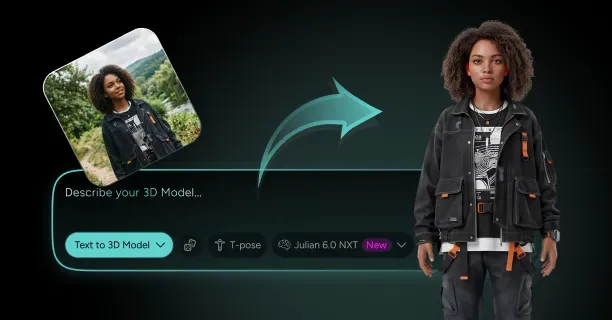
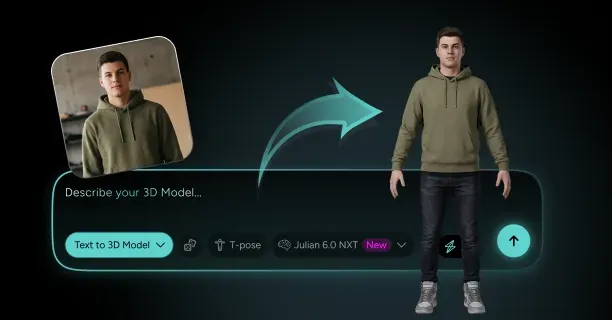
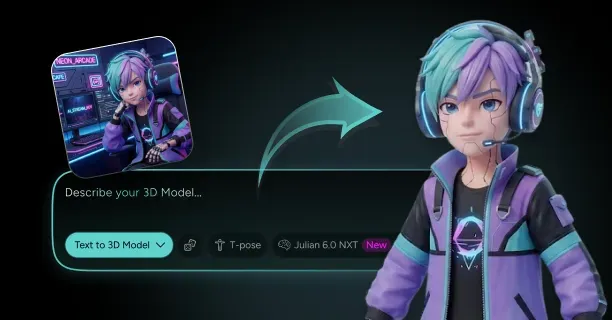
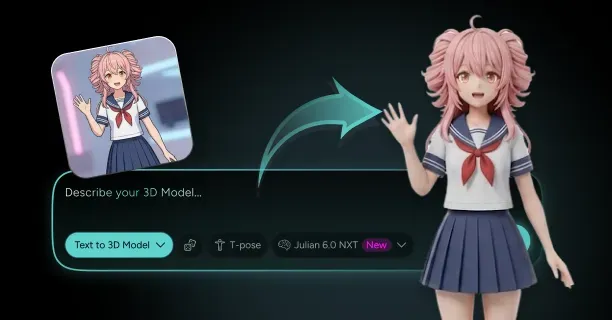
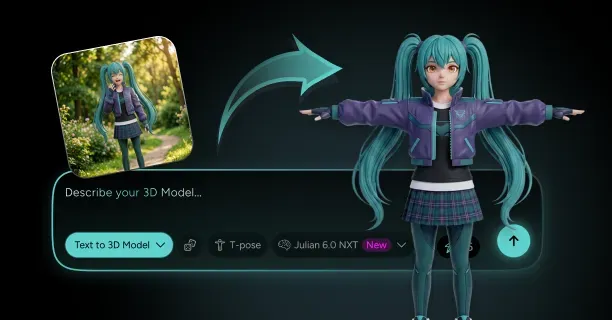
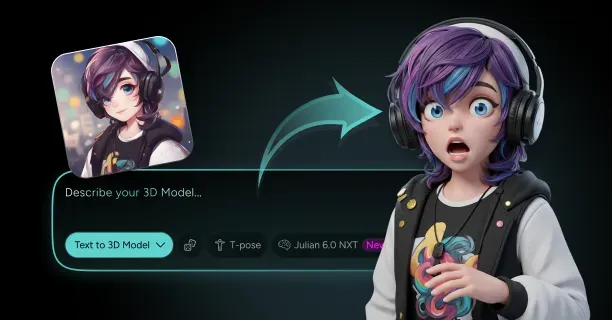
To create a 3D avatar from images for streaming, VR social, or web experiences, you provide high-resolution reference photographs to AI-driven reconstruction systems, execute computational processing to generate polygonal mesh geometry, transfer and align photographic textures to corresponding mesh regions, and configure skeletal frameworks for real-time animation across target platforms.
This service page documents the technical methodology for converting 2D photo data into dynamic 3D representations optimized for platform deployment in streaming software, VR social environments, and web-based experiences.
Upload High-Resolution Reference Images
You initiate the avatar creation workflow by submitting well-lit, high-resolution photographs that document visual data of facial features, body proportions, and distinctive characteristics you designate for geometric preservation in your avatar.
Key Requirements:
- Proper lighting eliminates problematic shadows that interfere with computational accuracy of AI depth perception
- Resolution above 1920×1080 pixels ensures that the reconstruction algorithm preserves geometric detail of fine details like:
- Skin texture
- Facial wrinkles
- Clothing folds
Multi-view photography enhances spatial accuracy through photogrammetry by capturing:
- Front angles
- Side angles
- Three-quarter angles
This enables the photogrammetry system to compute through triangulation precise surface positions by identifying and correlating corresponding points across images.
Single-image reconstruction remains functionally viable when multiple views cannot be obtained. AI models undergo supervised learning using face datasets comprising annotated examples of thousands of human faces to infer probable geometry for missing regions leveraging encoded learned statistical priors about facial anatomy.
AI-Driven Reconstruction Converts Photos to Geometry
Our AI processes uploaded photographs through computational analysis deploying specialized neural network architectures that derive spatial depth information from 2D pixel data.
| Technology | Function | Benefits |
|---|---|---|
| Convolutional Neural Networks | Detect and localize facial landmarks | Establish geometric correspondences between image features and 3D coordinate positions |
| Generative Adversarial Networks (GANs) | Iteratively improve geometric quality | Progressive enhancement of geometric accuracy and visual fidelity |
| Diffusion Models | Iteratively denoise random 3D structures | Alternative generative approach for coherent avatar geometry |
| Neural Radiance Fields (NeRF) | Model 3D avatars as continuous volumetric functions | Photorealistic lighting effects and view-dependent reflections |
GANs iteratively improve geometric quality of avatar geometry through adversarial training, where:
- A generator network synthesizes candidate 3D mesh candidates
- A discriminator network assesses photorealistic quality by comparison with training data distributions
This competitive process progressively enhances geometric accuracy, generating output avatars that preserve biological anatomical believability while achieving visual fidelity to your source photographs.
3D Morphable Models Fit Statistical Templates
3D Morphable Models (3DMM) adaptively modify geometry of parametric face templates to align with detected landmarks in your photographs. These statistical models decompose into:
- Identity parameters: unique bone structure, facial proportions
- Expression parameters: dynamic muscle deformations for smiles, frowns, and other emotional states
The 3DMM fitting process:
- Iteratively optimizes shape coefficients
- Reduces geometric error between projected template vertices and detected 2D landmarks
- Yields biologically plausible anatomically valid results
The statistical model constrains geometric modifications within variations observed in human face databases, preventing unnatural distortions that happen with unconstrained mesh warping.
Mesh Generation and Texture Mapping
The reconstruction pipeline extracts discrete points from the continuous 3D representation, tessellating into triangular faces that represent geometric form of your avatar’s shape with discrete polygons.
Mesh topology conforms to industry-standard humanoid structures:
- Head
- Torso
- Limbs
This ensures compatibility so that your avatar integrates seamlessly with animation rigs used in:
Texture mapping transfers photographic color information from your source photographs to corresponding regions of the generated mesh surface. UV unwrapping parameterizes 3D geometry into 2D texture coordinates, enabling pixel colors to transfer from images to corresponding mesh regions.
This process reproduces:
- Photorealistic skin tones
- Eye colors
- Hair textures
Normal maps encode fine surface details like pores and wrinkles as RGB values, adding perceived geometric complexity without increasing polygon count, which is critically important for real-time rendering in VR social platforms where frame rate performance directly impacts user comfort.
Rigging Enables Real-Time Animation
Skeletal rigging establishes structural framework of joint hierarchies and deformation weights that control how your avatar mesh bends during animation.
We construct hierarchical bone chains for:
- Spine
- Arms
- Legs
- Facial regions
Computing and assigning vertex weights that determine each polygon’s response to joint rotations. This rigging structure enables real-time motion capture integration for:
- VTuber streaming: facial tracking software drives avatar expressions
- VRChat: sensor data animates your avatar’s movements
Blend shapes provide an alternative animation method for facial expressions, storing pre-sculpted mesh deformations for specific emotions. A streaming application interpolates between neutral and smile blend shapes based on facial recognition input, creating smooth expression transitions without skeletal joint rotations.
Platform-Specific Optimization
VTuber Streaming Avatars
Requirements:
- Low polygon counts: typically 10,000 to 30,000 triangles
- Maintain 60 frames per second during live broadcasts
- CPU resources handle video encoding
Optimization strategies:
- Reduce mesh density in non-visible regions like the avatar’s back
- Concentrate polygons on the face where expression detail matters most
- Texture resolution: 2048×2048 pixel diffuse maps for 1080p streaming output
VRChat Avatars
VRChat avatars must follow performance ranking systems that limit:
- Polygon counts
- Material slots
- Bone counts
We optimize your avatar to meet “Good” or “Excellent” performance ratings by:
- Merging materials
- Removing hidden geometry
- Simplifying mesh topology while preserving visual appearance
Threedium’s workflow automatically adjusts avatar complexity based on your target platform, generating VRChat-compatible FBX exports with appropriate component configurations.
Metaverse-Ready Avatars
Metaverse-ready avatars for web experiences focus on file size reduction for fast loading over network connections.
Advanced optimizations:
- Texture compression: basis universal formats reduce download size by 75% compared to uncompressed PNG textures
- Level-of-detail (LOD) systems: dynamically swap high-polygon meshes for simplified versions as viewing distance increases
These optimizations enable your avatar to load within three seconds on standard broadband connections, meeting user experience benchmarks for web-based virtual environments.
Advanced Reconstruction Technologies
PIFuHD Technology
PIFuHD (Pixel-Aligned Implicit Function in High Definition) reconstructs full-body avatars from single photographs by predicting implicit surface functions aligned to image pixels.
Capabilities:
- Preserves clothing details, accessories, and hairstyles
- Synthesizes complete 3D representations without requiring separate garment modeling
- Maintains geometric consistency between visible and inferred regions
- Produces avatars suitable for 360-degree viewing in VR social contexts
NVIDIA Get3D
NVIDIA Get3D generates diverse avatar variations through adversarial training on 3D shape datasets.
Process:
- You provide style parameters: age range, body type, facial features
- Get3D creates multiple avatar candidates matching your specifications
- Maintains consistent mesh topology across variations
- Ensures rigging and animation systems transfer between different avatar designs
Threedium Integration
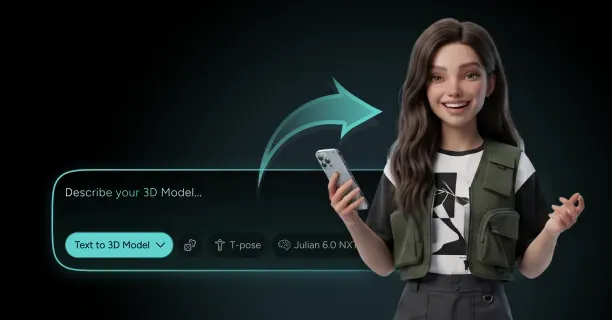
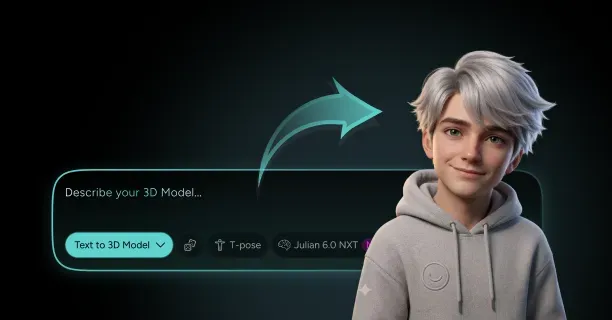
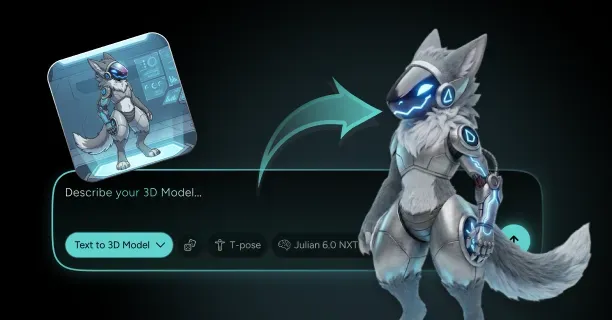
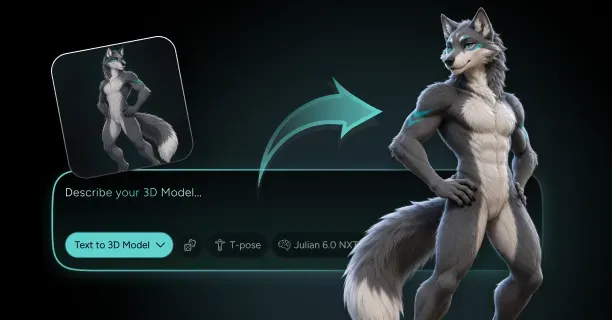
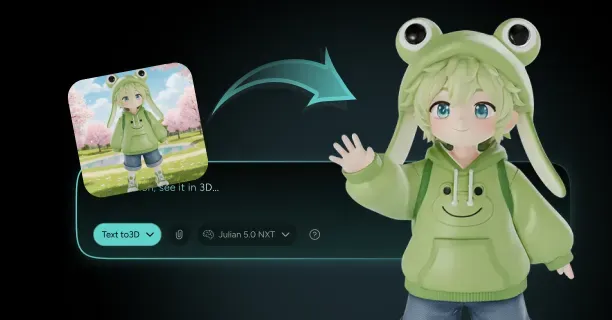
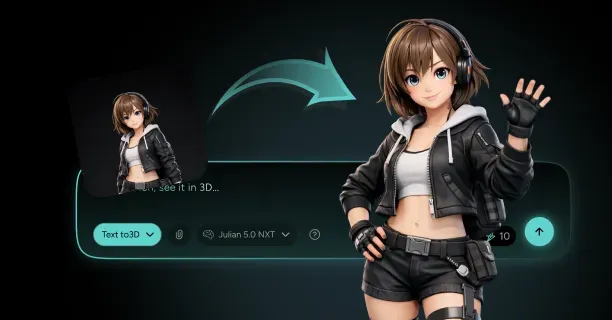
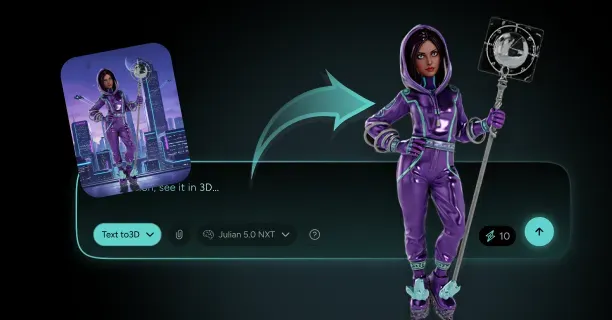
Threedium integrates these reconstruction methods into a unified workflow where you:
- Upload images
- Configure avatar parameters for your target platform: - VTuber streaming - VRChat social - Metaverse applications
- Receive production-ready 3D models with automatic rigging, optimized textures, and platform-specific export formats
Our proprietary Julian NXT technology dramatically speeds up reconstruction processing, reducing avatar generation time from hours to minutes while maintaining geometric accuracy and texture fidelity needed for professional deployment.
Which Avatar Type Do You Need: VTuber, VRChat, Or Metaverse-Ready?
Which avatar type you need depends on your primary use case: VTuber avatars specialize in real-time facial expression tracking optimized for live streaming platforms, VRChat avatars excel at social interaction with platform-specific interactive features, and metaverse-ready avatars require cross-platform compatibility utilizing standardized 3D formats. Each avatar type requires distinct technical specifications, specialized rigging methods, and platform-specific export formats that align with the user’s intended application and target platform requirements.
VTuber Avatars
VTuber avatars optimize for real-time facial expression tracking to deliver high-fidelity emotional representation during live broadcasts. Content creators should develop a VTuber avatar when planning to broadcast live streams, enabling viewers to engage with the creator’s digital character in real-time on streaming platforms including:
- YouTube
- Twitch
- Bilibili
A high-quality VTuber avatar requires an extensive blendshape library:
ARKit facial tracking technology utilizes 52 specific blendshapes as standardized by Apple Developer Documentation on ARKit Face Tracking (2023), enabling the avatar to render detailed facial expressions including jaw movement, cheek puffing, tongue protrusion, and eyebrow articulation.
This extensive blendshape library enables the avatar to accurately replicate subtle facial movements captured by:
- iPhone TrueDepth camera facial tracking technology
- Webcam-based solutions such as iFacialMocap
VTuber avatars utilize VRM (Virtual Reality Model) as the industry-standard file format, which encapsulates:
- 3D model geometry data
- Texture maps
- Humanoid skeletal bone definitions
The VRM format maintains compatibility with multiple VTubing applications:
| Application | Features |
|---|---|
| VSeeFace | Webcam and iPhone tracking via VMC Protocol |
| Luppet | Real-time motion capture |
| VTube Studio | Professional streaming features |
| VMagicMirror | Desktop interaction |
Performance optimization is critical for VTuber avatar creation, as the avatar model must sustain 30-60 FPS consistently during live streaming sessions. Achieve the 30-60 FPS performance target by:
- Limiting polygon count to 15,000-30,000 triangles for the body mesh
- Constraining facial geometry to 8,000-12,000 triangles
- Limiting texture resolution to 2048x2048 pixels or lower
Avatar creators should configure spring bone physics systems for:
- Hair
- Clothing
- Accessories
Spring bones generate secondary motion that enhances visual realism, causing hair to sway dynamically in response to the avatar’s head rotation and clothing to flutter naturally with body movement.
VRChat Avatars
VRChat avatars are specifically optimized for social interaction and platform-specific features, designed to facilitate real-time user engagement in multiplayer virtual reality environments. VRChat imposes strict performance rankings that directly affect which worlds you can access:
| Performance Tier | Requirements |
|---|---|
| Excellent | <7,500 triangles, <1 material, <75 bones |
| Good | <20,000 triangles, <4 materials, <150 bones |
| Medium | <32,000 triangles, <8 materials, <256 bones |
| Poor | <70,000 triangles, <16 materials, <400 bones |
| Very Poor | Above Poor limits |
VRChat avatars require Unity Engine integration, as the platform exclusively accepts avatar uploads through the VRChat SDK. Export requirements include:
- FBX file with properly configured humanoid rig
- Unity 2019.4.31f1 or Unity 2022.3.6f1 compatibility
- VRChat Avatar Descriptor component configuration
Facial animation for VRChat relies on viseme blendshapes (15 mouth shapes corresponding to phonetic sounds):
- aa, ch, dd, ee, ff
- ih, kk, nn, oh, ou
- pp, rr, sil, ss, th
VRChat avatar customization extends beyond basic appearance to include:
- Particle effects
- Audio sources
- Animated toggles controlled through expression menus
- Physics simulation through PhysBones components
Balance physics complexity against performance impact, as excessive collider counts (keep below 32 colliders total) or chain lengths (limit to 16 transforms per chain) significantly reduce frame rates in populated instances.
Metaverse-Ready Avatars
Metaverse-ready avatars require cross-platform compatibility with standardized formats that function across multiple virtual environments:
- Spatial
- Mozilla Hubs
- Decentraland
- The Sandbox
- Somnium Space
- Proprietary corporate metaverse environments
GLB (GL Transmission Format Binary) emerges as the most widely adopted format for metaverse avatars, offering:
- Compact file sizes (typically 2-10 MB)
- Embedded textures
- PBR (Physically-Based Rendering) material support
Export metaverse-ready avatars with:
- Standardized humanoid skeletal structures
- Texture resolution capped at 1024x1024 or 2048x2048 pixels
- Polygon counts under 20,000 triangles
- PBR workflows using base color, metallic, roughness, normal, and occlusion texture maps
Interoperability standards like Ready Player Me provide avatar systems that work across 8,000+ partner applications as of 2024. Ready Player Me avatars use:
- Standardized half-body mesh
- Consistent UV mapping (512x512 base texture)
- Bone structure (65 bones for full-body rigs)
Animation support for metaverse avatars typically includes:
Basic locomotion: - Idle - Walk
- Run
Social gestures: - Wave - Clap - Dance - Point
Facial expressions: - Happy - Sad - Surprised - Angry - Neutral
Technical Specification Comparison
Technical specifications diverge significantly across avatar types, requiring you to understand these distinctions before initiating your image-to-3D conversion workflow:
| Avatar Type | File Format | Polygon Count | Key Features |
|---|---|---|---|
| VTuber | VRM | 15,000-30,000 | 52 ARKit blendshapes, spring bones |
| VRChat | FBX (Unity) | <32,000 | 15 visemes, PhysBones, social features |
| Metaverse | GLB | <20,000 | PBR materials, cross-platform compatibility |
Determine your avatar type based on primary use case:
- Choose VTuber avatars for streaming and content creation requiring high-fidelity facial tracking
- Choose VRChat for social VR experiences with platform-specific interactive features
- Choose metaverse-ready for multi-platform presence across web-based virtual environments
Each avatar type requires distinct export formats (VRM vs FBX vs GLB), rigging specifications (ARKit blendshapes vs visemes vs simplified expressions), and performance targets (streaming FPS vs VR frame rates vs web loading times) that fundamentally shape your image-to-3D conversion workflow and post-processing requirements.