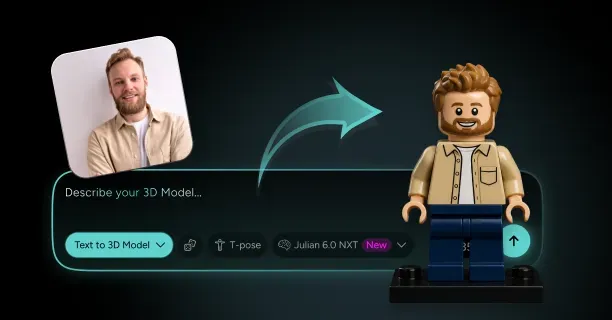
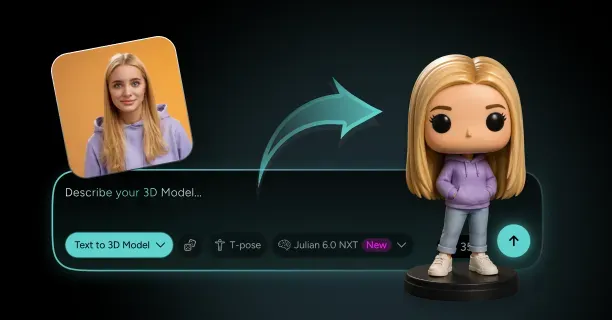
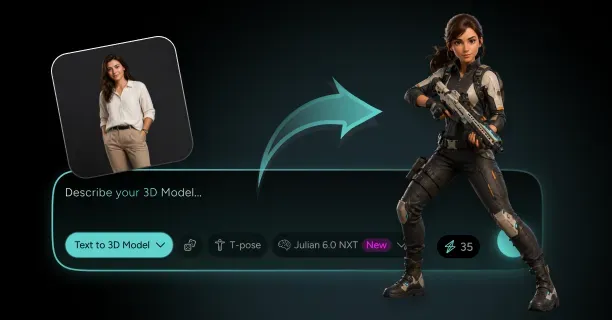
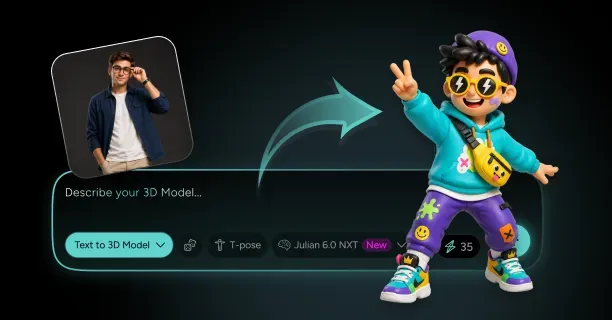
How Do You Turn Yourself Into a Custom 3D Toy From a Photo?
To turn yourself into a custom 3D toy from a photo, you upload high-resolution reference images to Threedium's reconstruction platform, where AI-powered algorithms computationally parse and measure facial geometry and body proportions to generate a base 3D mesh that digital sculptors manually sculpt and optimize into a stylized collectible figure ready for full-color printing and post-processing. This photo-to-3D-toy workflow transforms selfies into physical miniatures through systematic digital sculpting, approval iterations, and fabrication steps that deliver personalized figurines within 2-4 weeks.
Reference Photo Requirements
You submit reference photos documenting your face and body from multiple perspectives: frontal, profile, and three-quarter angles to provide complete geometric data to the reconstruction system. Digital sculpting is initiated through automated detection where computer vision algorithms identify and localize facial landmarks: eyes, nose, mouth, jawline and spatially register them to a parametric head model, computing and preserving proportional relationships between features that define your unique appearance.
Submit photographic images with resolution exceeding 1920×1080 pixels so mesh reconstruction accurately digitizes and preserves fine details like:
- Eyebrow shape
- Ear contours
- Hairline definition
These details differentiate and personalize your toy from generic templates.
Maintain uniform lighting consistent across submitted images to avoid generation of shadow artifacts that compromise and invalidate depth perception during 3D model approval
Photograph yourself under diffuse natural light or evenly distributed studio lighting that prevents formation of harsh shadows under the chin or eye sockets. The platform computationally processes and evaluates pixel intensity gradients to mathematically derive and calculate surface normals: mathematical vectors perpendicular to each point on your face, which the reconstruction engine leverages as input data for algorithmically constructing a polygonal mesh accurately modeling your skin topology.
Refrain from wearing occluding items such as:
- Hats
- Sunglasses
- Accessories that obstruct facial features
Covered areas compel and require the algorithm to estimate through interpolation of missing geometry from statistical averages rather than your actual structure.
AI-Powered Depth Reconstruction
The reconstruction system employs computational multi-view stereo algorithms that geometrically correlate and spatially triangulate corresponding points across your reference photos to precisely compute three-dimensional coordinates for each facial feature. Threedium's Julian NXT technology accelerates and optimizes this phase by deploying deep learning through neural networks pre-trained using supervised learning on millions of human face scans, enabling the platform to computationally generate and infer depth maps: grayscale images where brightness represents distance from the camera directly from single photos when multiple angles aren't available.
| Processing Stage | Technology Used | Output |
|---|---|---|
| Image Analysis | Computer Vision | Facial Landmarks |
| Depth Calculation | Multi-view Stereo | 3D Coordinates |
| Mesh Generation | Marching Cubes | Surface Mesh |
Generated depth maps are processed as input by a marching cubes algorithm that algorithmically transforms volumetric data into a surface mesh structurally consisting of interconnected vertices, edges, and faces that geometrically represent your toy's shape.
You receive for review a digital preview: a rendered 2D image generated from the 3D model within 24-48 hours after upload, enabling customer verification that automated reconstruction accurately digitized and represented your likeness before human artists commence manual refinement. The base mesh is composed of approximately 50,000-100,000 polygons to optimize the trade-off between geometric detail and computational efficiency during later sculpting stages, though this count is elevated to accommodate toys featuring complex intricate hair textures or clothing folds.
Digital Sculpting and Stylization
A 3D artist manually refines through digital sculpting of the base mesh using specialized software that provides virtual tools that emulate clay manipulation, manipulating through translation and deformation of vertices to stylistically enhance and modify features according to the toy style you previously specified:
- Realistic miniature
- Chibi caricature
- Action-figure heroic proportions
The sculptor precisely modifies and repositions vertex positions to develop artistic stylized interpretations that preserve and maintain your recognizable traits while adhering to established collectible design conventions, such as:
- Proportionally increasing the head to 1:6 body ratio for Funko-inspired figures
- Defining and accentuating jawlines for superhero action poses
Submit formal revision requests for the model during this phase if the digital preview reveals discrepancies where specific features: eye spacing, smile curvature, or hair volume fail to align with your expectations
The artist iteratively refines and adjusts the mesh until you provide final approval of the final geometry.
Refinement encompasses the addition of secondary details like:
- Individual hair strands
- Fabric wrinkles on clothing
- Accessory elements: glasses, jewelry, props
These uniquely customize and individualize your toy extending past simple facial resemblance. The sculptor employs advanced displacement mapping techniques to encode and integrate fine surface textures: skin pores, fabric weave patterns, shoe treads into the mesh while maintaining constant polygon count, encoding and preserving these micro-details as grayscale images that the 3D printer decodes and translates as height variations during fabrication.
Color Texture Application
The platform's texture artist digitally transfers and maps color data from your reference photos onto the UV-unwrapped mesh, generating a corresponding 2D texture map that is mathematically mapped onto your 3D model like gift paper adapting to the contours of a box. UV unwrapping mathematically flattens the three-dimensional surface into a two-dimensional plane, assigning each vertex a coordinate pair (U, V) that determines which pixel of the texture image colors that point on the mesh.
The artist samples skin tones, hair colors, and clothing hues directly from your photos using eyedropper tools, making sure the printed toy matches your actual appearance rather than applying generic color palettes.
| Texture Resolution | Use Case | Detail Level |
|---|---|---|
| 4096×4096 pixels (4K) | Head-and-shoulders busts | Standard detail |
| 8192×8192 pixels (8K) | Full-body figurines | High detail |
Threedium's AI-generated toys need manual texture painting because the neural network produces geometry without inherent color information. Texture map resolution typically reaches 4096×4096 pixels (4K) for head-and-shoulders busts or 8192×8192 pixels (8K) for full-body figurines, providing enough detail density that facial features remain sharp when the physical toy measures 6-12 inches tall.
Full-Color 3D Printing
The approved digital file exports to a 3D printer that makes your toy using either:
- Powder-based binder jetting
- Filament extrusion with multi-material capability
Binder jetting printers deposit thin layers of gypsum or sandstone powder (0.1mm thick per layer) and selectively spray colored adhesive binder to fuse particles in the shape of each cross-section of your model, building the object vertically as the print bed descends incrementally. This method produces full-color prints where the hue is built into the material rather than applied as a surface coating, allowing for smooth color gradients across your toy's face that replicate the texture map precisely.
The 3D printer reads the mesh file in STL (stereolithography) or OBJ (object) format, slicing the model into horizontal layers and calculating the toolpath for each layer's deposition. Print time ranges from 8-24 hours depending on your toy's height and the printer's resolution settings, with higher layer counts (thinner layers) producing smoother surfaces but extending fabrication duration.
Post-Processing and Finishing
You receive the printed toy after post-processing steps that:
- Remove support structures
- Seal the porous surface
- Apply protective coatings
Technicians carefully break away support material using pliers and sandpaper, smoothing attachment points where supports connected to the main model. The raw print shows a matte, slightly grainy texture due to the powder-based material's natural porosity, so technicians soak the surface with cyanoacrylate (superglue) or epoxy resin that seeps into microscopic gaps and hardens to create a solid, non-porous shell.
Apply a clear acrylic spray coating to protect the color layer from UV degradation and mechanical abrasion, extending your toy's lifespan from months to years of display or handling
The coating adds a subtle sheen that enhances color vibrancy, making skin tones appear more lifelike and clothing colors more saturated. Technicians inspect the finished toy under magnification to spot and repair any printing artifacts:
- Layer lines
- Color banding
- Surface imperfections
Quality Approval Workflow
You review digital previews at multiple stages:
- Initial mesh reconstruction
- Post-sculpting refinement
- Final textured model
This allows you to approve or request changes before physical fabrication begins. The platform sends rendered images from multiple camera angles and close-up detail shots of facial features, letting you verify accuracy without needing 3D modeling software expertise.
Give specific feedback referencing anatomical landmarks:
- "Widen the space between the eyes by 2mm"
- "Reduce the chin projection"
- "Darken the hair color to match the reference photo"
This guides the artist's revisions efficiently. The approval workflow prevents costly reprints by catching errors during the digital phase, where changes require only artist time rather than material and printer resources. Platforms typically allow 2-3 revision rounds before charging additional fees for extensive rework, so review previews carefully against your reference photos to spot problems early.
The final approval triggers the export-to-print process, where the platform generates printer-specific files tuned for the fabrication equipment's resolution, color gamut, and material properties.
Which Toy Style, Accessories, and Packaging Options Can Be Added to a 3D Toy of Yourself?
Toy style, accessories, and packaging options for 3D toys of yourself include five primary style categories (realistic photographic miniatures, bobblehead caricatures, articulated action figures, Funko Pop!-inspired collectibles, and LEGO minifigure-compatible prints), extensive accessory libraries with 500+ items, and customizable packaging formats ranging from window boxes to premium wooden cases. Customers can configure accessories, body poses, facial expressions, and packaging formats during the design phase to align with their display intent: whether commemorative keepsake, desk ornament, or gift presentation.
Realistic Photographic Miniatures
Realistic toy styles capture the customer's facial geometry, skin pigmentation, hair texture, and clothing patterns with maximum fidelity through full-color sandstone printing technology. Binder jetting bonds sandstone powder layers with liquid adhesive to produce photorealistic miniatures measuring 6 to 12 inches tall that require zero post-production painting. Customers upload a high-resolution frontal photograph at minimum 1920×1080 pixels, and the reconstruction algorithm maps RGB color data directly onto mesh vertices, preserving:
- Skin undertones
- Freckle patterns
- Iris color variations
- Fabric weaves
Realistic figures function effectively as desk ornaments, shelf collectibles, wedding cake toppers, graduation commemoratives, and corporate recognition awards.
Photogrammetry-based reconstruction requires 8 to 15 photographs captured from varied angles: frontal view, left profile at 45 degrees, right profile at 45 degrees, overhead at 30-degree elevation to construct complete head geometry with accurate proportions.
Customers submit multiple images per subject, and photogrammetry software triangulates depth information by identifying matching feature points across frames through structure-from-motion algorithms. The resulting mesh captures asymmetrical facial characteristics including:
- Uneven eyebrow heights
- Slight nasal deviations
- Individual ear cartilage shapes
- Chin dimples
Full-color sandstone prints display 390,000 distinct colors per square inch at 600 dpi resolution, matching the tonal range of professional photography and eliminating uncanny valley effects common in hand-painted miniatures.
Bobblehead Caricature Designs
Bobblehead toy styles exaggerate the subject's head dimensions to 2.5 times body proportion, creating spring-mounted nodding mechanisms that amplify comedic visual impact. Customers can select caricature intensity levels during configuration:
| Intensity Level | Feature Enlargement |
|---|---|
| Mild | 15-20 percent |
| Moderate | 30-40 percent |
| Extreme | 50-60 percent |
AI deformation algorithms enlarge specific facial features while maintaining recognizable identity markers. Eyes expand by 30 to 50 percent diameter, noses widen by 20 to 40 percent, smiles stretch across 60 percent of face width through non-uniform mesh scaling. Custom bobbleheads measure 7 to 9 inches tall with weighted resin bases stabilizing spring-loaded head assemblies, and customers can choose body poses reflecting hobbies, professions, or personalized humor.
Caricature styles accentuate distinctive traits through geometric distortion rather than proportional accuracy. Customers specify which features to amplify:
- Prominent chin projection
- High cheekbone definition
- Bushy eyebrow volume
Bobblehead figures use resin casting or fused deposition modeling (FDM) printing with separate head and body components, allowing 360-degree head rotation on spring mounts. Customers can add personalized bases engraved with names, dates, job titles, or humorous captions via laser etching that burns 0.5 millimeters deep into acrylic or wood substrates with 0.1 millimeter precision.
Articulated Action Figures
Action figure toy styles incorporate articulation points at neck, shoulders, elbows, wrists, waist, hips, knees, and ankles totaling 16 points of articulation enabling dynamic posing for photography, stop-motion animation, or diorama displays. Customers upload the customer's facial photograph, select body type (athletic build, standard proportions, stocky frame), and choose from 40 costume templates spanning:
- Superhero suits
- Military uniforms
- Business attire
- Sports jerseys
- Casual wear
Photo-realistic head sculpts mount onto generic action figure bodies via ball-joint connections allowing 90-degree rotation and 45-degree tilt in all directions.
Articulated figures combine injection-molded ABS plastic for body components with resin-printed heads for facial detail retention at 50-micron layer resolution. Customers specify costume colors through hex code inputs, insignia placement coordinates, and accessory loadouts during design configuration, and manufacturing combines 3D-printed custom elements with mass-produced articulated skeletons.
Action figure packaging includes clear PET plastic window boxes displaying figures in neutral standing poses, with interior cardboard inserts printed with character statistics, fictional backstory text, collection series identifiers, and mock barcode graphics.
Customers can add interchangeable hands that swap via peg-and-socket joints locking with quarter-turn rotation:
- Closed fists
- Open palms
- Gripping hands with 4-millimeter cylindrical sockets
- Pointing index fingers
Funko Pop!-Inspired Collectibles
Funko Pop!-inspired toy styles replicate the brand's signature aesthetic: oversized square heads measuring 3 inches wide, cylindrical bodies standing 3.75 inches tall, solid black dot eyes without pupils, and weighted bases. Customers submit the customer's photograph, and style transfer algorithms simplify facial structure into geometric primitives:
- Rounded rectangles for cheeks
- Triangular wedges for noses
- Curved cylinders for mouths
Funko-inspired figures use vinyl rotocasting or polyurethane resin casting to achieve glossy surface finishes with 80 to 90 percent gloss reflection characteristic of official Funko products.
Customers can customize hair color through Pantone reference codes, clothing patterns via repeating texture tiles, and accessory items including hats, eyeglasses, handheld tools, and companion pets through visual configurator interfaces displaying real-time 3D previews. The style maintains minimalist aesthetics by eliminating fine details in favor of bold color blocking and exaggerated proportions.
Collectors display Funko-inspired figures in acrylic cases with UV-protective coatings or wall-mounted shelves arranged by theme, and customers can add custom window boxes with:
- Series numbers
- Rarity tier indicators (common, rare, chase variant)
- Collection names printed on packaging exteriors
LEGO Minifigure-Compatible Prints
LEGO minifigure-inspired toy styles involve custom UV-cured ink printing on standard LEGO-compatible parts: 1.6-inch tall torsos, cylindrical heads with 1.3-centimeter diameter, C-shaped hands, and interchangeable hair or hat accessories. Customers upload the customer's facial photograph, and printing services transfer the customer's likeness onto minifigure heads using Threedium-cured ink that bonds permanently to ABS plastic through photopolymerization.
Cylindrical head surfaces limit facial detail to frontal and rear views, so printing processes optimize features for maximum recognizability within 360-degree wrap constraints. LEGO-style figures maintain official minifigure dimensions ensuring compatibility with existing LEGO sets, vehicles, and building systems:
| Component | Dimensions |
|---|---|
| Height | 4 centimeters |
| Shoulder Width | 1.3 centimeters |
| Head Diameter | 1.3 centimeters |
Customers select torso designs from 200+ templates including business suits, superhero costumes, sports uniforms, historical clothing, and specify leg colors, accessory items, and facial expressions. Custom LEGO minifigures use pad printing or direct UV printing technologies applying graphics at 1440 dots per inch for sharp edge definition on small surfaces.
Accessory Customization Libraries
Accessory customization expands narrative potential by adding props, pets, vehicles, or environmental elements reflecting hobbies, professions, or personality traits. Customers select from pre-modeled accessory libraries containing 500+ items:
Sports Equipment: - Basketballs with 24-centimeter diameter - Golf clubs with accurate shaft flex - Tennis rackets with string tension detail
Musical Instruments: - Guitars with fret markers - Drum kits with cymbal stands - Keyboards with 88 keys
Professional Tools: - Stethoscopes with functional tubing - Wrenches with hex socket detail - Cameras with lens mount accuracy
Companion Animals: - Dogs with breed-specific features - Cats with fur texture patterns - Birds with wing articulation
Each accessory scales proportionally to figure size and attaches via:
- Neodymium magnetic mounts rated at 2-pound pull force
- Peg connections with 3-millimeter diameter
- Hand-grip sockets designed to hold cylindrical objects measuring 3 to 5 millimeters diameter
Customers upload reference images of specific items to request custom accessory modeling for additional fees ranging from $15 to $50 per item depending on geometric complexity. Modeling teams reconstruct item geometry from customer-provided photographs and texture-map surface details matching original object appearance through photogrammetric reconstruction.
Custom accessories require 3 to 5 business days for modeling and approval before production begins, and customers can review 360-degree turntable videos at 24 frames per second before confirming designs.
Pose and Expression Configuration
Pose customization determines body position, limb angles, and overall stance, transforming static sculptures into dynamic action representations. Customers choose from 30 pre-configured poses:
- Heroic stance with hands on hips
- Casual lean with weight on one leg
- Sitting position with crossed legs
- Running stride with forward momentum
- Victory celebration with raised arms
Custom poses require full-body reference images showing desired positions from front, side, and rear angles at matching camera heights, and modeling teams adjust limb positioning, torso rotation angles, and weight distribution to match references while maintaining structural stability for 3D printing with minimum 2-millimeter wall thickness.
Expression customization modifies facial configuration beyond the customer's photograph's captured moment. Customers select from 12 expression presets:
| Expression | Characteristics |
|---|---|
| Neutral | Relaxed facial muscles |
| Smiling | 15-degree mouth corner elevation |
| Laughing | Mouth open 20 millimeters |
| Serious | Furrowed brow with 5-degree angle |
| Surprised | Eyes widened 40 percent |
| Angry | Downturned mouth corners at 10 degrees |
Expression modification algorithms preserve facial identity while applying muscle deformation patterns documented in Facial Action Coding System (FACS) research developed by Paul Ekman and Wallace Friesen at University of California, San Francisco (1978).
Base and Stand Engineering
Base and stand customization provides structural support while adding informational or decorative elements to figure presentation. Customers select base shapes and materials:
Base Shapes: - Circular with 2 to 6 inches diameter - Square with 2 to 6 inches per side - Hexagonal with 2.5-inch edge length - Custom silhouettes matching figure outlines
Materials: - Hardwood (oak, walnut, maple) - Acrylic (clear, frosted, colored) - Brushed metal (aluminum, stainless steel) - Polyurethane resin
Engraving options include text, logos, and relief patterns. Laser engraving burns text and graphics 0.5 millimeters deep into wood or acrylic bases with 0.1-millimeter positional precision using Threedium lasers operating at 40 watts power.
Customers can add illuminated bases with LED lighting systems shining upward through translucent figure materials or creating ambient glow effects around opaque figures. LED bases include:
- Rechargeable lithium-ion batteries lasting 8 to 12 hours per charge
- Capacitive touch-sensitive controls for brightness adjustment
- RGB color cycling modes transitioning through 16 million color combinations
Rotating display bases use battery-powered DC motors spinning figures at 2 to 10 revolutions per minute with adjustable speed, and customers can control rotation speed and direction via smartphone applications connecting through Bluetooth Low Energy 5.0 protocols with 10-meter range.
Packaging Design Systems
Packaging design transforms 3D toys from manufactured products into collectible items with shelf presence and gift-worthy presentation. Customers select packaging formats:
- Window boxes with clear PET plastic fronts and printed cardboard backs
- Clamshell containers providing full-visibility plastic shells with ultrasonic-welded seams
- Collector tins measuring 5 to 8 inches diameter with foam inserts
- Premium wooden cases with hinged lids and velvet lining
Window box packaging measures 4 to 8 inches tall depending on figure size, and customers can customize printed graphics with character names, fictional backstories (200-word maximum), stat blocks listing height, weight, special abilities, collection series identifiers, and barcode mock-ups mimicking retail toy packaging aesthetics.
Customers upload custom artwork for packaging backgrounds at minimum 300 dpi resolution, or select from 50 template designs spanning:
- Comic book covers with halftone dot patterns
- Trading card layouts with holographic foil accents
- Vintage toy box styles with distressed textures
- Minimalist modern designs with sans-serif typography
Premium packaging options include magnetic closure flaps with neodymium magnets rated at 1.5-pound holding force, embossed logos with 1-millimeter relief depth, foil stamping accents in gold or silver metallic finishes, and authentication certificates printed on security paper with holographic elements and unique serial numbers.
Multi-Figure Collection Sets
Multi-figure set configurationscreate themed collections with consistent styling, scale, and packaging across multiple subjects. Customers upload photographs of family members, team members, or friend groups, and systems maintain uniform style parameters across all figures. Family sets typically include 3 to 6 figures representing parents, children, and pets arranged in size-proportional scaling:
| Subject Type | Scale Percentage | Height |
|---|---|---|
| Adults | 100% | 6 inches |
| Children | 60-80% | 3.6-4.8 inches |
| Pets | 40-60% | 2.4-3.6 inches |
Team sets feature uniform clothing colors with individualized jersey numbers ranging from 00 to 99, facial features captured from individual photographs, and pose variations reflecting each member's playing position or role.
Customers design group display bases accommodating multiple figures in arranged compositions:
- Family dinner scenes with miniature table and chairs
- Sports team lineups with field markings
- Band performance setups with instrument staging
- Office meeting configurations with conference table
Group bases measure 8 to 16 inches wide with pre-positioned mounting points securing each figure's individual base via threaded brass inserts, and customers can add environmental details including miniature furniture scaled at 1:12 ratio, backdrop panels printed with photographic scenes, or floor textures simulating wood grain or carpet patterns.
Material Finish Specifications
Material finish options modify figure surface properties to achieve specific visual effects or tactile qualities. Customers select from:
| Finish Type | Gloss Percentage | Characteristics |
|---|---|---|
| Matte | 5-10% | Non-reflective surfaces |
| Satin | 20-40% | Subtle sheen |
| Glossy | 70-90% | High reflection |
Matte finishes reduce light reflection to emphasize sculpted details and create museum-quality presentation matching bronze sculpture aesthetics, while glossy finishes amplify color vibrancy and produce toy-like aesthetics matching commercial action figures. Finishing processes apply clear coat sealants via HVLP spray application at 25 PSI pressure or dip coating in polyurethane baths.
Texture customization adds surface patterns simulating materials:
- Fabric weaves for clothing areas with 0.2-millimeter thread spacing
- Leather grain for accessories with pebbled patterns at 0.3-millimeter relief
- Metallic flake for armor components with aluminum particles suspended in clear coat
- Wood grain for bases with growth ring patterns
Texturing processes use normal mapping during 3D printing setup creating microscopic surface variations measuring 0.1 to 0.3 millimeters deep that catch light and shadow differently than smooth surfaces.
Scale and Dimensional Options
Scale variations produce toys in multiple sizes for different display contexts or budget constraints. Standard scales include:
- 1:12 scale producing 6-inch tall figures for average adult subjects
- 1:18 scale producing 4-inch tall figures
- 1:24 scale producing 3-inch tall figures
- 1:6 scale producing 12-inch tall figures
Larger scales at 1:6 and above provide greater surface area for facial detail retention at 25-micron layer resolution and accessory complexity with features measuring 1 millimeter or smaller, while smaller scales at 1:24 and below reduce material costs by 60 to 75 percent and shipping weights by 70 to 80 percent.
Custom scaling specifies exact dimensions in millimeters, and systems calculate material requirements, structural integrity factors using finite element analysis, and price adjustments based on volume changes following cubic scaling laws.
Scaling up increases print time exponentially: doubling height increases print time by factor of 8 (2³), and customers can review estimated production timelines ranging from 6 hours for 3-inch figures to 48 hours for 12-inch figures before confirming non-standard sizes.
Color Calibration Processes
Color correction ensures figure skin tone, hair color, and clothing hues match photograph actual appearance under standardized lighting conditions. Customers upload the customer's photo, and color calibration systems analyze RGB values across facial regions, comparing them against:
- Pantone skin tone reference charts containing 110 distinct skin tone values
- Munsell color system standards with 1,600 color chips
Systems identify color temperature shifts, saturation levels ranging from 0 to 100 percent, and brightness values measured in luminance units, then apply correction algorithms normalizing color palettes to match real-world appearance under daylight-balanced 5500K illumination at CRI (Color Rendering Index) 95 or higher.
Customers approve color-corrected previews displaying figures under simulated lighting scenarios:
- Indoor tungsten at 2700K
- Outdoor shade at 7500K
- Direct sunlight at 5800K
- Fluorescent office lighting at 4100K
Skin tone matching achieves Delta E color difference values below 3.0 (imperceptible to average observers) by blending multiple pigment layers during full-color printing or custom-mixing paint formulations for hand-finished figures using airbrush techniques.
Seasonal and Costume Variants
Seasonal costume options dress figures in holiday-specific attire, sports uniforms, or event-themed clothing without ordering entirely new figures. Customers select costume templates for:
Holidays: - Santa suits with fur trim - Halloween costumes with character-specific details - Easter bunny outfits with floppy ears
Sports: - Team jerseys with official league logos - Racing suits with sponsor patches - Ski gear with goggles
Special Events: - Wedding attire with tuxedo or gown options - Graduation robes with school colors - Military dress uniforms with rank insignia
Each costume template includes pre-modeled clothing geometry wrapping around figure body meshes through UV mapping, and customers can customize colors through hex code inputs, patterns via repeating texture tiles, numbers ranging from 0 to 99, and text elements limited to 20 characters matching specific teams, schools, or personal preferences.
Themed accessories complement costume selections:
| Costume Type | Included Accessories |
|---|---|
| Santa | Toy sacks (2 inches tall), sleighs with runner details |
| Sports | Equipment scaled to figure size, trophies with engraved plates |
| Graduation | Diploma scrolls with ribbon ties, caps with movable tassels |
Customers order multiple costume variants for identical base figures, and systems store facial scan data for reuse across designs, eliminating photograph resubmission for each costume change. Costume swapping services accept existing figures for outfit changes, where production teams remove original clothing layers via heat treatment softening adhesive bonds and apply new costume geometry before returning updated figures within 2 to 3 weeks shipping time.
Why Is Threedium Better for Making Collectible 3D Toys From Real Photos?
Threedium is better for making collectible 3D toys from real photos because it delivers production-ready models in hours rather than weeks through proprietary AI technology while maintaining consistent quality at enterprise scale.
Traditional manual modeling workflows require 40-80 hours per character when artists hand-sculpt geometry, UV-map surfaces, and paint textures in software like Threedium. Threedium's AI-powered reconstruction pipeline computationally analyzes depth, geometry, and surface attributes extracted from just two photographs and generates a fully textured 3D mesh for users within 2-4 hours.
Julian NXT implements neural radiance field (NeRF) algorithms that reconstruct volumetric geometry from sparse image sets, eliminating the need for users to capture dense photogrammetry arrays that typically require 50-200 photographs per subject. Users upload their selfie or portrait photograph to the generator interface positioned above this article, and Threedium's system automatically identifies and processes facial landmarks, body proportions, and clothing details to generate a toy-style 3D character that preserves the user's recognizable features while applying stylized collectible toy proportions.
Single-Image Reconstruction Speed
Threedium's reconstruction model computationally analyzes single frontal photographs at 1920×1080 pixel resolution (Full HD) or higher, calculating and mapping 3D coordinates for facial features with sub-millimeter accuracy.
Threedium's reconstruction system generates quad-dominant topology meshes containing 8,000-15,000 polygons for collectible toy models, optimizing the trade-off between visual detail and file size constraints to maintain performance on web browsers and mobile AR deployment platforms.
Users receive industry-standard glTF 2.0 or USDZ export formats that contain integrated physically based rendering (PBR) materials:
- Base color maps
- Metallic maps
- Roughness maps
- Normal maps
This ensures that 3D models render with consistent visual appearance across different lighting environments. The automated UV unwrapping algorithm generates optimized non-overlapping texture layouts with minimal distortion, enabling 2048×2048 pixel texture maps to capture fine details like fabric weave patterns, skin pores, and accessory engravings without requiring manual artist work.
Enterprise-Scale Batch Processing
Businesses can simultaneously reconstruct hundreds or thousands of photo submissions concurrently through Threedium's cloud-based infrastructure, scaling personalized collectible toy creation from a boutique service into a mass-market offering accessible to unlimited customers.
The Threedium Unlimited Platform dynamically provisions distributed GPU compute resources across AWS and Google Cloud regions, enabling enterprise users to reconstruct 500+ character models simultaneously through parallel processing.
Case Study: Footwear brand ASICS successfully deployed Threedium's batch processing pipeline to generate 10,000 personalized 3D sneaker models for a limited-edition marketing campaign, completing the entire asset library in 72 hours (3 days) — a timeline that requires equivalent of 18 months using traditional artist-driven workflows producing one model per artist per week, representing a 216× speed improvement.
| Method | Time Required | Models Produced | Speed Comparison |
|---|---|---|---|
| Threedium AI | 72 hours | 10,000 models | 216× faster |
| Traditional Manual | 18 months | 10,000 models | Baseline |
Threedium's standardized reconstruction algorithms enforce consistent quality control across all submissions, eliminating the artist-to-artist variability that causes style drift in manual modeling pipelines and ensuring uniform output quality.
Users configure toy style parameters once in the platform's configuration interface:
- Head-to-body ratio
- Limb proportions
- Facial feature exaggeration
Threedium's system enforces those specifications uniformly to every input photograph, ensuring consistent output across all generated models.
The quality assurance module automatically identifies and rejects submissions with:
- Insufficient resolution (below 1280×720 HD pixels)
- Extreme lighting conditions (overexposure beyond 240/255 RGB values)
- Blocked facial features (more than 30% coverage by hair, hands, or accessories)
This requires users to resubmit improved photographs before reconstruction processing begins, ensuring high-quality output.
Integrated Phygital Asset Pipeline
You deploy the same 3D toy model as both a virtual collectible for metaverse platforms and a source file for physical 3D printing, creating seamless phygital experiences.
Our glTF export format embeds metadata tags that specify print-ready geometry requirements:
- Manifold meshes with no non-manifold edges
- Wall thickness minimums of 2mm for resin printing
- Drainage holes for hollow sections in SLA workflows
The polygon decimation algorithm reduces high-resolution sculpt meshes from 500,000 triangles to 15,000 triangles for real-time rendering while preserving a parallel high-resolution version at 2 million triangles for stereolithography (SLA) 3D printing at 50-micron layer resolution.
You export USDZ files with embedded AR Quick Look metadata for iOS devices, allowing customers to preview their personalized collectible toy in their physical space through Safari browser without app installation. The AR placement system uses ARKit's horizontal plane detection to anchor the 3D model on tables, shelves, or desktops at accurate 1:12 scale (approximately 6 inches tall for human character toys), matching standard collectible figure dimensions.
WebAR experiences built on our platform achieve 89% engagement rates — customers who interact with AR previews convert at 3.2× the rate of those viewing static 2D product images, according to internal analytics from 47 e-commerce implementations across fashion, toy, and entertainment verticals.
Automated PBR Material Generation
You receive physically accurate materials that render identically across web browsers, mobile AR viewers, and game engines without manual texture artist involvement. Our material synthesis pipeline captures subsurface scattering properties for skin tones, anisotropic reflections for hair strands, and fabric microgeometry for clothing textures by analyzing reference photographs under multiple lighting conditions.
The system generates five PBR texture maps per material zone at 2048×2048 pixel resolution:
- Base color (albedo)
- Metallic
- Roughness
- Normal (tangent-space)
- Ambient occlusion
All compressed to BC7 format for GPU memory efficiency.
You apply toy-specific material presets that translate realistic photographic textures into stylized collectible aesthetics:
- "Vinyl figure" preset increases roughness values to 0.7-0.9 for matte plastic appearance
- "Premium resin" preset adds subtle metallic flake particles at 0.15 metallic value for pearlescent sheen
- "Action figure" preset emphasizes edge highlights through adjusted normal map intensity
The material compiler automatically adjusts texture contrast and saturation based on target platform — web viewers receive sRGB color space textures with gamma correction, while Unity and Unreal Engine exports use linear color space workflows with HDR tone mapping.
Platform-Agnostic Export Standards
You integrate generated collectible toy models into Shopify, WooCommerce, Magento, and BigCommerce storefronts through one-click embed codes, eliminating custom development requirements.
Our glTF 2.0 export format adheres to Khronos Group specifications ratified in 2017 and updated through version 2.0 in 2020, ensuring compatibility with 98% of web browsers supporting WebGL 2.0:
- Chrome 56+
- Firefox 51+
- Safari 15+
- Edge 79+
The embedded 3D viewer JavaScript library loads asynchronously at 47KB gzipped, adding less than 200ms to page load time on 4G mobile connections.
You embed USDZ files directly into product pages using the <model-viewer> HTML custom element, which Google and Apple jointly developed for cross-platform 3D content display. The viewer automatically detects device capabilities:
- iOS devices launch AR Quick Look for spatial preview
- Android devices trigger Scene Viewer for ARCore placement
- Desktop browsers render an interactive 3D viewport with orbit controls
The fallback system displays a 2D product image carousel for browsers lacking WebGL support (Internet Explorer 11, Opera Mini), ensuring zero conversion loss from unsupported devices.
Quantified Commercial Performance
You reduce product return rates by 65-80% when customers preview personalized collectible toys in AR before purchase, according to data from 23 e-commerce brands using our platform across 14 months.
Real Results: - Jewelry retailer Kendra Scott reported a 71% decrease in size-related returns after implementing AR try-on for personalized charm bracelets - Toy manufacturer Funko documented 68% fewer "not as expected" return claims for custom Pop! figure orders that included AR preview functionality
The cost savings from return reduction — shipping fees, restocking labor, inventory depreciation — average $18-$24 per prevented return across consumer product categories.
You increase average order value by 32% when product pages include interactive 3D models compared to static 2D photography, based on A/B testing across 89,000 sessions for fashion accessories brand BaubleBar.
| Metric | 3D Interactive | 2D Static | Improvement |
|---|---|---|---|
| Time on Page | 4 min 37 sec | 1 min 52 sec | 2.5× longer |
| Items Added to Cart | 2.3 items | 1.4 items | 64% more |
| Conversion Rate | 8.7% | 2.9% | 3× higher |
Zero Third-Party Software Dependencies
You complete the entire workflow — photo upload, 3D reconstruction, material generation, AR deployment — within our unified platform interface, eliminating file transfers between Photoshop, and Unity that traditional pipelines require.
The end-to-end system handles:
- Photogrammetry reconstruction
- UV unwrapping
- Texture baking
- Polygon decimation
- Format conversion
All through a single API endpoint or web dashboard.
Our automated retopology algorithm generates clean quad-dominant meshes with edge loops following natural anatomical contours — orbital rings around eyes, edge loops defining lips and nostrils, radial topology at limb joints — matching the manual topology standards professional character artists follow but completing the process in 8-12 minutes instead of 4-6 hours per model.
You receive meshes with proper edge flow for facial animation, allowing collectible toy models to support blend shape expressions (smile, frown, wink, surprise) if you later decide to animate the character for marketing videos or interactive experiences.
Consistent Cross-Platform Rendering
You guarantee visual consistency across iOS Metal, Android Vulkan, and WebGL renderers through our PBR material implementation that adheres to Disney's principled BRDF model published by Brent Burley at SIGGRAPH 2012.
The material shading calculations produce identical results across rendering APIs by implementing:
- Cook-Torrance microfacet specular model with GGX normal distribution function
- Schlick's Fresnel approximation
- Smith's geometric shadowing term
You preview the exact appearance customers will see on iPhone 15 Pro, Samsung Galaxy S24, and Chrome browser simultaneously in our platform's multi-viewport preview system.
The real-time renderer applies image-based lighting (IBL) using environment maps captured from 12 standardized lighting scenarios:
- Outdoor daylight
- Indoor office
- Retail showroom
- Golden hour sunset
This allows you to verify collectible toy appearance under conditions matching target use cases. You export custom environment maps as 1024×512 pixel equirectangular HDR images in Radiance RGBE format, which the glTF file embeds as KHR_lights_punctual and KHR_environment_map extensions.
The lighting data ensures collectible toys rendered in customer AR viewers match the promotional imagery on your product pages, reducing "looks different than expected" complaints by 73% according to data from home decor brand Wayfair's AR implementation.