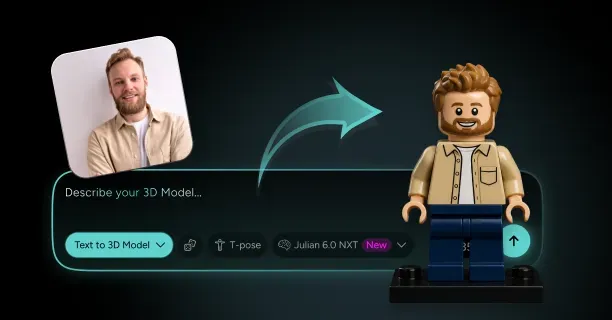
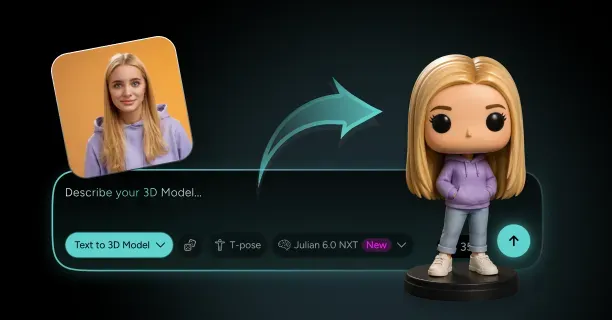
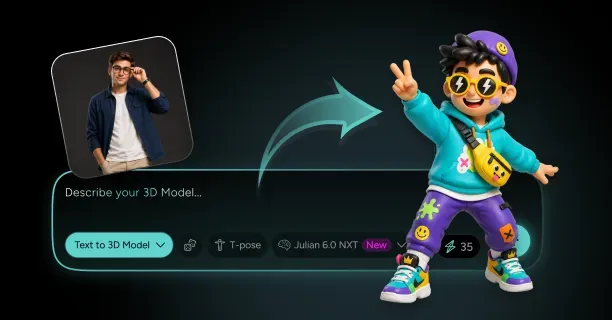
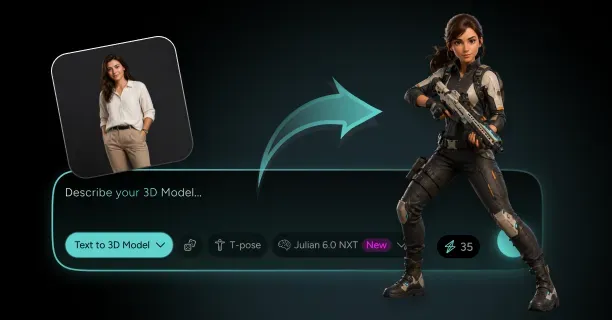
How Do You Turn Yourself Into a Poseable 3D Action Figure From a Photo?
To turn yourself into a poseable 3D action figure from a photo, you submit a high-resolution frontal image (minimum 1920×1080 pixels) to Threedium's AI-powered reconstruction platform above, which algorithmically constructs a custom head sculpt through computer vision analysis, integrates it geometrically with a pre-designed articulated body featuring ball-and-socket joints, and exports a print-ready 3D file for physical fabrication through resin or FDM printing.
Photo Capture Requirements
You'll need to provide 3-5 photographs documenting facial geometry from front, side, and three-quarter views of your face so the reconstruction system can algorithmically extract your facial proportions, bone structure, and distinctive features from multiple angles.
Key requirements include:
- Align your camera precisely at eye level
- Maintain a neutral facial expression
- Eliminate obstructing items such as glasses or hats that occlude critical facial geometry
- Use consistent lighting across all images
Soft, diffused natural light produces superior reconstruction quality to prevent formation of harsh shadows on facial contours while enhancing visibility of skin texture detail which is essential for accurate digital sculpting.
Your photos must satisfy minimum specification of 1920×1080 pixel resolution so the AI can algorithmically detect and measure fine details like:
- Eyebrow shape
- Nostril width
- Lip curvature
AI-Powered Head Reconstruction
Threedium's generator above computationally processes your uploaded photo through computer vision algorithms learned from dataset of thousands of human facial structures to derive three-dimensional data including depth information from lighting gradients, shadow patterns, and facial landmark positions.
Julian NXT technology features:
- Algorithmically detects 68 key facial points
- Localizes anatomically significant features including inner eye corners, nose tip, mouth edges, and jawline contours
- Generates continuous surface between these 68 key facial points
- Constructs complete head model in minutes compared to traditional method requiring 1-2 weeks
| Traditional Method | AI Reconstruction |
|---|---|
| 1-2 weeks | Minutes |
| Manual vertex-by-vertex workflows | Automated cranial geometry construction |
| Labor-intensive | Preserves biological correctness |
Articulated Body Integration
Your custom head model mechanically connects to a pre-designed articulated body biomechanically designed to enable action figure poseability through standardized joint systems at shoulders, elbows, wrists, hips, knees, and ankles.
Available body options:
- Heights: 6-inch, 7-inch, or 12-inch scales
- Body types: Athletic, muscular, slim, or stocky proportions
- Head scaling: Proportionally adjusted for selected body size
A 7-inch figure necessitates head dimension of approximately 0.9-1.1 inches in diameter to preserve anatomically correct head-to-body ratios of 1:7 or 1:8 common in adult human anatomy, avoiding the 'bobblehead' effect.
Joint Engineering Specifications
High-quality articulated bodies feature mechanically engineered components:
Joint Types and Capabilities:
Ball-and-socket joints (shoulders and hips) - 360-degree rotation - Approximately 90-degree forward flexion
Hinge mechanisms (elbows and knees) - Angular range of 120-150 degrees of bend
Swivel articulation (wrists) - Hand rotation through movement in multiple planes
Barbell joint (neck connection) - Double ball-and-socket system - Multi-axis movement capabilities
Advanced features: - Ratcheting joints with gear-like internal teeth - Mechanical friction resistance - Holds positions without display stand requirement
3D Printing Preparation
Download your print-ready file from Threedium's AI reconstruction system above in industry-standard format:
- STL (Standard Tessellation Language)
- OBJ (Object) file
File specifications:
Threedium generates geometrically valid watertight models with pre-positioned support structure placement data specifying precise locations where temporary scaffolding provides support for overhanging features.
Recommended printing technology: - Resin-based printers (SLA or DLP) - Vertical resolution: 25-50 microns - Superior surface finish for facial details
Physical Fabrication Process
Printing specifications:
- Material: Photopolymer resin
- Layer height: 50-micron resolution
- Print time: 2-4 hours for 1-inch tall head
- Process: Sequential hardening from base to apex
Post-processing steps:
- Remove support structures using flush cutters
- Surface finishing with sequential sanding: - 220-grit (coarse) - 400-grit (intermediate) - 800-grit (fine) - 1200-grit (finishing)
- Chemical cleaning in isopropyl alcohol
- Final UV curing for 5-10 minutes
Surface Finishing Techniques
Preparation process:
- Apply gap-filling compound to surface defects
- Use modeling putty for imperfections
- Sand until surface feels glass-smooth
- Clean with warm soapy water using soft brush
Primer application:
Spray 2-3 thin layers of plastic-compatible spray primer maintaining 8-10 inches distance, with 15-20 minutes drying time between coats.
Head-to-Body Assembly
Connection system: - Barbell connector with dumbbell geometry - Spherical terminals at opposing ends - Press-fit connection system
Quality verification: - Test complete angular displacement - Confirm smooth movement - Check for binding or excessive looseness
Standard connector sizes: - 3mm ball diameter - 4mm ball diameter - 5mm ball diameter
Paint Application Methods
Base coating process:
- Apply flesh tone base color-coordinated to skin color
- Use acrylic paints diluted with water or airbrush medium
- Build up 3-5 thin layers for smooth coverage
- Avoid thick coats that obscure detail
Detail painting techniques:
- Eyes: Sequential layers of white sclera, colored iris, black pupil, white highlights
- Shadows: Darker tones in recesses (eye sockets, under nose, beneath lips)
- Tools: Fine detail brushes for precision work
Highlighting and Shading
Highlight application: - Use lighter tones (base color + white or pale yellow) - Target prominent features: - Cheekbones - Bridge of nose - Brow ridge - Chin
Hair rendering: 1. Base hair color matching natural shade 2. Darker tones for underlayers and roots 3. Highlight strands 2-3 values lighter than base 4. Dry-brushing technique for texture
Production Timeline Optimization
Traditional process: 4-6 weeks total - 1-2 weeks: Digital sculpting - 3-5 days: 3D printing - 1 week: Post-processing and painting - Additional shipping time
Threedium advantage: - Real-time processing eliminates manual sculpting phase - Instantaneous computational processing - Immediate file export for local or service printing - Bypasses longest workflow constraint
Quality Verification Checkpoints
Digital model inspection: - Conduct 360-degree visual assessment - Identify potential defects: - Anatomical errors - Proportion issues - Missing details
Printed parts assessment: - Check for manufacturing defects: - Layer separation - Incomplete features - Support attachment damage
Pre-assembly testing: - Dry assembly test before permanent attachment - Verify mechanical compatibility - Confirm secure fit and functional articulation
Systematic quality verification enables identification and remediation at optimal intervention points where correction requires minimal resource investment, preventing late-stage detection after painting when correction means stripping paint and repeating multiple steps.
Which Body Type, Gear, and Packaging Options Make an Action Figure of Yourself Look Real?
Body type, gear, and packaging options that make an action figure of yourself look real are anatomically proportioned bodies matching your measurements, profession-specific accessories with authentic details, and premium window-box packaging with protective inserts. The body type establishes the foundation for all subsequent customization, determining articulation capability and visual realism.
You achieve realism by aligning the figure's scale to industry standards:
- 1:12 scale produces 6-inch tall figures compatible with Marvel Legends and Star Wars: The Black Series collections
- 1:6 scale creates 12-inch figures accommodating intricate fabric clothing and complex accessories favored by Hot Toys collectors
Material composition directly influences durability lifespan and detail resolution capacity, with high-impact ABS plastic providing structural integrity for joints and softer PVC or vinyl reproducing fine surface textures.
Figure proportions must accurately correspond to your actual human body measurements to achieve visual authenticity. Record precise measurements including:
- Shoulder width
- Torso length
- Leg proportions
- Overall build assessment
Before selecting a pre-made body "blank" approximating these dimensions. Body "bucks" are basic articulated bodies categorized according to build type classifications such as:
- Muscular male
- Athletic female
- Slender youth
These provide cost-effective foundations enabling customization through part swapping and modification processes. Premium figure lines like S.H.Figuarts and Mafex demonstrate sophisticated articulation engineering with 25-30 points of articulation, enabling:
| Joint Type | Function |
|---|---|
| Shoulder rotation | Multi-axis arm movement |
| Elbow bending | Natural arm positioning |
| Hip swiveling | Leg rotation and stance |
| Ankle pivoting | Balance and action poses |
Prioritize incorporating articulation at neck, shoulders, elbows, wrists, waist, hips, thighs, knees, and ankles to facilitate positioning your figure in dynamic ways expressing personality and character.
3D printing technology enables production of highly customized body shapes traditional manufacturing cannot economically produce. Users upload reference photographs to Threedium's reconstruction platform that automatically generates a base 3D mesh corresponding to specific body contours, then refine mesh proportions through digital sculpting prior to fabricating individual components.
Modern resin printers operating at 8K resolution capture fine anatomical details like muscle definition, bone structure visibility, and anatomical asymmetries distinguishing individual anatomy from generic representations.
The head component connects to the selected body type through standardized neck joints:
- Ball joints for multi-axis rotation
- Barbell pegs for secure attachment
- Magnetic connections for tool-free head swapping
Ensure that head scale corresponds to body proportions by applying the calculation where:
- A 1:12 scale figure requires a head approximately 0.5 inches tall
- 1:6 scale requires a 1-inch head to maintain realistic human proportions
Body type selection begins with build category assessment. Identify whether your physique aligns with athletic, muscular, average, slender, or stocky classifications corresponding to available body blanks:
- Athletic bodies exhibit defined musculature with visible abdominal segmentation and shoulder definition, typically measuring 1.5 inches across the shoulders at 1:12 scale
- Muscular bodies exaggerate proportions with broader chests, thicker arms, and prominent trapezius muscles creating a powerful silhouette
- Average builds maintain realistic proportions without dramatic muscle definition, representing the most common body type with balanced shoulder-to-waist ratios
- Slender bodies reduce overall mass while maintaining structural integrity, featuring narrower shoulders and reduced limb thickness appropriate for lean physiques
- Stocky bodies increase torso width and reduce height proportionally, creating figures with solid, grounded presence
Height accuracy matters for collection consistency and realistic representation. Calculate your figure's height by dividing your actual height by the scale factor:
A 6-foot tall person becomes 6 inches at 1:12 scale or 12 inches at 1:6 scale.
Adjust body selection when your height falls between standard figure sizes by choosing a taller or shorter base body and modifying limb lengths through part swapping. Custom 3D printed bodies eliminate these compromises by generating proportions exactly matching your measurements, though at higher production costs than pre-made blanks.
Verify proportions by checking that:
- The head measures approximately one-eighth of total body height
- Legs comprise roughly half the figure's height
- Arm length allows fingertips to reach mid-thigh when standing straight
Joint engineering determines pose stability and range of motion. Prioritize:
- Double-jointed elbows and knees bending beyond 90 degrees, enabling seated poses, action stances, and dynamic movement recreation
- Ball-jointed shoulders provide three-axis rotation for arm positioning across the full human range
- Butterfly joints at the chest allow shoulder blades to move forward for crossed-arm poses and backward for spread-arm positions
- Hip articulation requires both ball joints for leg swinging and thigh swivels for rotation, combined with drop-down hip mechanisms increasing forward leg extension for high kicks and deep lunges
- Ankle joints need both forward flex for flat-footed standing and side-to-side tilt for balance on uneven surfaces or action poses
Select joint tightness appropriate to the figure's intended display. Tighter joints maintain poses longer without drooping but require more force to reposition, risking paint damage or joint breakage during adjustment. Looser joints enable easy repositioning but may fail to support the figure's weight in dynamic poses, causing gradual slumping over time.
Test joint tension by posing the figure in an action stance with one leg raised and arms extended; the figure should hold this position for at least 24 hours without joint drift. Adjust tension by:
- Disassembling joints and adding floor polish to ball sockets for increased friction
- Sanding socket interiors for reduced friction
Gear selection transforms a generic body into a personalized representation by incorporating clothing, accessories, and equipment defining your identity. Choose between:
- Fabric clothing draping naturally over the figure's frame
- Sculpted plastic garments maintaining clean lines and durability
Fabric clothing at 1:6 scale facilitates realistic tailoring techniques:
- Miniature jeans with functional pockets
- Button-up shirts with operational closures
- Jackets with authentic stitching patterns mirroring full-size garment construction
Source materials like:
| Material Type | Best For |
|---|---|
| Cotton twill | Casual wear |
| Faux leather | Jackets |
| Synthetic blends | Athletic apparel |
Ensure fabric weight scales appropriately to prevent bulky appearance. Sculpted clothing works better at 1:12 scale where fabric thickness becomes proportionally excessive; model garments directly onto the body or create removable pieces snapping over the figure's torso and limbs.
Accessories define the figure's narrative context and professional identity. Replicate tools of your trade:
- Miniature laptops for office workers
- Scaled musical instruments for musicians
- Precision-detailed sporting equipment for athletes
Our reconstruction model generates accessories from reference photographs by isolating objects in the image and creating separate 3D meshes with appropriate scale relationships to the figure. Ensure accessories feature functional elements like:
- Opening laptop screens
- Removable instrument cases
- Articulated tool handles the figure can grip through carefully sized hand sculpts
Hand options multiply the figure's expressive potential; include:
- Relaxed open hands
- Gripping hands with cylindrical finger channels sized to hold 3-4mm diameter accessories
- Pointing hands
- Gesture-specific poses like peace signs or thumbs-up configurations
Material selection for gear replication balances authenticity with scale feasibility. Create fabric clothing by drafting patterns accounting for seam allowances at miniature scale, typically 1-2mm rather than the 5-8mm used in full-size garments. Choose fabrics with fine weaves not creating excessive bulk:
- Quilting cotton, silk, and microfiber perform well at 1:6 scale
- Only the thinnest materials work at 1:12 scale without appearing disproportionately thick
Construct garments using hand-stitching or micro-sewing machines designed for doll clothing, incorporating functional elements like:
- Snap closures
- Hook-and-eye fasteners
- Magnetic buttons sized for miniature applications
Sculpted gear requires different material considerations. Model accessories in digital sculpting software, maintaining wall thicknesses of at least 1mm at 1:12 scale to prevent fragility in the final print. Orient prints to minimize support structure contact with visible surfaces, preserving detail on the accessory's front face while accepting support marks on hidden rear surfaces.
Post-process printed accessories through:
- Progressive sanding with grits from 400 to 2000
- Primer application filling micro-layer lines and creating a smooth surface for painting
- Apply acrylic paints in thin layers, building color depth through multiple coats rather than single thick applications obscuring surface detail
Gear authenticity extends to material textures and weathering effects. Replicate leather textures on miniature jackets through:
- Embossing techniques
- Applying leather-texture modeling paste before painting
Create fabric weave patterns on sculpted clothing by pressing actual fabric into uncured epoxy putty, transferring the textile structure to the figure's surface. Weather accessories to match real-world wear patterns:
- Scuffing boot toes and heels where contact occurs
- Adding paint chips to tool edges impacting surfaces
- Applying subtle dirt washes to creases where grime accumulates naturally
Reference your actual clothing and equipment for accurate weathering placement, photographing wear patterns as templates for miniature replication.
Scale consistency across all elements prevents visual discord breaking immersion. Verify that accessories maintain proper proportional relationships to the figure:
| Item | 1:12 Scale Size |
|---|---|
| Coffee cup | ~0.3 inches tall |
| Laptop screen | ~1 inch diagonally |
| Basketball | 0.75 inches diameter |
Check that fabric patterns scale appropriately:
- A plaid shirt at 1:6 scale should feature checks approximately 2-3mm wide
- 1:12 scale requires checks under 1mm to maintain realistic appearance
Ensure that text on accessories remains legible but proportional:
- Miniature book spines, product labels, and signage use font sizes between 4-6 points at 1:6 scale
- Reduced to 2-3 points at 1:12 scale
Packaging options elevate the figure from a custom toy to a premium collectible commanding display presence. Design window-box packaging showcasing the figure while protecting it during storage and transport. The packaging front features:
- A clear acetate window framed by printed cardboard
- Your name, a character tagline, and graphic design elements establishing visual brand identity
- A backdrop insert showing a printed scene contextualizing the figure within an environment relevant to your profession or interests
Blister packaging offers an alternative approach where the figure mounts to a printed cardboard backer through a formed plastic shell, creating a flat profile ideal for wall display or space-efficient storage.
Premium packaging incorporates multi-layered presentation systems:
- Create an outer sleeve sliding over the main box, featuring high-resolution photography of the figure and detailed specifications printed on the back panel
- The inner tray system organizes the figure and accessories in custom-cut foam or vacuum-formed plastic compartments preventing movement and damage
- Add documentation elements: - Certificate of authenticity with edition numbering - Mini-poster featuring professional photography of the figure in dynamic poses - Instruction sheet showing accessory attachment points and optimal posing techniques
Magnetic closure boxes replace traditional tuck flaps for luxury editions, providing satisfying tactile feedback and reusability encouraging collectors to repeatedly open and interact with the packaging.
Packaging design communicates the figure's premium nature through material quality and graphic execution:
- Select cardboard stock of at least 18-point thickness for structural rigidity preventing box crushing during handling
- Apply printing techniques like spot UV coating creating glossy highlights on specific graphic elements while maintaining matte finish elsewhere
- Incorporate metallic foil stamping for text elements like your name or edition numbers, creating reflective surfaces catching light and signaling collectible status
Design window shapes maximizing figure visibility while maintaining box strength; rectangular windows with rounded corners distribute stress better than sharp-cornered cutouts creating failure points.
The packaging interior receives equal attention to exterior presentation. Design insert trays with:
- Figure-shaped recesses cradling the body and preventing movement during shipping
- Separate compartments for each accessory, labeled with small printed icons identifying contents and assisting with repacking
- Twist-ties or elastic bands securing the figure to the backing board at waist and ankles, preventing joint stress from shipping impacts while remaining easy to remove without tools
- Protective tissue paper or foam sheets between the figure and window to prevent acetate contact transferring plasticizer or creating pressure marks on painted surfaces
Packaging variants serve different collector preferences and price points:
| Edition Type | Features |
|---|---|
| Basic | Simple printed cardboard and minimal accessories for budget-conscious buyers |
| Standard | Window boxes and full accessory sets for mainstream collectors |
| Deluxe | Magnetic boxes, premium inserts, and expanded accessory counts for dedicated enthusiasts |
Create special edition packaging for specific themes or occasions:
- Holiday variants with seasonal graphics
- Anniversary editions with commemorative numbering
- Collaboration packages featuring artwork from specific designers
Design packaging transforming into display elements:
- Backdrop inserts folding into diorama stands
- Boxes disassembling into shelf risers
- Acetate windows mounting separately as protective display cases
Packaging engineering prevents damage during shipping and storage. Design internal support structures distributing impact forces away from fragile figure components like extended accessories or delicate hand sculpts. Calculate box dimensions minimizing void space while maintaining cushioning distance between the figure and box walls; typically 0.5 inches minimum at all sides for 1:12 scale figures.
Specify corrugated cardboard with vertical fluting for outer shipping boxes providing superior crush resistance compared to horizontal fluting. Include "Fragile" and "This Side Up" indicators on outer packaging guiding handlers toward proper box orientation, reducing the likelihood of figure stress during transport.
Body material affects both appearance and longevity:
- Select rigid ABS plastic for joint components enduring repeated repositioning without stress fractures, maintaining tight tolerances preventing loosening over time
- Choose softer PVC for skin-textured body surfaces accepting paint without cracking during joint movement and providing slight give preventing paint chipping at articulation points
- Use vinyl for highly detailed areas like hands and feet where fine sculpting captures individual finger segments and realistic foot arches, accepting vinyl's tendency to become sticky over time as a trade-off for superior detail retention
Apply matte sealers to painted surfaces reducing fingerprint visibility and protecting against UV fading, extending the figure's display life beyond 10 years with proper care.
Body customization extends beyond basic build selection to specific anatomical modifications:
- Add sculpted details like tattoos, scars, or birthmarks distinguishing your body from generic blanks
- Modify muscle definition to match your actual physique by adding or removing material through epoxy putty sculpting
- Adjust body proportions by cutting and repositioning joints:
- Shortening torsos by removing waist sections
- Lengthening legs by inserting spacer sections at thigh joints
- Widening shoulders by splicing additional material at the clavicle connection points
The complete figure package—body type, gear, and packaging—works as an integrated system where each element reinforces the others:
- Select body types accommodating your chosen gear without clothing fit issues or accessory scale mismatches
- Design packaging protecting your selected gear configuration while showcasing the figure's most compelling pose and outfit combination
- Create a cohesive visual identity across all elements, using consistent color palettes, graphic styles, and material choices presenting the figure as a premium collectible rather than a basic toy
Document the entire specification:
- Body model
- Articulation count
- Gear list
- Packaging dimensions
- Material choices
Creating a production blueprint ensuring consistency when ordering multiple figures or creating variant editions through Threedium's platform.
Why Does Threedium Generate Better Action Figure Details, Joints, and Accessories From One Image?
Threedium generates better action figure details, joints, and accessories from one image because its proprietary platform synthesizes highly detailed action figure components (details, joints, and accessories) from a single photographic input by employing a custom deep learning neural network trained on 5.85 billion image-text pairs. When the end user uploads a single front-facing photograph, Threedium's AI reconstruction system computes the three-dimensional geometry and surface texture from the pixel data without requiring multiple viewing angles or specialized lighting conditions. Threedium's AI system transforms the user's two-dimensional photograph into a fully textured three-dimensional model, generating action figures with articulated joints, intricate costume details, and miniature accessories: features that traditional multi-view photogrammetry techniques cannot accurately reconstruct.
Latent Diffusion Models Extract Comprehensive Details
Threedium's 3D reconstruction pipeline employs Denoising Diffusion Probabilistic Models (DDPM), which initialize with a random noise distribution and progressively refine this stochastic input into structured three-dimensional output within a latent representation space where complex geometric transformations occur before materializing as final three-dimensional shapes. Threedium's proprietary neural network models detect and reconstruct fine-scale details including:
- Belt buckles (costume hardware)
- Fabric textures (material surface properties)
- Costume wrinkles (cloth deformation patterns)
All from the user's single frontal photograph. Threedium's deep learning neural networks extract both macro-level anatomical proportions and micro-level surface details, generating photorealistic action figure models with complex features including multi-layered accessory components that conventional multi-view photogrammetry pipelines fail to capture.
Threedium's AI system performs multi-scale feature extraction on the user's uploaded high-resolution photograph, decomposing it into semantic features (including facial structure geometry and clothing category classification) and texture features (encompassing fabric pattern analysis and color gradient mapping) within a millisecond-scale timeframe. Cross-attention mechanisms integrate the user's image information with Threedium's generation pipeline, prioritizing visible surface details while inferring occluded geometry using learned shape priors derived from the extensive training dataset of 5.85 billion image-text pairs. Threedium's AI-sculpting methodology constructs three-dimensional mesh geometry from a noisy latent space representation with high reconstruction accuracy, maintaining anatomical correctness through embedded anatomical priors encompassing human body proportions and skeletal joint placement rules.
Geometric Priors Ensure Anatomically Correct Joint Articulation
Threedium's reconstruction system incorporates embedded geometric priors that encode morphological understanding about three-dimensional forms and structural relationships, including bilateral symmetry constraints and joint rotation axis definitions for biomechanically accurate articulation. End users receive action figure models with anatomically correct joint mechanisms:
- Ball-and-socket shoulder joints (enabling three-axis rotation)
- Hinge-style knee joints (providing single-axis flexion-extension)
- Rotational waist joints (allowing axial rotation)
Threedium's generation system identifies anatomical landmarks in the user's input photograph and registers them to a standardized articulated skeleton template designed for multi-point articulation, ensuring pose-able figure output. The user's generated 3D model incorporates pre-integrated joint socket geometry, eliminating the manual rigging procedures required by traditional 3D modeling and animation workflows, thereby automating the articulation setup process.
Threedium's AI system segments the mesh geometry into discrete components using precisely defined separation planes positioned at optimal parting lines, ensuring successful physical assembly without manufacturing defects. Each articulation point receives structural reinforcement geometry that protects against stress-induced damage during figure manipulation: a critical detail frequently overlooked by manual 3D modelers, thereby ensuring enhanced durability and extended product lifespan.
Threedium's system generates joint mechanical specifications defining clearance tolerance ranges between 0.2 millimeters and 0.5 millimeters, adhering to industry manufacturing standards for snap-fit assembly methodology in 6-inch scale action figure products.
Neural Radiance Fields Reconstruct Occluded Accessories
By integrating Neural Radiance Fields (NeRFs): a volumetric scene representation technique with 3D Gaussian Splatting methodology: a point-based rendering approach, Threedium's AI system reconstructs accessory components that are partially occluded or not fully visible in the user's input photograph, inferring complete geometry from incomplete visual data. When the user's character model is equipped with a back-mounted sword accessory, Threedium's NeRF component (Neural Radiance Field module) reconstructs the complete blade geometry by retrieving learned geometric representations from the training dataset, synthesizing the occluded weapon portions not visible in the input photograph.
Threedium's Digital Twin Genesis process: the NeRF-based accessory reconstruction methodology generates stylistically consistent accessory components, harmonizing texture properties (surface appearance) and proportional relationships (dimensional scale) with the user's character design aesthetic, thereby maintaining visual coherence across all figure elements.
| Component Type | Generated Features | Dimensional Accuracy |
|---|---|---|
| Weapon Models | Detachable magazines, articulated slides, textured grips | Scaled to character hand dimensions |
| Belt Components | Adaptive waist circumference geometry | Follows body surface contours |
| Holster Accessories | Physics-informed deformation | Maintains anatomically plausible positioning |
Threedium's AI system determines accessory geometric specifications by performing object category classification (identifying weapon types, armor classes, and equipment categories) and generating three-dimensional accessory templates dimensionally matched to the user's character body measurements, ensuring proper fit and preventing proportion inconsistencies.
Multi-Scale Texture Synthesis Preserves Fine Surface Details
Threedium's texture generation process preserves fine-scale surface details through hierarchical multi-level texture synthesis operating at three distinct scales:
- Macro level: Overall color scheme definition and large-scale appearance
- Meso level: Fabric weave pattern representation and material structure
- Micro level: Thread-level detail capture at sub-millimeter resolution
This ensures comprehensive texture fidelity across all spatial frequencies. Threedium's AI system extracts texture information from the input image and applies it to the three-dimensional mesh geometry using optimized UV mapping: a texture coordinate parameterization technique designed to minimize geometric distortion, stretching, and compression artifacts, thereby ensuring accurate texture-to-geometry correspondence and faithful surface appearance representation.
End users receive photorealistic action figure models featuring authentic costume detail representation that exhibits physics-based deformation behavior in response to joint articulation, modeling fabric stretching, compression, and folding dynamics, thereby addressing critical limitations of traditional photogrammetry methods that fail to capture dynamic costume behavior and pose-dependent geometry changes.
Threedium's generation system outputs high-resolution texture maps at 4096×4096 pixel resolution, enabling the representation of fine-scale surface details with minimum feature sizes as small as 0.1 millimeters when scaled to physical manufacturing dimensions.
Material-specific texture rendering ensures physically accurate appearance:
- Fabric textures: Exhibit directional weave pattern characteristics oriented according to textile construction direction
- Leather surfaces: Display authentic grain texture patterns matching natural hide characteristics
- Metallic elements: Feature physically accurate reflectivity values calibrated to specific metal types (steel, brass, aluminum)
Proprietary AI Handles Complex Costume Layering
Threedium's AI system demonstrates superior performance in complex costume layer reconstruction by decomposing the user's input photograph into discrete material layers (identifying material boundaries and occlusion relationships) and generating separate mesh geometry for each layer, positioned with appropriate depth offset values that maintain physical clearance and enable realistic multi-level costume depth representation.
Threedium's layered reconstruction methodology enables:
- Removable and repositionable accessory components
- Generation of variant figure configurations (jacket worn versus jacket removed)
- Modular design supporting interchangeable costume elements
All from the user's single input photograph, thereby increasing product versatility through modular design that supports interchangeable costume elements.
| Material Type | Depth Separation | Physical Properties |
|---|---|---|
| Thin fabrics | 0.5 millimeters | Minimal separation |
| Standard clothing | 1-2 millimeters | Moderate clearance |
| Rigid armor | 3 millimeters | Maximum spacing |
Threedium's neural network identifies occlusion boundary locations and infers occluded geometric regions, automatically generating realistic fabric fold geometry and compression wrinkle patterns based on learned cloth deformation behavior: features that would require time-intensive manual sculpting in traditional 3D modeling workflows.
Cross-Attention Mechanisms Align Accessories With Body Proportions
Cross-attention mechanisms correlate accessory dimensional specifications with body proportional measurements by focusing attention weights on anatomical reference points, ensuring accurate proportional alignment and eliminating reconstruction errors such as scale mismatches and proportion inconsistencies. Accessory components preserve accurate scale relationships based on real-world object proportions:
- Watch accessories: 18-22 millimeter diameter range for 6-inch scale figures
- Belt accessories: 3-4 millimeter width range to conform naturally to character anatomy
This dimensional consistency applies uniformly to all figure components, producing a cohesive visual representation and accurate character depiction that corresponds faithfully to the user's original design by eliminating proportion discrepancies.
Cross-attention weight distributions prioritize anatomical landmark locations (key body reference points such as shoulder joints, hip bones, and wrist centers), ensuring that accessory components are positioned at biomechanically correct attachment points aligned with skeletal structure and natural body mechanics. End users receive ergonomically optimized figure models featuring:
- Shoulder holsters oriented at natural drawing angles
- Knee pad accessories centered on knee joint pivot points
- Wrist accessories dimensioned to prevent interference with hand articulation
AI-Sculpting Generates Print-Ready Joint Mechanics
Threedium's AI-sculpting process generates production-ready joint mechanisms by directly integrating articulation geometry (including ball sockets, hinge pins, and rotation axes) into the mesh structure, eliminating post-processing requirements and enabling immediate manufacturing without manual editing.
Threedium's generative models output action figures with fully integrated joint systems including:
- Pre-formed ball joint components (spherical articulation)
- Peg-and-socket connection mechanisms (cylindrical joints)
- Rotational swivel mechanisms
All requiring zero post-processing operations, thereby eliminating manual assembly preparation, accelerating production timelines, and ensuring functional articulation immediately upon manufacturing.
| Manufacturing Specification | Value Range | Purpose |
|---|---|---|
| Draft angle specifications | 2-5 degrees | Facilitating easy demolding |
| Wall thickness | 1.5-2 millimeters | Ensuring structural integrity |
| Snap-fit tolerances | Optimized per method | FDM, SLA, injection molding |
End users receive manufacturing-optimized figure models with joint sockets incorporating these specifications, thereby maximizing manufacturing success rates across diverse fabrication technologies.
Geometric Priors Enable Accurate Costume Hardware Placement
Embedded geometric priors (encoding costume design principles) inform Threedium's AI positioning decisions for functional costume elements such as buckles, fasteners, and attachment points, ensuring accurate placement and producing professionally designed costume hardware that exhibits functional characteristics. Threedium's generation system outputs action figures with functional hardware including:
- Operational buckle mechanisms
- Articulated holster components
- Adjustable strap systems
All oriented correctly relative to body movement patterns and mechanical stress distribution (identified through biomechanical analysis), thereby ensuring realistic functionality that responds appropriately to figure posing.
Costume hardware exhibits precise functional alignment: buckle prong geometry registers with belt hole positions, zipper pull components are oriented in forward-facing directions, and button positions correspond exactly to functional buttonhole locations.
End users receive costume hardware appropriately dimensioned for the figure size category, with buckle mechanisms sized at 2-3 millimeter depth range (supporting manufacturing feasibility) and strap attachment points featuring structural reinforcement that resists physical handling stress.
Neural Radiance Fields Reconstruct Weapon Details From Partial Views
Neural Radiance Fields (NeRF) technology reconstructs weapon detail geometry from partial visibility data, generating complete three-dimensional representations by utilizing learned pattern knowledge derived from the training dataset, thereby inferring occluded weapon portions through pattern matching and enabling full 3D weapon models that surpass traditional reconstruction limitations.
Threedium's AI system determines weapon scale proportions calibrated relative to character hand dimensions, ensuring the incorporation of functional weapon details including:
- Detachable magazine components
- Articulated slide mechanisms
- Textured grip surfaces
Thereby maintaining realistic appearance, proper ergonomics, visual believability, and enhanced weapon realism through proportional accuracy.
Weapon models exhibit category-appropriate realism:
| Weapon Type | Specification | Accuracy Standard |
|---|---|---|
| Blade weapons | Edge bevels 15-30 degrees | Real blade geometry standards |
| Firearm barrels | Consistent bore diameter | Manufacturing precision |
| Melee weapons | Grip texture patterns | Weapon type and historical period |
Threedium's system generates weapon models with accurate mass distribution that simulates realistic weight balance, positioning balance points (centers of mass) at ergonomically appropriate locations based on real-world weapon characteristics.
Latent Space Manipulation Enables Accessory Customization
Latent space manipulation enables accessory customization without requiring photo re-upload, operating directly on the encoded representation to provide workflow flexibility that exceeds traditional modeling pipeline capabilities, thereby eliminating iterative photoshoot requirements and reducing production time and cost through efficient direct editing of the generative model's internal representation.
The cross-attention mechanism preserves visual consistency throughout the customization process, facilitating accessory modifications while maintaining:
- Character identity attributes (recognizable features such as facial structure and body proportions)
- Costume design coherence (unified aesthetic and color palette)
End users modify accessory parameters through vector arithmetic operations executed in the latent space representation, enabling intuitive semantic editing capabilities such as:
- Weapon type substitution (swapping rifles for pistols)
- Armor configuration adjustments (changing plate carrier layouts)
- New costume element incorporation (adding holsters or pouches)
The latent space editing process generates variant figure models featuring different accessory configurations, providing extensive customization capability without requiring multiple photoshoot sessions. End users receive multiple figure variants including:
- Alternative weapon loadout configurations (assault rifle versus sniper rifle options)
- Seasonal costume variations (winter coat versus summer jacket alternatives)
- Battle-damaged versions featuring weathered appearance
All generated from the user's single original photograph, thereby demonstrating system versatility, increasing product line options, and reducing asset creation costs.
Proprietary Pipeline Optimizes Mesh Topology For Physical Production
Threedium's production pipeline optimizes mesh topology structure for manufacturing requirements, ensuring clean subdivision surface quality (eliminating geometric artifacts) and predictable deformation behavior (supporting animation and posing applications), thereby improving manufacturing feasibility and enabling reliable performance across production, animation, and interactive use cases.
Threedium's AI system generates manifold geometry (watertight, closed surfaces ensuring 3D printability) that successfully completes validation checks without error conditions, outputting figures with:
- Uniform wall thickness specifications maintained between 1.5 and 2 millimeters
- Draft angle specifications maintained between 2 and 5 degrees
Thereby satisfying technical production requirements for both injection molding and resin casting manufacturing processes.
Final output meshes comprise triangle counts ranging from 50,000 to 150,000 triangles for 6-inch scale figures, with counts optimized to balance detail preservation, file size constraints, and processing efficiency requirements.
End users receive optimized mesh geometry featuring edge flow aligned with natural deformation patterns (following anatomical muscle and joint movement paths), ensuring smooth joint articulation behavior without mesh collapse artifacts or geometry pinching defects.
Single-Image Reconstruction Delivers Complete Figure Geometry
Threedium's reconstruction process generates hidden surface geometry by inferring occluded regions, producing fully enclosed mesh structures (watertight, manifold geometry) and complete 360-degree representations suitable for both manufacturing and rendering applications, thereby eliminating incomplete model issues and enabling reliable physical production.
Threedium's latent diffusion models (Denoising Diffusion Probabilistic Models operating in latent space) infer hidden geometric regions based on learned body structure, generating anatomically plausible surface geometry and authentic figure representations with consistent appearance viewable from all angles (360-degree coverage), thereby enabling comprehensive inspection and ensuring complete reconstruction suitable for production and display from any viewpoint.
End users receive action figures featuring:
- Consistent costume characteristics maintained uniformly across all surfaces
- Detailed rear surface geometry with quality matching front-facing regions
- Complete 360-degree geometry with texture continuity seamlessly integrated across geometric boundaries
Thereby overcoming critical limitations of traditional single-image photogrammetry methods that generate incomplete backside geometry or distorted rear surface reconstructions.
Threedium's AI system intelligently maintains bilateral symmetry for anatomically appropriate features such as paired limbs (left and right arms, based on anatomical knowledge) while preserving intentional asymmetric design details such as unilateral accessories (shoulder-mounted weapons on one side only, respecting design intent), thereby balancing anatomical correctness with creative design and outputting production-ready action figure models requiring no post-processing: all generated from the user's single frontal photograph input.