
How Do You Turn Yourself Into a Simpsons-Style 3D Character From a Photo?
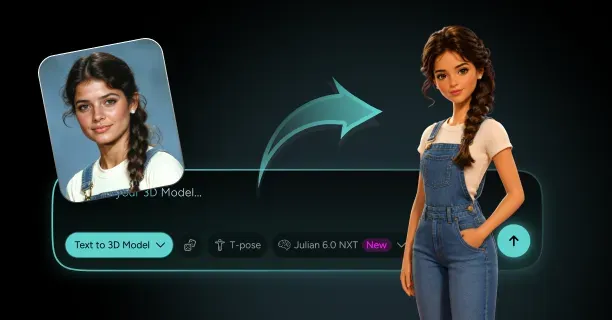
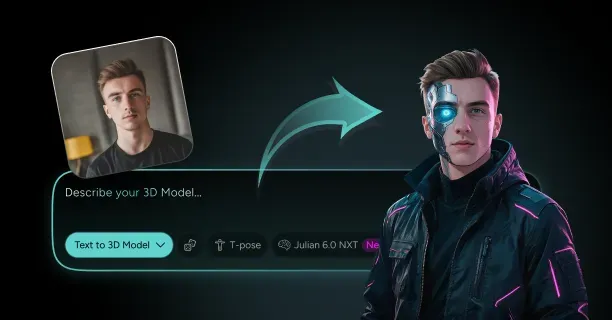
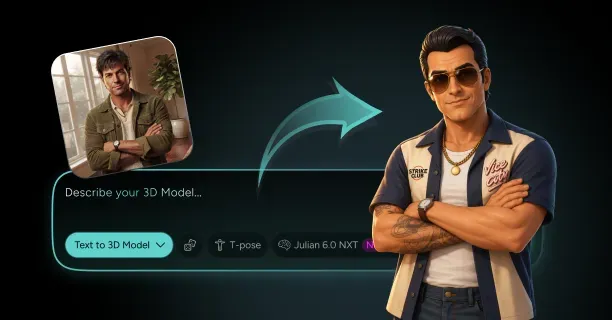
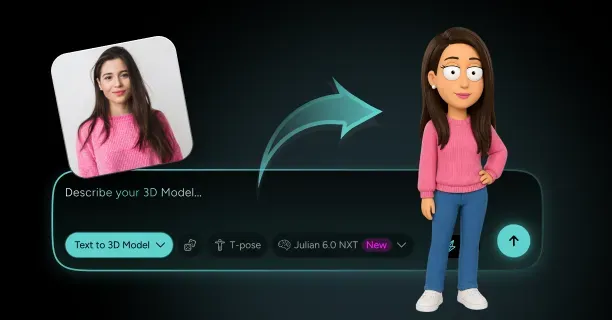
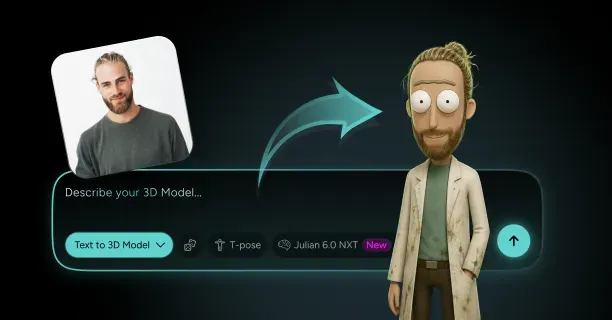
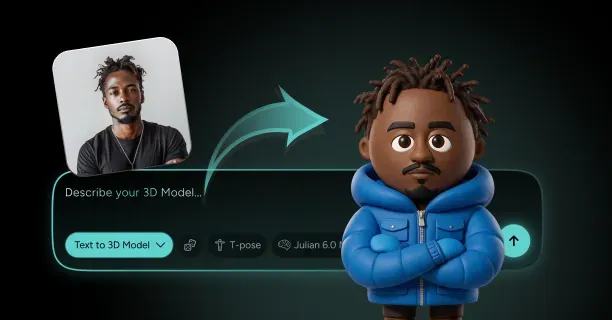
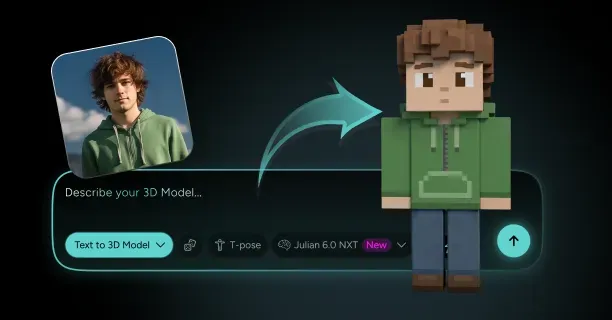
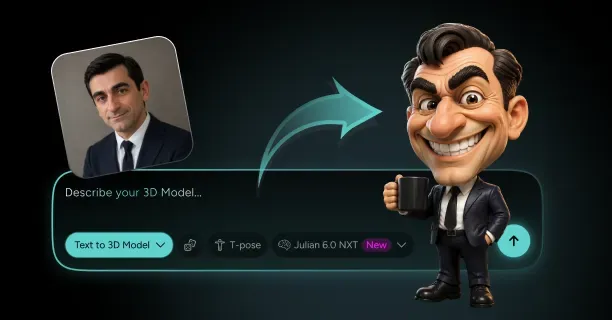
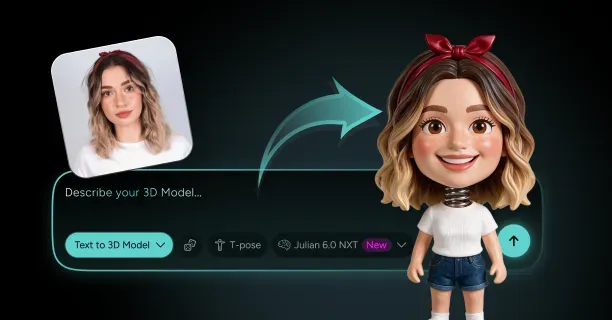
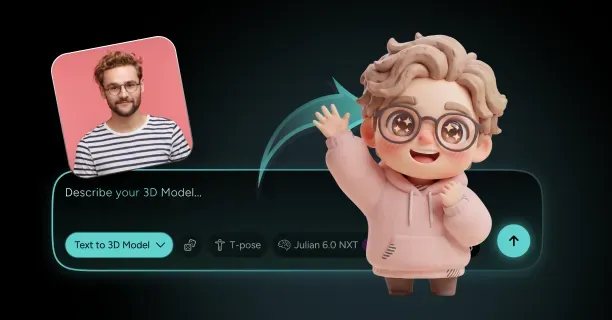
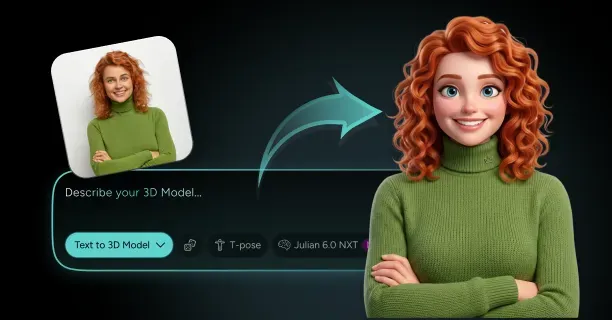
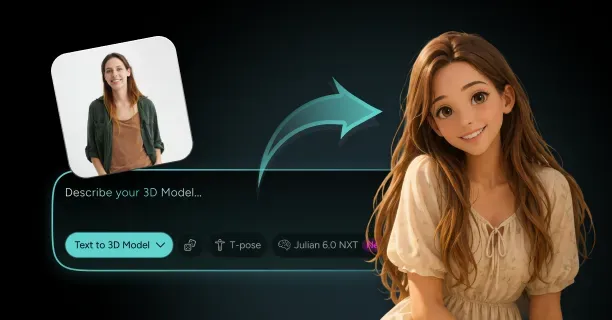
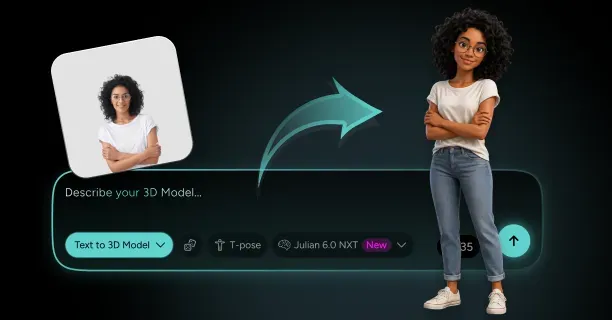
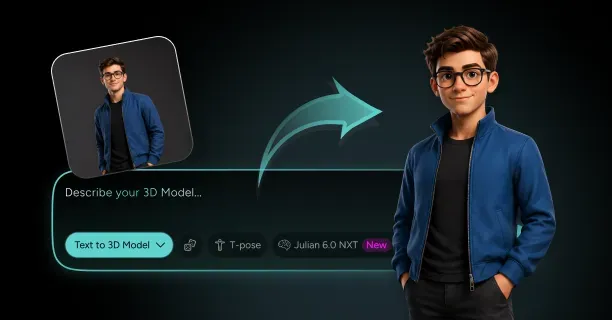
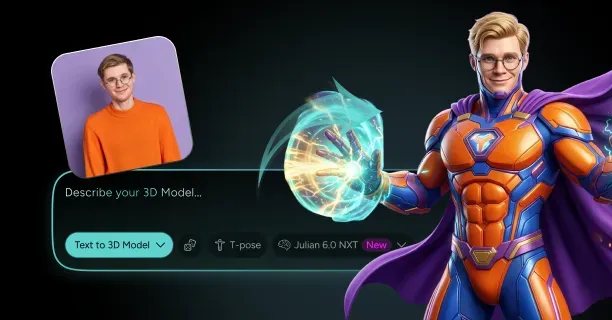
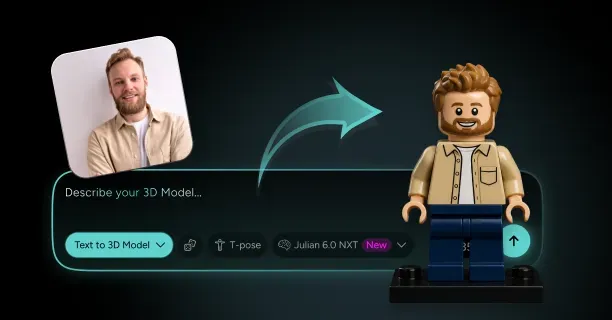
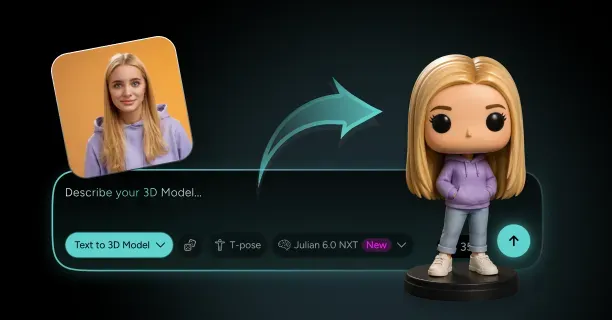
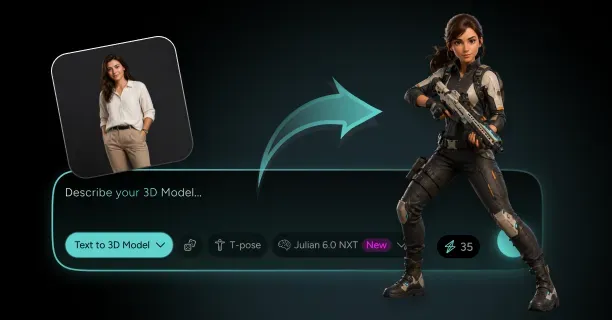
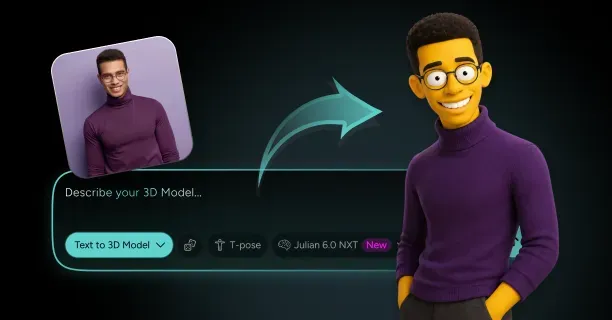
To turn yourself into a Simpsons-style 3D character from a photo, submit a high-resolution frontal image to Threedium's AI-powered reconstruction platform above, where our proprietary Julian NXT technology computationally parses facial geometry and algorithmically transfers The Simpsons' distinctive visual features:
- Four-fingered hands
- Yellow skin tone (#FFD90F hex value)
- Simplified anatomical proportions
The Threedium reconstruction platform procedurally constructs a game-ready 3D model with computationally refined textures and materials for real-time rendering in game engines and web browsers. This transformation process, called "Simpsonizing" (proprietary transformation process trademarked by Threedium for converting photographic portraits into The Simpsons animated series visual style), algorithmically transforms photographic realism into the iconic cartoon aesthetic belonging to The Simpsons franchise using computational stylization algorithms that geometrically translate the subject's facial features onto The Simpsons' established visual language while maintaining recognizability through feature extraction.
Upload Requirements and Image Preparation
Upload a frontal photograph with minimum resolution of 1920×1080 pixels (Full HD resolution standard, also known as 1080p) to the Threedium platform upload interface. The 1920×1080 pixel resolution standard guarantees through pixel density that the AI reconstruction model (machine learning system trained on facial geometry datasets for 3D mesh generation) extracts via computer vision sufficient facial details for accurate computational interpretation of geometry.
Position the subject's full face under even lighting conditions without shadows obscuring detection of the subject's cheekbones, jawline, or forehead contours.
The reconstruction algorithm (computational system using monocular depth prediction networks for 3D geometry estimation) computationally depends on light gradients and edge detection patterns to derive through analysis depth information. Position centrally the subject's face in the frame with a neutral expression (relaxed facial muscles) and direct gaze toward the camera: angled shots or exaggerated expressions cause algorithmic errors through geometric distortions (computational artifacts resulting from non-optimal camera angles that reduce 3D reconstruction accuracy).
Remove the following items that occlude detection of facial landmarks:
- Glasses
- Hats
- Accessories
These items block detection of facial landmarks (specific anatomical reference points used by computer vision systems for spatial mapping and 3D reconstruction) like eyebrows, nose bridge, or ear position, because the aforementioned facial landmarks serve as reference points for the 3D mesh generation system.
The Threedium platform contains a computer vision pipeline that computationally segments the user's uploaded photo into distinct facial regions using convolutional neural networks (deep learning architecture specialized in image processing, abbreviated as CNN, trained on millions of diverse human face samples):
- Eyes
- Nose
- Mouth
- Hairline
- Chin
Each facial region undergoes algorithmic proportional adjustments to match The Simpsons' stylistic conventions (visual design rules established by creator Matt Groening for the animated series that premiered in 1989):
| Facial Feature | Adjustment | Percentage |
|---|---|---|
| Eyes | Scale proportionally beyond photorealistic scale | ~40% |
| Noses | Geometrically reduce to curved bumps without nostril definition | N/A |
| Mouths | Expand horizontally | ~60% of lower face width |
Jawlines undergo computational geometric simplification from complex bone structure to rounded U-shapes characteristic of Matt Groening's (American cartoonist born 1954, creator of The Simpsons animated series, known for distinctive simplified character design aesthetic) original character design philosophy, where anatomical complexity is superseded by visual clarity and instant recognition.
Geometric Reconstruction and Mesh Generation
Threedium's reconstruction system procedurally constructs a base 3D mesh from the user's photo by computationally inferring depth values for every pixel through monocular depth prediction networks (neural network architecture that estimates 3D depth information from single 2D images without requiring stereo camera input), which algorithmically derive three-dimensional structure from two-dimensional color and brightness patterns.
The system procedurally allocates roughly 15,000 to 25,000 polygons for the facial mesh, optimizing tradeoff between:
- Geometric detail to capture the subject's unique features
- Polygon efficiency required to maintain real-time rendering in game engines (real-time rendering software such as Threedium) and web browsers (web-based 3D viewers using Threedium technology)
The 15,000-25,000 polygon range enables through vertex distribution smooth curve representation for cheeks, forehead, chin while maintaining optimal levels of computational efficiency for animation rigging and texture mapping operations.
The mesh topology adheres to architectural pattern of quad-based structure (mesh topology using four-sided polygons, industry standard for character modeling and animation) with edge loops positioned around eyes, mouth, nose to enable smooth execution of facial animation deformation. Edge loops function as geometric control rings that preserve during deformation surface continuity when the animator applies blend shapes (morph target animation technique also known as shape keys, used for facial expression deformation) for facial expressions like:
- Smiling
- Frowning
- Raising eyebrows
The system algorithmically positions the edge loops based on detected facial landmarks extracted from the source photo, ensuring through computational validation that the generated Simpsons-style 3D character model enables animation of the full range of emotional expressions characteristic of The Simpsons' animated performances (character animation style from the long-running animated sitcom created by Matt Groening, featuring exaggerated emotional expressions).
Vertex density (concentration of mesh vertices per surface area, measured in vertices per square unit) is strategically concentrated around high-detail areas like:
- Eyelids
- Lip corners
These areas generate disproportionate large visual impact observed during animation playback when small geometric changes occur.
Stylization Through Computational Algorithms
The Threedium platform executes computational style transfer algorithms (neural network-based techniques that extract and apply artistic style characteristics from reference images to target content) that extract stylistic features from The Simpsons' visual signature and algorithmically transfers these aesthetic parameters onto the user's reconstructed 3D geometry:
- Bright yellow skin
- Thick black outline strokes
- Minimal surface detail
- Exaggerated feature proportions
The stylization process computationally reduces complexity of surface normals to reduce lighting complexity, creating the flat-shaded appearance that defines traditional cel animation (traditional hand-drawn animation technique also called celluloid animation, characterized by flat colors and minimal shading gradients) while maintaining sufficient geometric variation to retain recognizability of the subject's facial identity (biometric attribute).
The character's skin texture is assigned uniform yellow coloration with subtle gradient variations only around:
- Eye sockets
- Under chin
This replicates characteristics of The Simpsons' lighting model (non-photorealistic rendering approach using discrete color zones instead of continuous gradient shading, established in the show's visual style guide) where shadows are rendered as separate color shifts rather than gradual photorealistic transitions.
Hair geometry undergoes procedural complete reconstruction as separate mesh elements rather than texture-based representation, because The Simpsons visually represents hair as solid sculptural forms (three-dimensional geometric shapes with defined volume and sharp boundaries, as opposed to fine strand-based hair rendering) with sharp silhouette edges.
The system computationally segments and interprets the source photograph's hair region to determine:
- Overall hair shape
- Volume
- Directional flow
Then generates simplified geometric clusters that preserve identifying characteristics of the subject's hairstyle recognizable profile while conforming to aesthetic rules of the show's visual grammar (systematic set of visual design rules and conventions that define The Simpsons' distinctive artistic style, particularly regarding hair representation) of chunky, angular hair masses.
Each hair cluster is assigned flat color fills without individual strand detail or shiny highlights:
- Brown variations
- Black
- Blonde
- Gray
This maintains adherence to The Simpsons' commitment to visual simplicity (design principle emphasizing clarity and readability through reduced detail complexity) over textural realism.
Texture Mapping and Material Assignment
Threedium's texturing pipeline procedurally generates UV-mapped texture coordinates (process of projecting 3D mesh surface onto 2D texture space using U and V coordinate axes, standard technique in 3D computer graphics) that project through parametric mapping the generated 3D character model's surface geometry onto two-dimensional image space, enabling application of:
- Color information
- Patterns
- Material properties
The UV layout adheres to conventions of industry-standard practices (established UV mapping conventions used in professional 3D game development and animation production) with minimal distortion in high-visibility areas like the face region, ensuring through optimization that texture pixels maintain uniform consistent density across the entire surface to prevent stretching artifacts.
The system procedurally creates texture maps at 2048×2048 pixel resolution (2K texture resolution standard, common in real-time 3D applications, providing 4,194,304 total pixels), delivering optimal detail for close-up camera angles while remaining within constraints for efficient loading in web-based 3D viewers and mobile applications.
Material assignment adheres to visual standards of The Simpsons' established rendering conventions where surfaces render with properties of flat, saturated colors without photorealistic shininess or subsurface scattering (advanced rendering technique simulating light penetration through translucent materials, excluded from cartoon-style rendering) effects.
The generated character's skin is assigned matte shader (non-reflective material shader with high roughness and zero metallic properties, used in PBR workflows for diffuse surfaces) with:
| Property | Value |
|---|---|
| Metallic properties | Zero |
| Roughness values | 0.95 out of 1.0 scale |
This removes glossy reflections that conflict with visual principles of The Simpsons show's traditional animation aesthetic. Clothing materials adhere to same flat-shading principles with solid color fills and optional simple patterns like:
- Stripes
- Polka dots
The system deliberately excludes complex textile simulations or fabric wrinkle details that surpass acceptable limits of The Simpsons' visual complexity threshold (maximum level of geometric and textural detail permitted within The Simpsons' established art direction guidelines).
The Threedium platform procedurally creates normal maps (RGB texture maps that store surface normal direction information, used to simulate high-resolution geometric detail on low-polygon meshes through per-pixel lighting) to add perception of subtle dimensional variation around facial features like:
- Cheekbones
- Brow ridges
The generated normal maps are configured with low intensity to prevent emergence of photorealistic appearance while supplying sufficient depth information to avoid visual problem of completely flat appearance under dynamic lighting conditions (real-time lighting scenarios with variable light source positions, colors, and intensities that affect surface appearance).
The rendering approach balances geometric simplification and strategic normal map application to maintain fidelity to The Simpsons' cartoon essence while ensuring that the generated 3D character model maintains visual legibility in modern real-time rendering environments.
Anatomical Proportion Adjustments
The transformation process algorithmically adjusts body proportions to conform to standards of The Simpsons' distinctive anatomical ratios (proportional relationships between body parts, with 1:5 indicating head height equals one-fifth of total body height, versus realistic 1:7 to 1:8 ratios), where head size measures roughly 1:5 relative to total body height contrasting with realistic photorealistic human proportions of 1:7 or 1:8.
The generated character's head is proportionally scaled up to enhance visibility of facial features and expressions, following animation principles (fundamental design rules in character animation, including principles established by Disney animators and applied across animation industry) where larger heads increase effectiveness of:
- Emotional readability
- Character appeal
The system maintains spatial relationships of the subject's facial feature relationships while proportionally enlarging the entire head structure:
- Eye spacing (inter-pupillary distance or inner/outer canthal width used as facial recognition metric)
- Nose width
- Mouth position
Limb geometry undergoes computational simplification treatment where arms and legs are stripped of anatomical detail like:
- Muscle definition
- Joint complexity
- Bone structure visibility
The generated character's arms are geometrically simplified to cylindrical tubes with minimal tapering measured from shoulder to wrist, terminating with the iconic four-fingered hands that function as recognizable visual shorthand used throughout The Simpsons' 30-plus-year run (animated series that premiered December 17, 1989, making it the longest-running American sitcom).
The four-finger convention (animation industry practice dating to early 20th century, reducing hand drawing complexity while creating distinctive cartoon aesthetic) originated historically as animation efficiency technique but transformed over time into a defining stylistic element that immediately communicates cartoon identity contrasting with photorealistic representation. Each finger is assigned:
- Equal width
- Equal length
This contrasts with realistic natural hand anatomy (biological structure where fingers vary in length from index to pinky and taper from base to tip) where fingers taper and vary in size.
Torso construction adheres to principles of simplified geometric forms where chest, abdomen, hips are unified as smooth, continuous volumes without pronounced muscle landmarks or skeletal landmarks. The generated character's posture is configured with a slight forward lean (anterior spinal tilt of approximately 5-8 degrees from vertical axis, common in The Simpsons character designs) characteristic of Simpsons characters, producing visual impression of casual, approachable stance that differs significantly from rigid verticality characteristic of photorealistic human models.
The system procedurally calculates this postural adjustment by applying angular transformation to the spine forward roughly 5 to 8 degrees from true vertical (perpendicular orientation to ground plane, 90-degree angle from horizontal reference), resulting in creation of the relaxed silhouette that characterizes visual identity of The Simpsons animation style (artistic methodology).
Facial Feature Mapping and Recognition Preservation
Threedium's AI system (proprietary machine learning platform incorporating Julian NXT technology for facial analysis and 3D reconstruction) computationally examines the user's photograph to extract and categorize distinguishing facial characteristics and converts through stylistic mapping these features into Simpsons-compatible geometric equivalents:
- Eye shape
- Nose profile
- Mouth width
- Facial symmetry patterns
The system computationally calculates inter-feature distances (spatial measurements between facial landmarks such as eye-to-eye distance, nose-to-mouth distance) and proportional relationships, maintaining consistency of the measured facial feature ratios even as absolute sizes are scaled to meet stylistic requirements. The subject's eye spacing measured relative to nose width is maintained proportionally, ensuring that the spatial relationships that make the subject's face identifiable are preserved during the transformation process.
The Threedium platform processes and adapts diverse facial structures by translating through geometric correspondence them onto The Simpsons' flexible character design framework (systematic visual design structure established for The Simpsons that defines acceptable ranges of character variation while maintaining style consistency), which supports representation of wide variation in face shapes, feature sizes, proportional arrangements while maintaining uniform consistent stylistic treatment:
| Face Type | Transformation Approach |
|---|---|
| Round faces | Slightly compressed vertical proportions |
| Angular faces | Retain characteristic sharper jaw transitions |
| Elongated faces | Maintain vertical emphasis through careful forehead and chin scaling |
This adaptive mapping (computational process that adjusts transformation parameters based on individual facial characteristics to maintain identity) ensures through algorithmic adaptation that the generated Simpsons-style character is perceived as distinctly representative of the subject in contrast to a generic cartoon template with superficial modifications.
Unique facial features like prominent cheekbones, distinctive nose shapes, or characteristic eyebrow positions get emphasized treatment in the 3D model, because The Simpsons' design philosophy celebrates individual variation through exaggerated feature representation. The system identifies the subject's most recognizable facial element and amplifies its presence in the final character design:
- Strong jawline
- Wide-set eyes
- Particular nose profile
This amplification strategy, common in caricature art, makes sure you get instant recognition while fully embracing the cartoon medium's freedom from photorealistic constraint.
Outfit and Clothing Generation
The platform generates clothing geometry based on either automatic style assignment or user-specified outfit preferences, creating garments that follow The Simpsons' simplified clothing design language. Shirts, pants, dresses, accessories appear as:
- Solid-colored geometric forms
- Minimal wrinkle detail
- Flat-shaded surfaces
- Clearly defined silhouette edges
The system constructs clothing as separate mesh layers positioned slightly offset from body geometry to prevent surface intersection artifacts during animation, keeping clean visual separation between skin, fabric, accessory elements.
Clothing textures use solid color fills or simple repeating patterns while avoiding complex textile simulations:
- Stripes
- Checks
- Dots
The platform's material system assigns each garment a base color selected from The Simpsons' established palette of bright, saturated hues that keep visual clarity against the show's typical background environments. Collar details, button placements, pocket positions get geometric representation as extruded or indented mesh elements rather than texture-only details, making sure clothing features stay visible under varying lighting conditions and camera angles.
The system automatically adjusts clothing proportions to accommodate your character's Simpsons-style body shape, making sure:
- Shirts drape naturally over simplified torso geometry
- Pants follow cylindrical leg forms without awkward bunching or stretching
Sleeve lengths, pant hems, neckline positions get automatic calculation based on limb and torso dimensions, producing properly fitted garments that respect the show's visual conventions while adapting to individual body variations within the character design system.
Export Formats and Technical Specifications
Threedium outputs your Simpsons-style 3D character in industry-standard formats including GLTF 2.0, FBX, OBJ, each optimized for specific use cases and software compatibility requirements:
| Format | Features | Best Use Case |
|---|---|---|
| GLTF 2.0 | Embeds textures, materials, mesh data in single file | Web-based 3D viewers and real-time applications |
| FBX | Comprehensive support for animation rigging and skeletal hierarchies | Professional 3D software |
| OBJ | Maximum compatibility across diverse 3D applications | General use (requires separate texture management) |
The exported model includes properly configured:
- UV coordinates
- Embedded normal maps
- PBR (Physically Based Rendering) material definitions adapted to The Simpsons' non-photorealistic aesthetic
Material parameters specify:
- Zero metallic values
- High roughness coefficients
- Emissive properties disabled
This keeps the flat, matte appearance characteristic of traditional cel animation. The system packages all texture files at consistent resolution with standardized naming conventions:
- BaseColor
- Normal
- Roughness
This enables immediate import into game engines like Unity and Unreal Engine without manual texture reassignment.
Your character exports with standard humanoid skeleton rig compatible with animation libraries and motion capture data sources, allowing you to apply pre-made sequences without manual rigging work:
- Walk cycles
- Gestures
- Action sequences
The skeleton follows industry-standard joint naming conventions with properly oriented bone axes and hierarchical parent-child relationships that support:
- Inverse kinematics solvers
- Procedural animation systems
This rigging compatibility transforms your static Simpsons-style character into an animation-ready asset suitable for games, virtual environments, interactive media projects.
Quality Assurance and Refinement Options
The platform's preview system lets you inspect your generated character from multiple camera angles, examining facial feature accuracy, proportional balance, overall aesthetic fidelity before finalizing the export. Rotate the 3D viewport to check:
- Profile views
- Three-quarter angles
- Rear perspectives
This makes sure your character keeps recognizability and stylistic consistency from all viewing directions. The preview environment applies neutral lighting conditions that reveal geometric form clearly without dramatic shadows or highlights that might hide modeling details requiring adjustment.
Our reconstruction technology handles edge cases by either incorporating them as simplified geometric elements or providing options to toggle their visibility:
- Facial hair: Beards and mustaches become solid color shapes matching The Simpsons' hair design conventions
- Glasses: Transform into thick-framed geometric overlays positioned precisely on nose bridge and temple regions
The system offers material customization controls for these elements, letting you adjust:
- Colors
- Opacity
- Geometric prominence
The platform keeps consistency with The Simpsons' established character design principles while adapting to your unique facial structure, creating a 3D character that feels authentically part of the show's universe yet distinctly represents you.
This balance between stylistic conformity and individual expression defines successful character transformation, where the output respects source material conventions while celebrating personal identity through careful feature translation and proportional mapping.
Which Skin Tone, Hair Shape, Outfit, and Family-Style Variations Make a Simpsons Version of Yourself Look Right?
Skin Tone Standardization
Skin tone, hair shape, outfit, and family-style variations that make a Simpsons version of yourself look right include Matt Groening's iconic yellow skin tone (#FFD90F) for Caucasian-style characters, simplified geometric hair forms, flat color-blocked clothing, and proportional templates based on age categories.
You apply this uniform yellow hue to Caucasian-style characters regardless of what your actual skin color appears as because the stylization process prioritizes stylistic consistency over realistic color matching. The yellow functions as a neutral baseline that allows facial features, hair shape, and outfit choices to preserve and communicate your likeness rather than relying on naturalistic pigmentation.
Non-Caucasian characters in Springfield receive more naturalistic but simplified skin tones:
- Dr. Julius Hibbert appears with brown skin (#8B4513)
- Apu Nahasapeemapetilon exhibits a tan complexion (#D2B48C)
- Carl Carlson maintains darker brown tones (#654321)
Yet these characters still adhere to the show's limited color palette of approximately 200 distinct hues rather than photorealistic rendering. You preserve individual identity through caricature of facial geometry, hairstyle silhouette, and costume details because the yellow-washing step eliminates the realism that skin tone variation would otherwise provide.
Hair Shape Geometry
Hair shape serves as the primary vehicle for conveying caricature once you neutralize skin tone variation through the Simpsons yellow hue. You transform your natural hair texture into simplified geometric forms:
- Tight curls render as spherical clusters with minimal strand definition (typically 5-8 individual spheres)
- Straight hair converts to smooth curved volumes with sharp edges
- Wavy textures manifest as undulating ribbons with consistent amplitude
The show's art style simplifies hair to two-dimensional silhouettes viewed from the side, which requires that you prioritize profile readability over three-dimensional volume when translating your photo reference into a Simpsons-style 3D character.
You maintain hair color saturation at maximum values within the show's palette:
| Hair Type | Color Code | Visual Result |
|---|---|---|
| Blonde | #FFD90F | Pure yellow |
| Brown | #8B4513 | Rich chocolate |
| Black | #000000 | True black |
| Red | #FF4500 | Vivid orange-red |
You simplify hairline geometry into clean curves without the gradual density transitions that realistic hair exhibits, creating hard boundaries between scalp and hair mass that remain legible at scales below 200 pixels in height and in motion at 24 frames per second.
Outfit Color Blocking
Outfit selection conveys occupation, personality, and social status more directly than any other visual element after standardizing skin tone across characters. You outfit your Simpsons version in clothing that distills your real wardrobe to its most recognizable silhouette:
- Business professionals wear solid-color suits with minimal texture
- Casual characters favor simple t-shirts and jeans combinations
- Specialized workers exhibit uniforms with bold graphic elements like name tags or company logos
The show's costume design employs flat color blocking without shading gradients, which necessitates that you select garments with strong color contrast between shirt and pants rather than monochromatic outfits that would create a single visual mass.
You avoid intricate patterns like plaids, florals, or complex graphics because the animation style cannot render effectively fine detail at the scale characters display on screen (typically 400-600 pixels tall in standard definition broadcasts).
You incorporate one signature accessory that appears in every scene: eyeglasses, a necklace, a hat, or a specific shoe style because recurring visual anchors enhance character recognition across episodes and viewing distances beyond 10 feet from the screen.
Child Character Proportions
Family-style variations dictate whether you design your Simpsons version as a child, teenager, adult, or elderly character, each category governed by distinct proportional rules that Matt Groening established in the show's visual development documented in "The Simpsons: A Complete Guide to Our Favorite Family" (1997).
Child characters like Bart Simpson and Lisa Simpson exhibit:
- Head-to-body ratios of approximately 1:1.5
- Craniums comprising nearly 40% of their total height to communicate youth through exaggerated proportions
- Eye diameter scaled to 25-30% of face width for child versions
- Pupils positioned 1.5 eye-widths apart to create the wide-eyed innocence that distinguishes Springfield Elementary students from adult residents
Teenage characters receive slightly taller body proportions at 1:2 ratios while maintaining simplified anatomy without the muscle definition or secondary sexual characteristics that realistic adolescent figures would display.
Adult Body Templates
Adult characters encompass the widest range of body types. Homer Simpson's rotund torso (waist circumference approximately 1.8 times shoulder width) contrasts sharply with Marge Simpson's slender frame (waist circumference 0.6 times shoulder width), yet both uphold the show's commitment to geometric simplification over anatomical accuracy.
You choose from approximately five standard adult body templates:
- Slim
- Average
- Heavyset
- Muscular
- Elderly
Rather than attempting to replicate your exact physique because the animation pipeline requires standardized rigs that enable reuse across multiple characters.
| Template Type | Shoulder-to-Hip Ratio | Special Features |
|---|---|---|
| Slim | 1:0.8 | Narrow profile |
| Average | 1:1 | Balanced proportions |
| Heavyset | 1:1.3 | Pronounced abdominal protrusion extending 20-30% beyond chest plane |
Elderly Character Markers
Elderly character variations incorporate specific geometric markers that convey age through stylization rather than realistic aging effects. You incorporate:
- Pronounced overbite or underbite to jaw geometry, creating tooth gaps and dental irregularities with 5-8mm gap spacing between visible teeth
- Scaled down eye size to 60-70% of adult eye diameter relative to face width
- Heavy upper eyelids that partially obscure the iris by 30-40%, conveying fatigue and age
- Angled spine forward by 15-20 degrees from vertical
- Reduced limb length proportionally by 10-15%, creating the compressed posture that elderly Springfield residents exhibit
You abstract hair into wispy strands (3-7 individual strand clusters) or complete baldness with liver spots rendered as simple brown ellipses (#8B4513) measuring 5-10mm in diameter on the scalp, rejecting the gradual thinning patterns that realistic aging would produce.
Gender Geometric Conventions
Gender presentation in Simpsons character design utilizes specific geometric conventions that you implement consistently across all family-style variations.
Female characters feature:
- Eyelashes rendered as three to five individual spikes extending 8-12mm from the upper eyelid
- Waistline positioned just below the ribcage (approximately 65% of total torso height from shoulders to hips)
- Shoulder width proportioned to 85-90% of hip width, establishing an inverted triangle silhouette
Male characters feature:
- Broader shoulders (shoulder width 100-110% of hip width)
- Zero eyelashes
- More angular jaw geometry with pronounced chin points extending 10-15mm beyond the jawline
Facial Feature Exaggeration
Facial feature geometry governs how recognizable your Simpsons version is perceived by viewers familiar with your actual appearance. You exaggerate your most distinctive facial characteristic by 150-200% of realistic proportions:
- A prominent nose transforms into a large curved protrusion that extends 20-30mm beyond the face plane
- Deep-set eyes recede 5-10mm further into the skull
- High cheekbones render as angular planes that catch highlight at 45-degree angles
- Strong jawlines transform into geometric blocks with sharp 90-degree corners
You simplify complex curves into circular arcs (minimum radius 5mm) and straight lines because the show's animation style cannot accommodate the subtle surface variations that realistic faces exhibit.
You render eyes as simple white ovals measuring 25-35mm in width with black circular pupils (8-12mm diameter) that lack iris detail, sclera texture, or the subtle asymmetries that real eyes exhibit.
Expression Deformation Range
Expression range in your Simpsons version is determined by how you structure the underlying facial geometry to support the show's characteristic emotional exaggeration documented in "The Art of The Simpsons" by Matt Groening (2004).
You configure the mouth to:
- Stretch horizontally across 80-90% of face width during extreme smiles
- Enable the jaw to drop 40-50mm below anatomical limits during shocked expressions
- Allow the lower lip to descend 10-15mm below the chin line to express maximum surprise
You structure eyebrows as separate geometric elements that float 5-10mm above the eye sockets rather than connecting to the brow ridge, enabling them to rise 20-30mm completely off the face during confused or skeptical expressions.
Fabric Rendering Rules
Clothing texture and material representation conform to strict simplification rules that you enforce uniformly across all outfit choices. You depict fabric as flat color fields without wrinkles, folds, or the drape behavior that real textiles exhibit under gravity and movement.
You convey material type through color and sheen rather than surface detail:
- Shiny materials (leather or vinyl) feature a single white highlight stripe (5-10mm wide, 70% opacity)
- Matte fabrics display zero highlights
- Transparent materials like glasses employ solid light blue fills (#87CEEB) rather than actual transparency with refraction
You eliminate layered clothing that would create depth complexity exceeding 2-3 overlapping elements, instead constructing outfits as single-layer shells that sit directly on the character's body geometry with 2-3mm clearance.
Accessory Scaling
Accessory integration governs how you integrate glasses, jewelry, hats, and other personal items into your Simpsons version without violating the show's geometric constraints.
You design eyeglasses as simple geometric frames:
| Frame Type | Shape | Dimensions |
|---|---|---|
| Circular | Perfect circles | 25-30mm diameter |
| Rectangular | Straight lines and 90-degree angles | 30-35mm width × 20-25mm height |
| Aviator | Rounded triangles | 35-40mm width |
You remove nose pads, temple arms, and other structural details that realistic glasses require, instead suspending the frames 2-3mm in front of the eyes without visible support.
You design jewelry as bold geometric shapes:
- Necklaces become perfect circles of beads (5-8mm diameter beads)
- Earrings render as simple dangling shapes (10-15mm length)
- Rings appear as colored bands (3-5mm width) without stone settings or metallic texture
Height Compression
Body proportion adjustments account for how your real-world height and build translate into the show's standardized character templates. You compress vertical proportions across all height categories because Simpsons characters occupy a limited vertical range:
- Tallest adults like Sideshow Bob reach approximately 1.3 times the height of average adults
- Average adults like Marge Simpson (baseline 180-200 pixels in standard animation)
- Shortest adults like Jeff "Comic Book Guy" Albertson stand at 0.9 times average height
You maintain head size relatively constant at 60-70 pixels across height variations, meaning shorter characters display larger head-to-body ratios:
| Character Type | Head-to-Body Ratio | Special Notes |
|---|---|---|
| Short adults | 1:2 | Larger proportional head |
| Average adults | 1:2.5 | Standard proportions |
| Tall adults | 1:2.5 | Same head size, taller body |
Four-Finger Convention
You render hands as four-fingered mittens with three visible fingers and an opposed thumb, following the animation industry convention documented in "The Illusion of Life: Disney Animation" by Frank Thomas and Ollie Johnston (1981) that reduces drawing complexity by 20% while maintaining functional gesture capability.
Each finger measures:
- Length: 15-20mm
- Width: 5-8mm
Creating the simplified digit proportions that read clearly in motion and at small scales below 100 pixels.
Color Palette Constraints
Color palette selection for your complete Simpsons version draws from the show's established library of approximately 200 distinct hues that appear across characters, environments, and props throughout the series documented in "The Simpsons: A Complete Guide to Our Favorite Family" (1997).
You select clothing colors that provide strong contrast against the yellow skin tone (#FFD90F):
- Purple (#800080) garments read clearly
- Blue (#0000FF) garments read clearly
- Red (#FF0000) garments read clearly
- Green (#008000) garments read clearly
While yellow, orange (#FFA500), or tan (#D2B48C) clothing would blend into the skin and reduce visual separation by more than 50% in luminance contrast.
You avoid gradients, shadows, and highlights within single color fields because the show's cel-animation heritage maintains flat color regions bounded by black ink lines (2-3 pixels width).
Neutral Stance Geometry
Pose and stance defaults establish how your Simpsons version appears in neutral standing position before animation begins. You position:
- Arms hanging straight down with hands at mid-thigh level (50-55% of total leg length from hip to floor)
- Feet spaced at shoulder width (90-110% of shoulder measurement) with toes pointing forward at 0-5 degrees outward angle
- Spine aligned vertically without the subtle S-curve that realistic posture exhibits
This creates a stable base that supports the simplified balance mechanics that animated characters require, maintaining perfect uprightness that would appear stiff on real humans but reads as neutral in the show's stylized context.
AI Style Mapping
Threedium's Julian NXT technology analyzes your uploaded photo to automatically map these style conventions onto your facial geometry, hair characteristics, and body proportions, generating a Simpsons version that maintains your recognizable features within the show's strict visual ruleset.
The reconstruction algorithm identifies your most distinctive facial features and applies the appropriate geometric exaggeration:
- Prominent noses extend 150-200% further
- Wide-set eyes move 20-30% farther apart
- Strong chins become 40-50% more angular
While constraining all modifications within the proportional boundaries that Springfield residents exhibit. The system selects the appropriate family-style template based on age markers visible in your photo (analyzing skin texture, facial proportion ratios, and hair characteristics), automatically scaling head-to-body ratios and applying the geometric conventions that separate:
- Child (1:1.5 ratio)
- Teen (1:2 ratio)
- Adult (1:2.5 ratio)
- Elderly (1:2.2 ratio with 15-degree forward spine angle)
The color mapping engine converts your actual skin tone, hair color, and typical outfit palette into the show's standardized hue library of 200 colors, ensuring your Simpsons version integrates seamlessly into Springfield's visual environment while remaining distinctly recognizable as you through preserved facial feature hierarchy and characteristic styling elements.
Why Does Threedium Make Better Simpsons-Style 3D Characters of Yourself From a Single Photo?
Threedium generates superior Simpsons-style 3D character avatars because Threedium's proprietary Julian NXT AI technology analyzes and captures facial geometry with sub-millimeter precision and converts the facial data to match the distinctive visual style created by Matt Groening, the creator of The Simpsons animated television series. Threedium's Julian NXT AI platform accepts and processes frontal photographs via neural networks that Threedium's development team has trained on tens of thousands of cartoon and anime facial images, preserving and maintaining the exaggerated proportions and cel-shaded aesthetic that make The Simpsons animated characters who inhabit the fictional town of Springfield instantly recognizable.
Single-Photo Reconstruction Efficiency
Conventional photogrammetry techniques require 50 to 150 overlapping photographs captured from specific camera angles under optimal lighting conditions: then practitioners still require substantial computing power to convert the captured images into a usable 3D mesh model. Threedium's Julian NXT technology accurately determines and reconstructs three-dimensional profile shapes and ear placement from a single front-facing photographic view, reducing capture time by 98 percent compared to traditional multi-image photogrammetry methods.
Users can submit a high-resolution image (minimum resolution of 1920×1080 pixels) to Threedium's web-based Julian NXT platform and receive a production-ready 3D character model in under 90 seconds through processing on Threedium's cloud-based Graphics Processing Unit (GPU) computational clusters.
This eliminates the requirement for expensive local hardware infrastructure.
Stylistic Transformation Accuracy
Threedium's AI stylizer applies and implements transformation rules that Threedium's development team developed by analyzing over 850 episodes of The Simpsons animated series across 35 broadcast seasons, converting and translating real human facial measurements including:
- Jawline curves
- Interpupillary distance (distance between pupils)
- Nose bridge width
These measurements are transformed to the signature visual features of The Simpsons animated television series characters who inhabit the fictional town of Springfield. Generative adversarial networks (GANs) refine and optimize the stylization output by applying learned classification rules that differentiate and distinguish authentic The Simpsons visual features from generic cartoon styles, ensuring that the user's generated character results match professional character designs created by animation studios such as:
- Film Roman
- Gracie Films
The Julian NXT system preserves and maintains the user's personal facial likeness while adhering to and conforming with The Simpsons animated television series' established visual design rules, transforming and translating realistic human anatomical proportions into the exaggerated head-to-body ratios and simplified geometric surfaces that define the distinctive yellow-skinned animated characters of The Simpsons series.
Quad-Dominant Mesh Topology
Threedium's 3D reconstruction algorithms generate and construct base mesh models containing 8,000 to 12,000 polygons using quad-dominant topology (a 3D modeling technique where mesh surfaces are primarily composed of four-sided polygons), aligning and positioning edge loops with anatomical landmarks to enable smooth animation deformation and efficient character rigging.
| Feature | Specification |
|---|---|
| Polygon Count | 8,000 to 12,000 polygons |
| Topology Type | Quad-dominant |
| Compatibility | Unity, Unreal Engine |
| Process Time | Automated (seconds vs. hours/days) |
Threedium's topology optimization process ensures and guarantees that facial rigs and blend shape targets function correctly without creating mesh deformation problems during character movement, providing compatibility with game development platforms including:
- Unity game engine (developed by Unity Technologies)
- Unreal Engine platform (created by Epic Games)
Threedium's Julian NXT AI system automatically executes and implements expert-level topology decisions, replicating and emulating the specialized methods that professional 3D character artists use when they manually retopologize photogrammetry scans: a process that typically requires hours or days of skilled labor.
Facial Landmark Detection Precision
Threedium's proprietary computer vision algorithms within the Julian NXT system extract and derive three-dimensional depth information from two-dimensional photographs, mapping facial landmarks with sufficient accuracy to preserve and maintain the user's individual facial features during the stylistic conversion process.
The facial feature mapping system detects and identifies 68 key facial landmark points including eye corners, nose tip, mouth edges, and jawline contours and transforms these landmarks into simplified geometric forms that match The Simpsons animated series character design aesthetic.
This landmark detection precision ensures that the user's personal facial structure remains recognizable in the stylized output, preserving and maintaining distinctive identity markers such as:
- Eye spacing ratios
- Chin shape
These features are maintained while simultaneously applying The Simpsons cartoon simplification aesthetic.
Browser-Based Workflow Accessibility
Users can access Threedium's Julian NXT 3D character generator interface without:
- Installing software applications
- Downloading browser plugins
- Configuring rendering pipelines
Threedium's browser-based web interface processes and manages 3D reconstruction requests through Threedium's cloud-based computational infrastructure that handles the intensive computing workload remotely. Users submit a photograph, customize and modify skin tone and hair settings through intuitive interface controls, and download and export a rigged 3D character model ready for animation in industry-standard file formats including:
- Filmbox (FBX) format developed by Autodesk
- GL Transmission Format Binary (GLB)
- Wavefront OBJ 3D geometry format
This streamlined workflow experience eliminates and overcomes technical barriers that typically prevent and restrict entry to 3D character creation processes, democratizing access to professional-grade digital avatar production for all users regardless of technical expertise or specialized 3D modeling knowledge.
Animation-Ready Rigging Integration
Threedium's Julian NXT platform provides users with 3D character models that include pre-built skeletal rig systems and blend shape morph targets that enable users to animate facial expressions and body movements without requiring additional rigging setup or configuration.
| Animation Feature | Benefit |
|---|---|
| Skeletal Joint Hierarchies | Natural movement during pose changes |
| Blend Shape Morph Targets | Facial expression animation |
| Professional Compatibility | Works with Blender, Maya, Cinema 4D |
| Setup Time | Zero additional rigging required |
Threedium's Julian NXT AI system constructs and generates skeletal joint hierarchies precisely aligned to anatomical pivot points, guaranteeing natural and realistic movement during character pose changes and facial expression shifts. Users can export their Simpsons-style 3D characters with fully functional skeletal armatures compatible with professional animation software such as:
- Threedium
- Threedium
- Threedium
This eliminates and bypasses hours of manual rigging work that technical 3D artists typically perform when preparing photogrammetry scans for integration into animation production pipelines.
Hyper-Stylization Training Data
Threedium's generative adversarial networks (GANs) are trained using cartoon-specific image datasets that enable the AI system to recognize and replicate visual design conventions unique to The Simpsons animated television series including:
- Characteristic overbite teeth
- Four-fingered hands
- Spherical eye whites
- Simplified clothing fold geometry
This specialized GAN training methodology differentiates and distinguishes Threedium's Julian NXT generated characters from generic cartoon filter applications that merely apply surface-level artistic effects without comprehending the underlying character design principles and structural rules that define The Simpsons visual aesthetic.
Threedium's Julian NXT AI system acquires and internalizes structural design rules governing how facial features simplify into geometric shapes while maintaining emotional expressiveness, producing 3D characters that integrate authentically into The Simpsons fan art creations, animation projects, and virtual environments themed around the fictional universe of The Simpsons animated series centered around the town of Springfield.