How Do You Create a Virtual Influencer 3D Avatar?
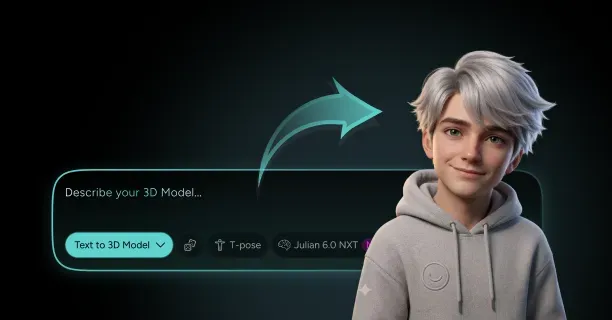
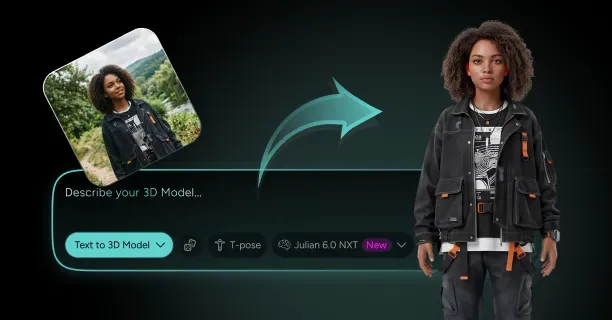
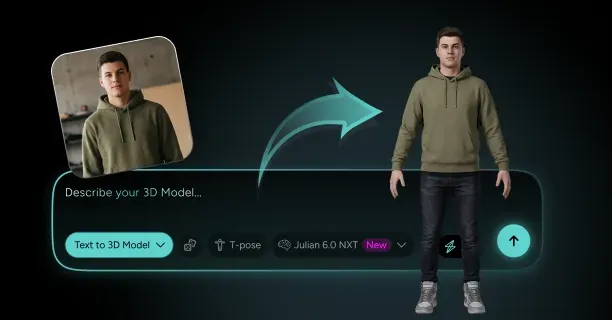
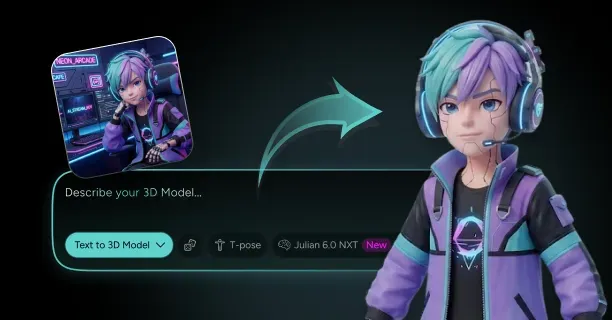
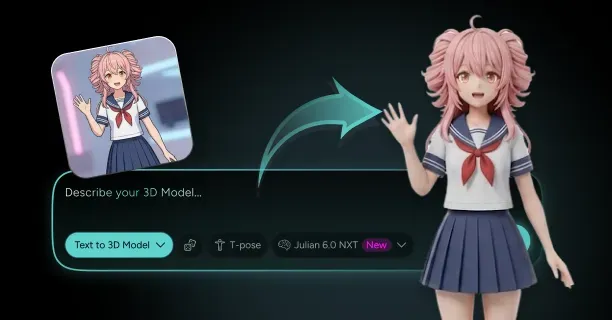
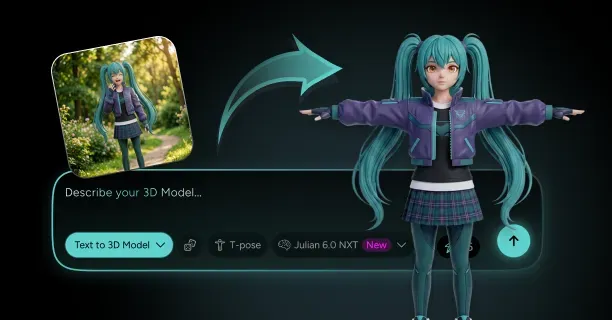
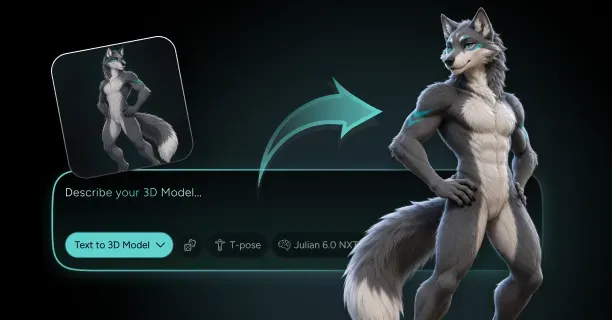
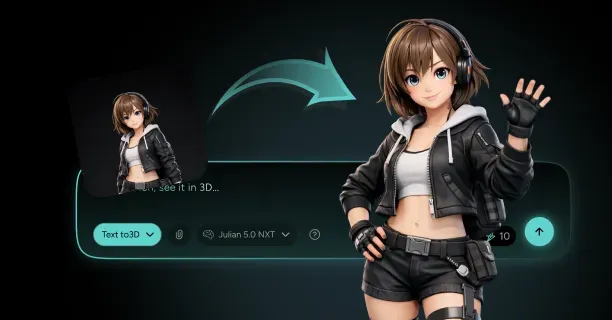
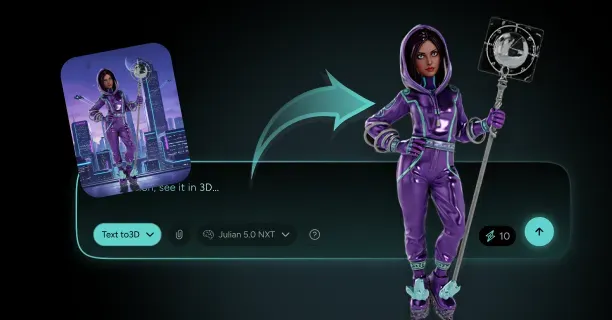
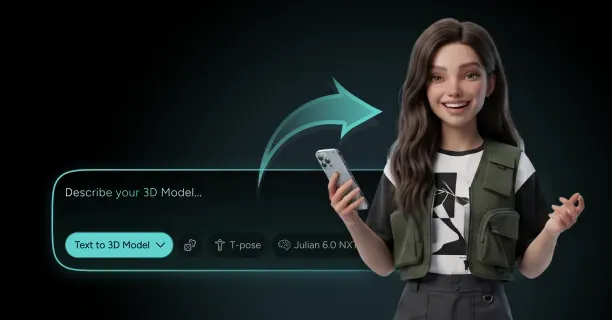
To create a virtual influencer 3D avatar, write an identity brief, generate a single master 3D character from it using a virtual influencer creator like Threedium's avatar generator, lock a character sheet, rig the face and body, then render every post from that one asset instead of generating a new face each time. Threedium's Julian NXT generator turns a text description or reference images into a production-ready model with PBR textures, automatic body and facial rigging, and export to GLB, USDZ, FBX, and VRM. The technical work takes hours; the discipline that makes it a business is treating the model as a permanent brand asset under version control.
This page is written for brand teams, agencies, and independent operators building a persistent commercial persona: a Miquela-style identity that posts weekly, signs brand deals, and reads as the same individual for years. That is a different job from generating one pretty face. The hard part is render number four hundred, shot under different lighting, in a different outfit, still recognizable to a follower who scrolls past in 1.2 seconds.
What Goes Into a Virtual Influencer Identity Brief: Backstory, Values, and Visual Signature?
The identity brief is a one-to-two page document written before you touch any generator, and it is the highest-leverage artifact in the project. It answers three questions: who is this person, what do they believe, and how would a stranger recognize them from a cropped photo. Skip it and you get a generic attractive face indistinguishable from thousands of other AI portraits, which is the most common failure in this category.
Make the backstory concrete enough to constrain content decisions. Lil Miquela launched as a 19-year-old Brazilian-American musician in Los Angeles, and that specificity is why her posts had somewhere to be set. A brief reading "aspirational fashion girl, 22, aesthetic" produces content with nothing to say; a brief reading "24, Lisbon, ceramics studio in a converted garage, obsessed with 90s club flyers" produces a year of shot ideas by itself. The values section is what makes partnerships safe: write down what the character would endorse and what they would refuse, because every post is a deliberate choice by your team.
The visual signature feeds the generator directly. Pick two to four features that survive compression, cropping, and small screens:
- A distinctive facial landmark: a specific nose bridge, wide interocular distance, a strong jaw angle, a beauty mark in a fixed position
- A hair silhouette that reads at thumbnail size: blunt space buns, a shaved side, a specific curl pattern and length
- A permanent styling motif: one piece of jewelry that never comes off, a freckle pattern, a recurring wardrobe color
- A posture or expression default: how the character stands, whether they smile with teeth, where the eyeline sits
How Do You Prompt Threedium To Generate an Ownable Virtual Influencer Face?
An ownable face does not look like the statistical average of a training set. Generic prompts produce symmetrical, conventionally proportioned, forgettable geometry. The technique that works is to over-specify structure and under-specify beauty, because the model supplies attractiveness by default and your prompt budget is better spent on what makes the character identifiable.
Structure a prompt for an ai influencer generator in four blocks. Demographic and structural base: apparent age, head shape, face length. Individual landmarks with comparatives: "wide-set eyes, interocular distance slightly above average," "aquiline nose with a visible dorsal hump," "square jaw with a defined gonial angle." Surface detail: skin texture level, freckle density and placement, visible pores, scars. Hair and default styling as a separate clause so it can be varied later without disturbing the face.
Deliberately introduce asymmetry. Real faces are asymmetric, and the visual system reads perfect symmetry as synthetic long before anyone registers why. Ask for a slightly higher left eyebrow, a smile that pulls to one side, a nose a degree off midline. Run eight to twelve generations before committing, and judge candidates at the size they will be consumed: export 500-pixel crops, grid them, and pick the one that still reads as an individual.
Never prompt with the name of a living person or celebrity. Beyond the rights exposure, it produces a face your audience half-recognizes, which is worse for brand-building than a face they have never seen. Describe the structural qualities you admire instead of naming who has them.
Should Your Virtual Influencer Be Photorealistic Like Shudu or Stylized Like Noonoouri?
This fork determines your production budget, risk profile, and disclosure posture for the life of the character. Shudu, created by photographer Cameron-James Wilson, is rendered at a fidelity where posts are frequently mistaken for photography. Noonoouri, created by Joerg Zuber, is unapologetically stylized with doll-like proportions and has still landed luxury partnerships and a music label deal. Both work commercially.
Photorealism buys credibility in fashion and beauty, where product needs to sit on skin that looks like skin, and costs more in every direction: higher texture budgets, harder lighting, longer renders, and a sharper disclosure obligation. Stylization buys instant recognizability, forgiving production tolerances, and self-evident disclosure, at the cost of fitting fewer brand categories.
| Factor | Photorealistic | Stylized |
|---|---|---|
| Reference personas | Shudu, Imma | Noonoouri |
| Texture budget | 4K albedo, 4K normal, 2K roughness | 2K albedo, often no skin normal map |
| Head polygon budget | 40k-80k triangles | 8k-20k triangles |
| Lighting sensitivity | Very high: subsurface tuned per setup | Low: three-point lighting reads fine |
| Render time per 2048px still | 4-25 minutes on a modern GPU | 30 seconds-3 minutes |
| Best fit | Beauty, fashion, product-on-body | Gaming, music, youth brands, mascots |
The middle path, which Miquela occupies, is deliberately imperfect realism: human proportions and skin with slightly plasticized surfaces that read as intentional CGI. It sidesteps the uncanny valley by never claiming the human side of it, and for a small team without a VFX budget it is usually the right answer.
How Do You Generate the Master 3D Model From a Text Prompt or Reference Images?
There are two input paths into Threedium's 3D model generation. Text-to-3D takes the structured prompt from your identity brief and produces a full character mesh. Image-to-3D reconstructs geometry from references, which is the right path when you already have concept art, approved 2D portraits, or an existing 2D persona you are upgrading to a virtual influencer 3d model.
For image-driven generation, supply the widest angular coverage you can: front, both three-quarters, and pure profile at minimum. Shoot references under flat, even lighting, since baked-in shadows get interpreted as geometry and produce hollows under the cheekbones you will spend an hour sculpting out. Four clean references at 2048 pixels on the short edge beat twelve at 800, with the face occupying at least 60 percent of frame height.
Evaluate the output as geometry, not as an image. Turn off textures and inspect the mesh in a neutral gray shader, checking for:
- Profile silhouette, especially the nose-to-lip-to-chin line, where reconstruction most often fails
- Ear placement and depth, commonly flattened when references lack profile coverage
- Eye socket depth: too shallow reads as a mask, too deep reads as skeletal
- Neck-to-jaw transition, which sells the head as attached to a body
- Topology density around mouth, eyes, and brows, since those regions carry every expression the rig will drive
How Do You Refine Facial Landmarks So the Character Stays Recognizable at Feed Resolution?
Feed resolution is brutal. Instagram serves feed images around 1080 pixels wide, putting a portrait face between 300 and 600 pixels tall on a phone. Everything you sculpted at 4K disappears; what survives is silhouette, value contrast, and the two or three largest structural features.
Refinement is therefore exaggeration, not subtlety. Push your chosen landmarks 15 to 30 percent past what looks correct in a close-up viewport. A distinctive jaw angle must be visibly distinctive; a slight one reads as nothing. The same applies to brow position, cheekbone prominence, and mouth width. Portrait painters have used this principle for centuries and it applies identically to a cgi influencer built for small screens.
Run a fast test loop after every change. Render a neutral three-quarter portrait at 2048 pixels, downsample to 400, blur slightly to simulate compression, and place it beside three other faces of similar demographic. If a colleague who has seen the character twice can pick it out, the landmarks are strong enough. Also check the face under three lighting directions before locking, since geometry that turns into a stranger under hard side light lacks cheekbone or brow definition.
Test against JPEG compression specifically, not just downscaling. Platforms recompress aggressively, and fine skin detail, subtle freckles, and low-contrast texture variation are exactly what compression discards first. Anything that only reads in an uncompressed render does not exist as far as your audience is concerned.
How Do You Lock a Character Sheet With Turnarounds, Expression Tests, and Signature Details?
The character sheet is where the project stops being exploration and becomes production. It is a fixed set of renders exported from the approved master, stored with a version number, and treated as ground truth for every future comparison. Without one, drift stays invisible until your audience has quietly stopped recognizing the character.
A complete sheet contains:
- A 360-degree turnaround at 8 or 12 fixed angles under a standardized neutral rig, full body and head-only
- Expression tests: neutral, full smile with teeth, closed-mouth smile, laugh, surprise, and the resting default
- Close-up plates at 2048 pixels: eyes, mouth, ears, hairline, hands
- Signature callouts: every mole, scar, piercing, or tattoo with its position noted in UV space
- Material swatches with exact shader values: skin at three exposures, hair, iris hex, teeth, nails
- Scale reference: height in centimeters, head-to-body ratio, hand size relative to face
Record the numbers, not just the images. A render is a picture of a setting; the setting is what you need to reproduce. Subsurface radius in millimeters, roughness values, iris hex, specular intensity. When a freelancer renders a post nine months from now, the numbers keep their output matching yours. Once signed off, freeze the sheet.
How Do You Texture Skin, Hair, and Wardrobe for Photorealistic Social Renders?
Threedium generates PBR texture sets automatically: albedo, normal, roughness, and metallic. A practical baseline for a virtual influencer is 4K albedo and normal on the face, 2K on the body, and 2K per wardrobe piece, which keeps a full look under roughly 200MB of texture data and renders comfortably on consumer hardware.
The craft of photorealistic skin shading, subsurface tuning, hair card layering, and micro-detail normals is a deep specialty, though Threedium's avatar generation produces that baseline set automatically. The constraint that matters here is different: texture values must be recorded and reused identically across every render, because material drift damages recognizability as much as geometry drift and is far easier to introduce by accident. Lock shader parameters into the character sheet and never eyeball them per shot.
How Do You Rig the Avatar for Poses, Facial Expressions, and Short-Form Video?
Rigging converts a static model into a working asset. Threedium's automatic rigging produces a humanoid skeleton with standard joint naming plus a facial rig carrying 52 ARKit blendshapes, the same shape set used by iPhone face tracking and supported natively by Unreal, Unity, and Blender. That standard is the interoperability layer: the same rig can be driven by a phone, by video-based capture, by hand-keyed animation, or by a text-to-speech viseme system without rebuilding.
Verify the body rig before calling it production-ready:
- Shoulder deformation at full arm raise: the most common auto-rig failure, producing a collapsed deltoid or upper-arm twist
- Hip and knee bend at seated and crouched poses, checking inner-thigh volume loss
- Finger articulation with three joints per finger, since hands appear constantly in influencer photography
- Neck rotation range, which drives most portrait posing and is routinely under-weighted
- Jaw and tongue joints if you plan speech animation, since blendshapes alone leave a hollow mouth interior
Build a pose library immediately after rigging. Fifteen to twenty-five saved poses covering standing three-quarter, seated, mid-stride, leaning, hand-to-face, product-at-chest, and over-the-shoulder cover most of a social calendar. Starting a post from a stored pose is a 20-minute job; starting from T-pose is a two-hour job. For video, keep ambitions modest: a three-second idle loop with breathing, a blink every 3 to 5 seconds, and a small weight shift reads as alive without a full animation pipeline.
How Do You Build a Reusable Wardrobe and Prop Library Around One Avatar?
The wardrobe library separates a persona that posts twice a month from one that posts five times a week. Every garment built once can be recolored and recombined indefinitely, so post fifty costs a fraction of post five: you are assembling from inventory rather than creating from scratch.
Build wardrobe as separate meshes fitted to the body, never as textures painted onto skin, so you can layer, swap, and simulate. Structure the library in tiers: base layers, outer layers, footwear, accessories, and props. A launch inventory of 12 to 20 garments across three or four style registers lets the character plausibly appear at a gallery opening, a gym, a cafe, and an event. Garments in the 5,000 to 20,000 triangle range with 2K textures are plenty for stills. Generating garments and props through Threedium's model generator builds inventory far faster than manual modeling, and outputs arrive with matching PBR conventions.
Name and version everything, using a scheme like character_garment_type_colorway_version and a sheet mapping every asset to the posts it appeared in. Fit each new garment against the full pose library before calling it done: clothing that sits perfectly in a T-pose will clip through the body at a seated pose or an arm raise, and discovering that mid-shoot costs far more than ten minutes of checking.
How Do You Light and Frame Renders To Match Real Instagram Photography?
Most CGI characters look like CGI because of lighting and framing, not geometry. Real photography carries imperfections a default render lacks entirely, and reproducing those imperfections is most of the work.
Start with HDRI-based lighting rather than hand-placed studio lights. A 4K or 8K environment map matching your setting gives plausible direction, color temperature, and reflections for free; add at most one or two shaping lights. The tell of amateur CGI is a perfectly balanced three-point setup with no environmental contamination. Match camera parameters to real gear too: influencer photography sits mostly at 35mm to 85mm full-frame equivalent between f/1.8 and f/4, with real depth-of-field falloff rather than post-processed blur. Selfies sit around 24mm to 28mm with visible nose distortion, worth reproducing deliberately.
Then degrade the render on purpose:
- Sensor noise or grain, heavier in shadows, consistent with the scene's implied ISO
- Slight chromatic aberration at frame edges and a subtle lens vignette
- A degree or two of tilt and off-center framing, since real photos are never perfectly level
- Something slightly out of focus or clipped at the edge of frame
- A consistent color grade across the feed, the way a real creator's editing preset works
Shoot 4:5 for feed and 9:16 for stories and Reels, rendering at least 2048 pixels on the long edge so platform recompression has headroom.
How Do You Composite 3D Renders Into Real-World Photos Like Lil Miquela's Feed?
Compositing into real photography is what gave Lil Miquela her cultural foothold: a CGI character standing in a real Los Angeles street, next to real people. It anchors the persona in the physical world in a way synthetic environments never do, and it is far cheaper than building photoreal 3D sets.
- Shoot the plate first, composed for where the character will stand, and record the camera's focal length, height, and tilt.
- Capture lighting reference on location: a gray sphere and a chrome sphere in the character's position give direction, intensity, color, and a reflection map. A phone panorama is a lower-fidelity substitute.
- Match the 3D camera to the plate camera, then match render lighting to the captured reference. Almost every failed composite fails here.
- Render in passes: beauty, alpha, shadow catcher, ambient occlusion, and depth.
- Composite and unify: match grain and black levels between plate and render, grade both together, and treat the silhouette edge so it does not read as a clean cutout.
Contact shadows deserve emphasis. The most reliable tell of a bad composite is the absence of a dark, tight shadow where the feet meet the ground, so render an ambient occlusion pass and multiply it under contact points even when you have a full shadow pass. If real people appear in shot, get written releases as you would for any commercial photography, and avoid framing that implies an endorsement that does not exist.
Which Export Formats Fit a Virtual Influencer Pipeline: GLB, FBX, USDZ, or VRM?
Export FBX as your production master for rendering and animation in Blender, Maya, or Unreal, GLB for web embeds, USDZ for iOS AR and Quick Look, and VRM if the persona will ever stream live.
Threedium writes all four from the same master asset, so this is not a permanent choice made at generation time: re-export whenever a new channel needs a different container.
How Do You Brief a Virtual Influencer to a Brand the Way a Talent Agency Briefs a Human Creator?
Brands buy influencer partnerships through an established process, and the fastest way to get a virtual persona taken seriously is to arrive with the same documents a talent agency brings for a human creator. Marketing teams evaluate against a template; a persona that does not fit the template gets filed as a novelty rather than a media buy.
Open with positioning in one sentence, then audience composition exactly as a creator pitch does: follower count, geographic distribution, age and gender split, engagement rate, and top content categories. Pull these from real platform analytics, because virtual influencers get held to the same numbers. Where the brief diverges is the capability section, and that is where the pitch is won:
- Guaranteed brand safety: no personal scandal, no off-brief 2am post, and a documented values framework reviewable before signing
- Placement in impossible settings: a mountain summit, a stylized environment, a location the brand cannot physically shoot
- Unlimited revisions without a reshoot: wardrobe, background, or colorway changes are re-renders, not new production days
- Perpetual usage without talent renegotiation as a person's rate rises next year
- Cross-format reuse: stills, video, AR try-on, and in-store display from one production
- Turnaround certainty: no weather delays, talent scheduling, or location permits
Close with deliverables in the format brands expect: post count, formats, exclusivity window, usage rights and duration, approval rounds, and turnaround per asset. Put your disclosure language on the last slide so legal sees it upfront rather than in review.
What Does a Virtual Influencer Media Kit Contain: Reach, Render Turnaround, Usage Rights?
The media kit is the leave-behind: a clean PDF of eight to fourteen pages a brand manager can forward internally without you in the room. It borrows a human creator's structure and adds the production and rights sections only a CGI persona needs.
| Section | Contents | Why the brand cares |
|---|---|---|
| Persona one-pager | Name, positioning line, backstory summary, hero image | Whether the persona fits the brand's world |
| Audience | Followers per platform, engagement rate, geo and age split | Standard media-buy evaluation criteria |
| Performance | Average reach and saves per post, best recent campaign | Justifies rate against human creator alternatives |
| Production capability | Formats, environments, wardrobe scope, animation and AR options | Shows what is possible beyond a static photo |
| Turnaround SLA | Brief-to-render days, revision turnaround, rush availability | Campaign planning depends on delivery certainty |
| Rate card | Per-post, per-campaign, retainer, add-ons for video and AR | Budgeting without a discovery call |
| Usage rights | What may be reused, for how long, in which channels | Usually the slowest part of contracting |
| Disclosure policy | Exact labeling used on organic and paid posts | Legal sign-off requirement |
Be specific about turnaround, because vagueness wastes a genuine advantage. Realistic numbers for a team working from an established master: 2 to 4 business days from approved brief to first still, 24 hours for a revision on an approved composition, and 5 to 10 business days for a short-form video.
Distinguish clearly between content licensing, the right to repost and run paid media against specific assets for a defined term, and character licensing, the right to use your persona in the brand's own campaigns independently. The second is a far larger arrangement and should never be bundled into a per-post rate.
How Do You Keep a Virtual Influencer's Identity Consistent Across Every Render?
Consistency is the entire commercial proposition. Followers do not form a relationship with a series of similar-looking images; they form it with someone they believe is the same person each time. These are the systems that hold face, materials, and behavior stable across hundreds of renders and multiple operators.
Why Does One Master 3D Model Beat LoRA Training for Face Consistency?
The dominant alternative is 2D: generate a face with an image model, train a LoRA or similar fine-tune on it, then generate every post from the tuned model. It starts fast and produces impressive single images. It also has a structural problem that compounds over time.
A fine-tuned image model does not store your character. It stores a statistical pull toward your character within a much larger space of faces, so every generation samples a slightly different face. Across ten posts nobody notices; across two hundred, the nose has changed, the eye spacing shifted, the jaw softened. The failures cluster in predictable places:
- Pose-dependent drift: profile and three-quarter views are underrepresented in training data, so the character looks least like themselves in the angles varied content needs most
- Expression-dependent drift: a laughing version often reads as a different person, because the model has no structural understanding of how that face deforms
- Lighting-dependent drift: hard side light reveals bone structure the model never committed to, so it invents new structure each time
- No continuity of scale or proportion, which makes multi-character and product-interaction shots nearly impossible
A master 3D model has none of these properties, because the character is geometry rather than a probability distribution. The nose is a fixed set of vertices; rotate the camera and you get that face's actual profile. Character consistency becomes a property of the asset instead of a result you fight for on every generation. The honest tradeoff is setup time and render infrastructure: for three images in a pitch deck, use 2D; for a persona meant to run for years, the setup cost amortizes to nothing.
How Do You Version-Control the Master Asset So the Face Never Drifts Between Campaigns?
Treat the master model as a software team treats a production codebase: canonical version, change log, review process, immutable releases. This sounds heavy until the first time a freelancer renders a campaign from a stale file and you have twelve approved assets with the wrong jawline.
Use semantic versioning with explicit rules. Major bumps are deliberate identity changes: a permanent restyle, an aging, a structural revision. Minor versions are additive: new blendshapes, improved topology, an extended pose library. Patch versions are fixes: weight paint corrections, texture seam repairs, UV adjustments. Tag every published post with the version it was rendered from, store masters where releases cannot be overwritten, and enforce the one rule that prevents most disasters: nobody renders from a working file, ever.
Render a standardized identity check plate with every version: same three-quarter portrait, same lighting rig, same camera, same neutral expression, 2048 pixels. Stack them chronologically. Drift invisible between consecutive versions is obvious when 1.0 and 3.4 sit side by side, and catching it there is far cheaper than in a client review.
How Do You Keep Skin Tone and Materials Consistent Under Changing Lighting Setups?
Geometry consistency is solved by using one model. Material consistency is not, because the same shader under different lighting produces genuinely different pixel values, and a character who reads as one skin tone in a studio render and another at golden hour feels like two people. This is the most common consistency failure in otherwise well-run operations.
Work in a color-managed pipeline end to end. Set a single color space for the project, ACEScg or a filmic sRGB workflow, and use it identically in every scene; mixed color management is the fastest route to unpredictable skin tone. Then calibrate against a reference: include a color checker and gray card in your character sheet render and in each new lighting setup, and if the card sits at a different value or hue than your reference, fix the lighting rather than color-correcting the character afterward.
- Never edit shader parameters per shot. If a shot needs a change, it is a lighting change.
- Keep one skin shader with locked subsurface radius and roughness, recorded numerically in the sheet
- Normalize every HDRI to a consistent intensity so ambient level does not vary invisibly between shots
- Apply the feed color grade last, on a consistent base, never as a fix for an inconsistent render
- Build three or four approved lighting presets, soft daylight, hard sun, interior warm, night neon, and use them instead of lighting from scratch
How Do You Change Hairstyles and Outfits Without Losing Recognizability?
A persona that never changes their hair looks like a mascot. But hair is one of the strongest recognition cues in human perception, often stronger than facial structure at small sizes, which makes restyling genuinely risky. The resolution is a defined hierarchy of what can change.
Classify every visual attribute into three tiers. Tier one is immutable: facial geometry, eye color, permanent marks, body proportions, and one or two signature elements. These never change without a major version bump and a narrative reason. Tier two is seasonal: hair color within a defined range, length within a band, a signature accessory swappable within an approved set. These change a few times a year and get announced through content. Tier three is per-post: wardrobe, makeup, nails, props, environment.
When you do restyle, change one tier-two attribute at a time, because a new color plus a new cut plus a new wardrobe direction forces the audience to re-learn the character. Narrate the change as an event, the way a real creator's fringe becomes content. Then run the small-size test: downsample the new look to 400 pixels beside three old posts. If the silhouette changed so much that the character is unrecognizable at feed scale, it is a tier-one change disguised as a tier-two one.
What Belongs in a Virtual Influencer Character Bible?
The character sheet covers appearance; the bible covers everything else. It is what lets you hand the account to a new writer or agency partner without the persona changing personality overnight, and for any team larger than one person it is not optional.
- Identity brief: backstory, age, location, profession, relationships, current arc
- Voice guide: sentence length, punctuation habits, which specific emoji, slang used and words never used, plus five to ten example captions
- Values and boundaries: endorsed categories, refused categories, topics engaged with, how the character responds to criticism
- Visual standards: full character sheet, approved lighting presets, grade specification, framing conventions
- Asset registry: model versions, wardrobe, props, poses, with file locations and naming conventions
- Canon log: every fact the character has publicly stated about themselves, dated
- Disclosure and legal: labeling language, platform tags, rights documentation, trademark status
- Operational: approval chain, who can publish, escalation path, response protocol for negative attention
The canon log is the section teams most often skip and most often regret. Personas accumulate stated facts: a hometown in a caption, a sibling in a story, a favorite band. Two years and four writers later, contradictions appear and long-time followers notice. A dated spreadsheet of every self-referential claim prevents an entire class of credibility damage.
How Do You Animate the Avatar for Reels and TikTok Without a Full Mocap Studio?
Short-form video is where these accounts get most of their reach, and the assumption that it needs a mocap volume is the main thing stopping teams from making it. Because the model carries a standard humanoid skeleton and 52 ARKit blendshapes, several low-cost capture routes work directly.
Facial performance is the easiest. Any recent iPhone with a TrueDepth camera drives ARKit blendshapes in real time, and because Threedium's facial rig already uses the ARKit shape names, mapping is largely automatic and anyone on your team can perform to camera. Body motion has three practical tiers: licensed motion libraries that retarget onto a standard humanoid skeleton with minimal cleanup, video-based markerless capture from phone footage, good enough for mid-shots but weak on hands and foot contact, and inertial suits in the low thousands that give clean full-body data without a studio.
- Keep cuts to three to seven seconds, which hides animation limits and matches short-form editing conventions anyway
- Lock the camera or use simple moves; complex moves expose every flaw
- Always layer secondary motion: breathing, weight shifts, blinks, micro head movement. Its absence is what makes a character look dead.
- Cut away from hands during complex interactions rather than animating a difficult grip badly
- Plant feet with an IK constraint or frame above the knee, since sliding feet are the most noticeable retargeting failure
How Do You Plan a Social Content Calendar Around a Single Rigged Avatar?
The economics here are entirely about production efficiency per post. A human creator's marginal cost per photo is near zero once they are dressed and out the door; yours is render time and operator hours. The calendar therefore has to be designed around batching rather than around inspiration.
Batch by setup, not by publish date. Build one environment and one lighting preset, then shoot eight to fifteen variations across poses, outfits, and framings. That is two to three weeks of posts from a single session, and a team running weekly production days can hold a five-post cadence across two platforms. Structure the calendar in pillars: roughly 40 percent lifestyle stills batched from existing setups, 20 percent short-form video for reach, 20 percent brand content, 10 percent behind the scenes, and 10 percent community posts.
The behind-the-scenes pillar deserves more weight than teams expect. Showing the wireframe, the rig, or a turntable satisfies disclosure obligations organically, builds interest in the craft, and converts artificiality from a liability into content. Plan four to six weeks ahead with a two-week buffer of finished assets, because render queues and client approvals always run long, and an account that goes quiet for ten days loses distribution that takes months to rebuild.
How Do Brand and Agency Teams Run Approval Workflows for Virtual Influencer Posts?
Approvals for CGI content differ from photography in one structural way: revisions are cheap but unbounded. A shoot day ends and you work with what you have; with 3D, a client can request the jacket in a different color forever, which erodes your margin without gates.
Stage approvals so expensive work only happens after cheap decisions are locked. First, concept approval on a written shot list and reference images, with no 3D work yet. Second, blocking approval on low-resolution grayscale viewport renders showing pose, framing, and composition. Third, look development approval on one hero frame at final quality. Fourth, final delivery of the full set. Write the revision policy into the contract: a common structure is two rounds at concept and blocking, one at look development, one at final, with anything beyond billed hourly and anything reaching back to an approved stage treated as a re-brief.
Keep an internal gate that no external party controls, covering brand safety against the no-go list, a canon check against the bible, an identity check against the current character sheet at feed resolution, a disclosure check for required labeling, and an asset log recording model version, wardrobe, and lighting preset before publish. That gate protects the persona when a client pushes for something that works as an ad but damages the character, which outlives the campaign.
How Do You Scale One Avatar Across Instagram, TikTok, and Paid Campaign Formats?
One master model should service every channel. The discipline is rendering at a master resolution and aspect ratio that survives downstream cropping: 4096 pixels on the long edge in a 4:5 frame with deliberate headroom yields 1:1 feed crops, 9:16 stories, 16:9 thumbnails, and print-resolution campaign assets from one file.
Adapt to each platform's native register instead of cross-posting identical assets. Instagram rewards polish and a coherent grid; TikTok rewards immediacy, which for a CGI character means more motion, more direct address, more visible process. Paid formats add multiple ratios, duration cuts, and localized text variants, and because your subject is 3D, localization is nearly free: swap the product, change a sign, re-render the text plate as swappable layers.
AR and 3D-native placements are where a virtual influencer has a structural advantage no human creator can match:
- USDZ export drives iOS Quick Look, letting audiences place the character in their own space from a web link
- GLB export powers web-embedded 3D viewers on brand sites and product pages
- Platform AR tools can host the character as a filter the audience wears or poses with
- Retail and event installations can run the rigged model on a screen or LED wall, live or looping
- VRM export opens live streaming and virtual events without rebuilding the character
What Do Brands and Agencies Need To Know Before Launching a Virtual Influencer?
Production is the easy half. Cost structure, ownership, disclosure, and positioning are where these programs actually succeed or quietly fail, and they are the part generic 3D tutorials never cover.
How Much Does a Commissioned CGI Influencer Cost Versus an AI-Generated 3D Avatar?
Virtual influencer cost splits into two very different numbers: the one-time cost to create the character and the ongoing cost per post. Teams routinely budget the first and get ambushed by the second, which over a year is almost always larger.
| Route | Character creation | Timeline | Cost per finished post |
|---|---|---|---|
| Full studio commission | 15,000-80,000 USD | 6-14 weeks | 500-3,000 USD |
| Freelance 3D artist | 4,000-20,000 USD | 4-10 weeks | 200-1,200 USD |
| AI generation plus in-house finishing | Subscription plus 1-3 weeks internal time | 1-3 weeks | 50-400 USD |
| AI generation plus enterprise artist refinement | Platform tier plus refinement fee | 2-5 weeks | 50-400 USD |
| 2D image model with fine-tuning | Under 1,000 USD | Days | Under 50 USD, with identity drift |
The ongoing number determines viability. A persona posting five times a week produces roughly 260 assets a year: at a studio rate of 800 USD per post that is over 200,000 USD in production alone. At 100 USD per post through an in-house pipeline built on a generated master, it is 26,000 USD. That gap is the entire reason AI-generated 3D avatars changed who can operate a virtual influencer at all. Budget separately for persona operation at 10 to 25 hours weekly, asset expansion at roughly 300 to 1,500 USD monthly if outsourced, render infrastructure, and front-loaded legal work.
Where AI generation does not replace a commission is highly art-directed work with an idiosyncratic aesthetic, where the value is a specific artist's eye rather than competent execution. If the persona's whole proposition is a visual style nobody else has, commission it. Otherwise generate the model and spend the budget on operating the character.
Who Owns the Rights to a Virtual Influencer's Face, Name, and Likeness?
Ownership is a bundle, not a single right, and each piece is secured differently. Getting it wrong surfaces years later, when the character is valuable and someone else has a claim on part of it. None of this is legal advice.
- The 3D asset: mesh, textures, and rig, governed primarily by the generating platform's terms of service. Read the commercial use and ownership clauses before committing a brand to any tool.
- The name: protected by trademark, not copyright. File early in the relevant classes and territories, since names are cheap to secure now and expensive to fight for later.
- The visual identity as a character: protection varies by jurisdiction and generally strengthens as the character becomes more distinctive and consistently depicted, which is another argument for identity discipline.
- Published content: each render is its own work, and freelancer contributions must be assigned explicitly rather than assumed.
- Voice: synthetic voices carry their own licensing terms, and a human performer's rights need separate contracting.
Threedium's model generation is built for commercial production, and its enterprise tiers include refinement by human 3D artists, which matters for rights as well as quality: a human-refined asset has a clearer creative-contribution story in jurisdictions where authorship affects protectability. Confirm exact terms for your tier before launch.
Every freelancer, agency, and contributor who touches the character, modeler, animator, retoucher, writer, voice performer, must sign a written assignment of all rights in their contributions to your entity. Verbal understandings and invoices marked "work for hire" are not reliably sufficient everywhere, and untangling contested ownership after the persona is valuable costs far more than the paperwork.
Never build on a real person's likeness without an explicit written license. Right of publicity claims are live in many jurisdictions and survive the person in some. Generate an original face and document the generation process as evidence of independent creation.
What Are the FTC and Platform Disclosure Rules for AI-Generated Influencers?
Ai influencer disclosure runs on two tracks people frequently conflate: advertising disclosure, which is a legal requirement, and synthetic-content disclosure, which is increasingly a platform policy and in some jurisdictions also law. You have to satisfy both.
Advertising disclosure is the older track. In the United States, FTC endorsement guidance requires material connections between endorser and brand to be disclosed clearly and conspicuously, and this applies identically whether the endorser is human or virtual. Labels belong where people actually see them, not buried behind a "more" link. The guidance also shapes how claims can be phrased: an endorsement must reflect honest experience, and a virtual character has not used the product. Synthetic-content disclosure is newer: major platforms have introduced AI-content labeling and their own tagging tools, and the EU AI Act includes transparency obligations aimed at making artificial content identifiable. Specifics change often, so verify current policy and applicable law before launch.
- State plainly in the account bio that the character is virtual or CGI, without coyness
- Apply the platform's own AI-content label in addition to your caption disclosure
- Tag sponsored posts at the start of the caption and use the platform's paid partnership tool
- Never phrase a claim as personal product experience the character cannot have had
- Publish behind-the-scenes construction content, which reinforces disclosure organically
Deceptive positioning is also bad strategy. Personas that concealed their artificial nature and were exposed suffered reputational damage that outlasted any short-term engagement gain, while Miquela, Imma, and Noonoouri are all open about being CGI and have audiences that treat the artificiality as part of the appeal.
How Do Virtual Influencers Like Lil Miquela, Imma, and Shudu Handle Brand Deals?
The established virtual influencers all sit behind an operating company rather than an individual. Miquela is operated by the Los Angeles company Brud; Imma by the Japanese studio Aww; Shudu sits under Cameron-James Wilson's agency The Diigitals. That structure is what lets them contract like a media property rather than a freelancer.
Their partnerships take three shapes: sponsored content, where the character posts about a product like any creator; campaign casting, where a brand books the character as talent for a campaign distributed through its own channels, which commands significantly higher fees; and extended collaborations across music, fashion collections, or long-running brand programs, which is where the largest value sits. The lesson for a new persona is that organic post fees are the smallest revenue line, so structure your offering around campaign licensing from the start.
These personas also invested as heavily in narrative as in imagery. Miquela released music, ran storylines, and engaged in public dialogue with other accounts. Visual quality was table stakes; audiences stayed because something was happening. A technically flawless character with nothing to say does not accumulate followers regardless of render quality.
How Do You Position the Persona: Digital Human, Brand Mascot, or Openly Fictional Character?
Positioning determines audience expectations, disclosure obligations, and what content will feel authentic. Choosing deliberately before launch is far easier than repositioning after an audience has formed its own understanding.
The digital human position presents the character as a person-like individual with a life and opinions, clearly labeled as virtual but treated narratively as someone. This is the Miquela and Imma model: deepest parasocial engagement, widest content range, highest operating burden, since someone must write this person continuously. The brand mascot position ties the character explicitly to a company, making ownership and disclosure trivially clear and briefing easy, but the ceiling is lower and the character cannot credibly work with other brands. The openly fictional character position frames the persona as an obvious creative work, which is the most disclosure-safe option and permits stylization that would break a realistic persona, at the cost of fitting fewer brand categories.
Choose by asking three questions. What is the revenue model, since brand partnerships favor the person-style persona, owned-brand marketing favors the mascot, and merchandising favors the fictional character. What content can you sustain, since the first position needs continuous narrative writing while a mascot needs only product-relevant posts. And what is your risk tolerance, since person-style personas attract the most scrutiny over authenticity and representation. Write the answer into the bible in one sentence and hold it.
What Team and Tools Do You Need To Operate a Virtual Influencer Month to Month?
Month-to-month operation, not character creation, is where these programs are won or abandoned. At the smallest scale, one skilled generalist working roughly 20 hours a week can maintain a three-to-five-post cadence from an established master model. The bottleneck is rarely skill; it is consistency of time.
A functional small team covers five roles, which may be three people:
- 3D generalist: rendering, lighting, wardrobe fitting, compositing, asset maintenance. The most load-bearing role.
- Content strategist and writer: calendar, captions, narrative arc, canon and voice consistency
- Community manager: comments, DMs, engagement, sentiment monitoring
- Business lead: partnerships, contracts, rate card, rights, disclosure compliance
- Animator, part-time or contract, brought in for short-form and campaign work
The stack is straightforward: Threedium's avatar generation and auto-rigging for the master asset and ongoing wardrobe expansion, Blender, Maya, or Cinema 4D for rendering and animation, Substance Painter if you author custom materials, Photoshop or Affinity for compositing, plus structured cloud storage for the asset registry and a project tracker for approvals. Hardware matters more than software cost: a current-generation GPU with at least 16GB of VRAM handles photoreal character rendering comfortably, and 24GB or more removes most scene complexity constraints, with cloud rendering filling campaign peaks.
When Should a Virtual Influencer Cross Over Into Live Streaming or VTubing?
Live is the natural expansion, and the technical barrier is low because the asset already supports it: exported as VRM, a model with a humanoid skeleton and 52 ARKit blendshapes drops into the standard VTubing software stack and drives from a webcam or phone in real time. The question is whether and when, not whether you can.
Live solves the two hardest problems in this format. It produces volume, since a two-hour stream generates more content minutes than a month of stills, and it produces genuine interactivity, which converts followers into a community. It also opens revenue that does not depend on brand deals. The cost is that live is a different product: it needs a performer embodying the character in real time on a reliable schedule, and acceptance that improvisation will push past the bible.
- The persona already has an audience that engages in comments and DMs
- You have a performer who can hold the character's voice unscripted for hours
- The pre-rendered operation is stable and will not collapse when attention shifts
- Positioning supports it: a digital human or fictional character streams naturally, a pure mascot usually cannot
- You can hold a consistent schedule, since streaming audiences punish irregular cadence harder than feed audiences
If streaming becomes the primary goal, the operating model diverges sharply. Always-on autonomous personas run without a human performer driving every session, trading performance quality for volume and demanding a different stack. The same master asset carries across either way, which is the practical payoff of committing to one rigged model from day one.
Frequently Asked Questions About Virtual Influencer Creators
How much does it cost to create a virtual influencer?
Creating the character costs roughly 15,000 to 80,000 USD through a full CGI studio commission, 4,000 to 20,000 USD through a freelance 3D artist, or a platform subscription plus one to three weeks of internal time using an ai influencer generator. Ongoing production is the larger annual number: 500 to 3,000 USD per finished post from a studio versus 50 to 400 USD per post running an in-house pipeline from a generated master model.
Budget the full first year, not just the build. A persona posting five times weekly produces around 260 assets, which at studio rates exceeds 200,000 USD before salaries, paid media, or legal costs. Add persona operation at 10 to 25 hours weekly, wardrobe expansion, render infrastructure, and trademark filings. A small-team operation built on AI generation typically lands in the low-to-mid five figures for year one; a studio-built and studio-operated persona runs well into six.
How was Lil Miquela created?
Lil Miquela was created by Brud, a Los Angeles technology and media company, and launched on Instagram in 2016. She is a CGI character rendered in 3D and composited into real photographs, which is why her posts show her in recognizable real-world locations alongside real people and products.
The production approach is the compositing pipeline described above: photograph a real plate, match the render camera and lighting to it, render with alpha and shadow passes, and composite with matched grain and grade. Her look sits deliberately in a middle register, human proportions and realistic skin with a slightly stylized surface that reads as intentional CGI. Brud also invested as heavily in narrative as in rendering, releasing music and running public storylines that sustained attention for years.
Do virtual influencers have to be disclosed as AI or CGI?
Yes, on two separate tracks. Any sponsored or brand-connected post must disclose the material connection clearly and conspicuously under FTC endorsement rules in the US and equivalent advertising standards elsewhere, exactly as for a human creator. Separately, major platforms now require labeling of AI-generated content, and jurisdictions including the EU have introduced transparency obligations for synthetic media.
The safe standard is disclosure in three places: a clear statement in the account bio that the character is virtual or CGI, the platform's own AI-content label where required, and a prominent Ad or Sponsored tag at the start of commercial captions plus the paid partnership tool. Rules change quickly, so verify current policy before launch. Transparency also simply performs better: the most successful virtual influencers are open about being CGI and publish process content that turns artificiality into a reason to follow.
Can a virtual influencer make money?
Yes, through the same revenue streams as human creators plus several only a 3D asset unlocks: sponsored posts, campaign licensing where a brand books the character as talent for its own advertising, long-running ambassadorships, merchandise, music and other IP, and live streaming revenue if the persona expands into it.
The mix skews differently from a human creator's, since organic sponsored posts are usually the smallest line and campaign licensing is where the larger money sits. The structural advantages, guaranteed brand safety, unlimited revisions without a reshoot, impossible locations, and reuse across AR placements, justify rates competitive with human creators at similar follower counts. Profitability comes down to the ratio between per-post cost and per-post revenue, which is the whole argument for building on a reusable rigged master.
What software is used to make CGI influencers?
The traditional stack is a 3D application, most commonly Blender, Autodesk Maya, or Cinema 4D, for modeling, rigging, lighting, and rendering, paired with a texturing tool such as Adobe Substance Painter and a compositor such as Photoshop or Nuke. Character tools like Reallusion Character Creator and Epic's MetaHuman Creator are common for base humans, and Marvelous Designer for clothing simulation.
The modern shortcut is to generate the master character with an AI 3D platform and use the traditional stack only where it is genuinely needed. Threedium's Julian NXT generator produces the rigged, textured master from a text prompt or reference images, including the 52-blendshape facial rig, and exports to GLB, FBX, USDZ, and VRM, so Blender or Maya handles rendering rather than weeks of character modeling. A realistic small-team stack today is Threedium for the character and asset library, Blender for rendering, Photoshop or Affinity for compositing, and a TrueDepth iPhone for facial capture.
Do I own a virtual influencer made with an AI generator?
Ownership of the generated 3D asset is governed by the generating platform's terms of service, so read the commercial use and ownership clauses before committing a brand to any tool. Threedium's model generation is built for commercial production and its enterprise tiers include refinement by human 3D artists, which strengthens the creative-contribution record alongside output quality. Confirm the exact terms for your tier before launch.
Ownership of the persona is a broader bundle than the file. The name is protected by trademark and should be filed early in the relevant classes and territories. The visual identity may attract character protection, which strengthens as the character becomes more distinctive and consistently depicted. Individual renders are separate works, so every freelancer, animator, retoucher, writer, or voice performer must sign a written assignment of rights to your entity. Never base the character on a real person's likeness without an explicit written license, and take the specifics to an IP lawyer, since none of this is legal advice.
Can my virtual influencer also stream live or become a VTuber?
Yes, and the technical work is largely done if you built on a properly rigged master. Export the character as VRM, the format the standard VTubing software stack expects, and the humanoid skeleton plus 52 ARKit blendshapes will drive from a webcam or a TrueDepth iPhone camera in real time with minimal setup.
The real question is operational. Live requires a performer who can hold the character's voice unscripted for hours and a reliable weekly schedule. Cross over once the persona has an audience already engaging in comments and DMs, the pre-rendered operation is stable enough to run alongside, and the positioning supports it, since a person-style persona or fictional character streams naturally while a pure brand mascot usually does not.
Budget for it as a separate product rather than an extension of the feed, since always-on autonomous personas are their own discipline with their own staffing. Anyone researching how to create a virtual influencer from scratch benefits from knowing that one master asset generated and rigged through Threedium's avatar tools carries across every one of these formats, which is the payoff of committing to a single rigged model from day one.